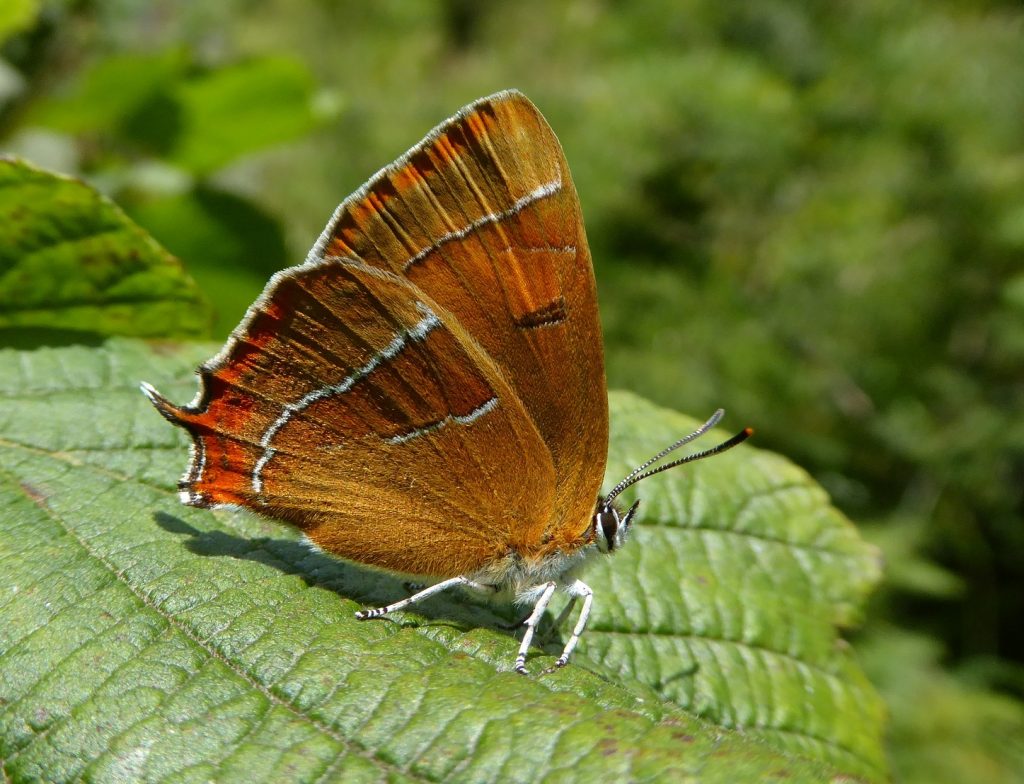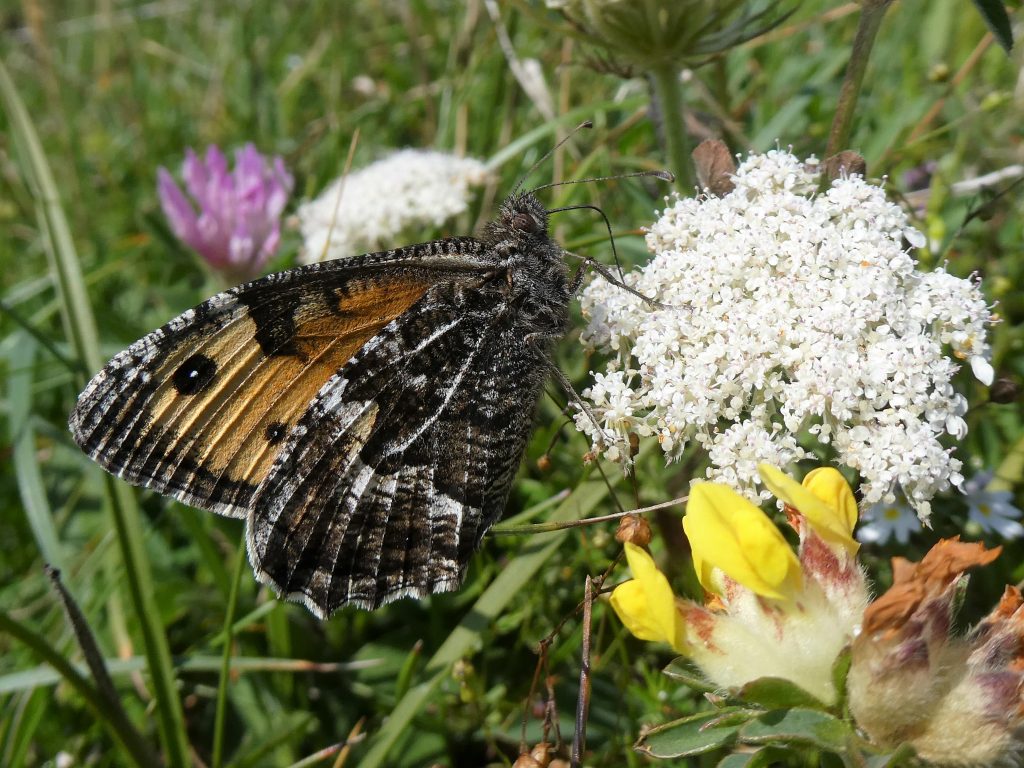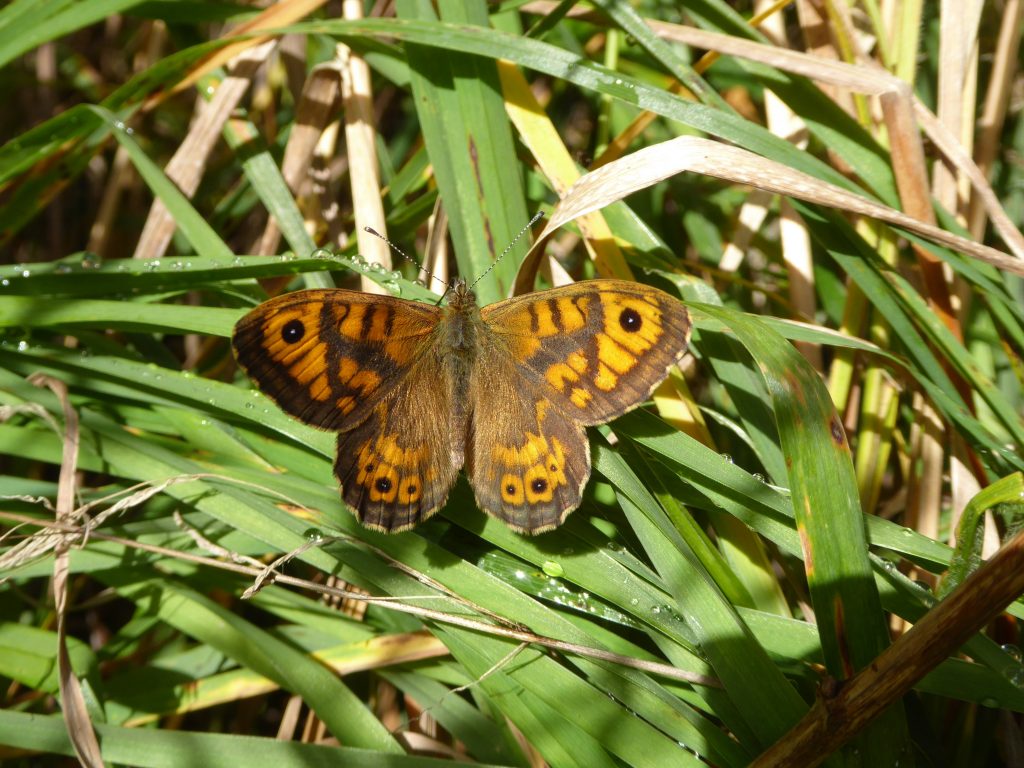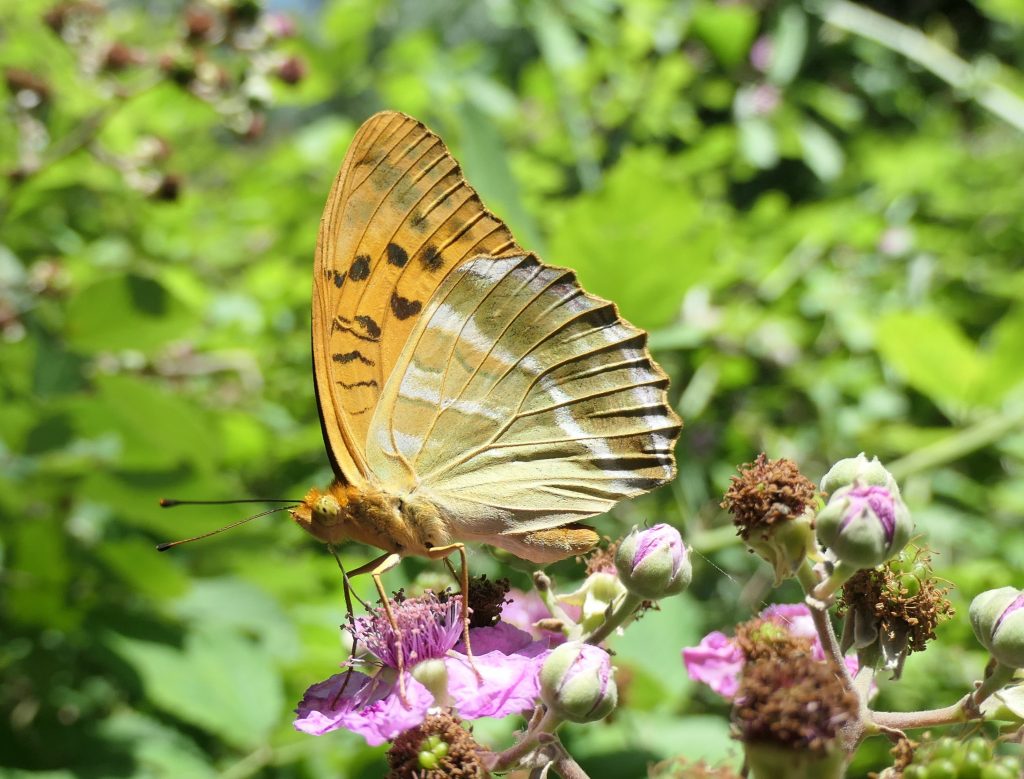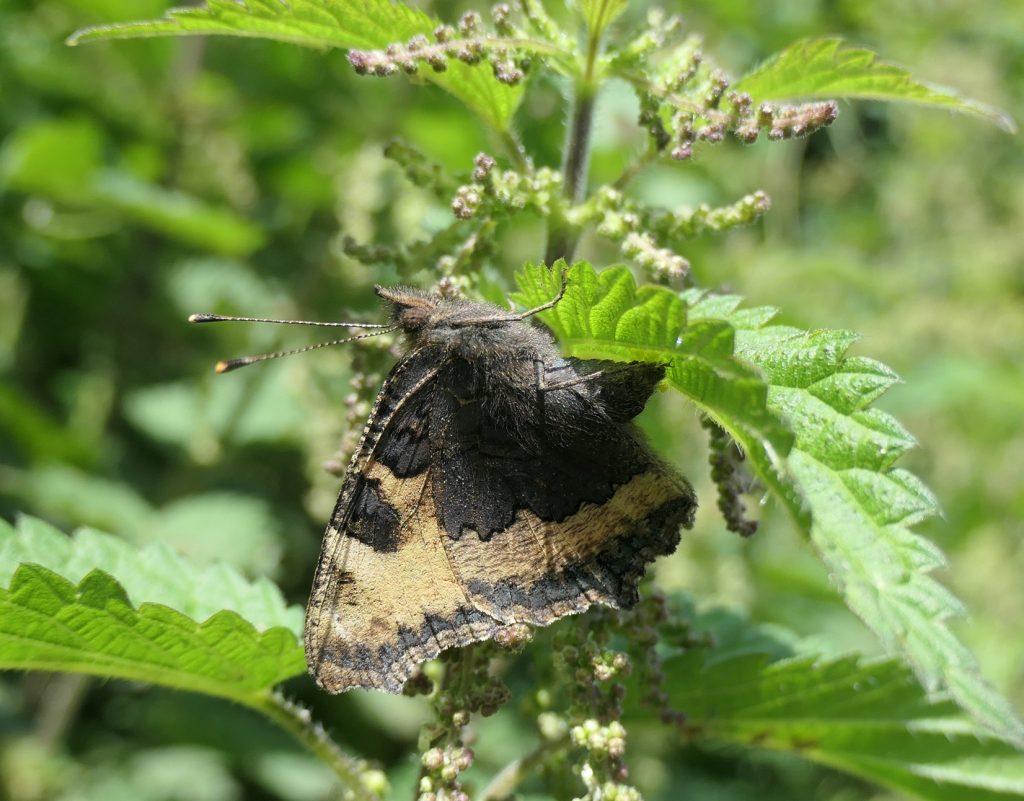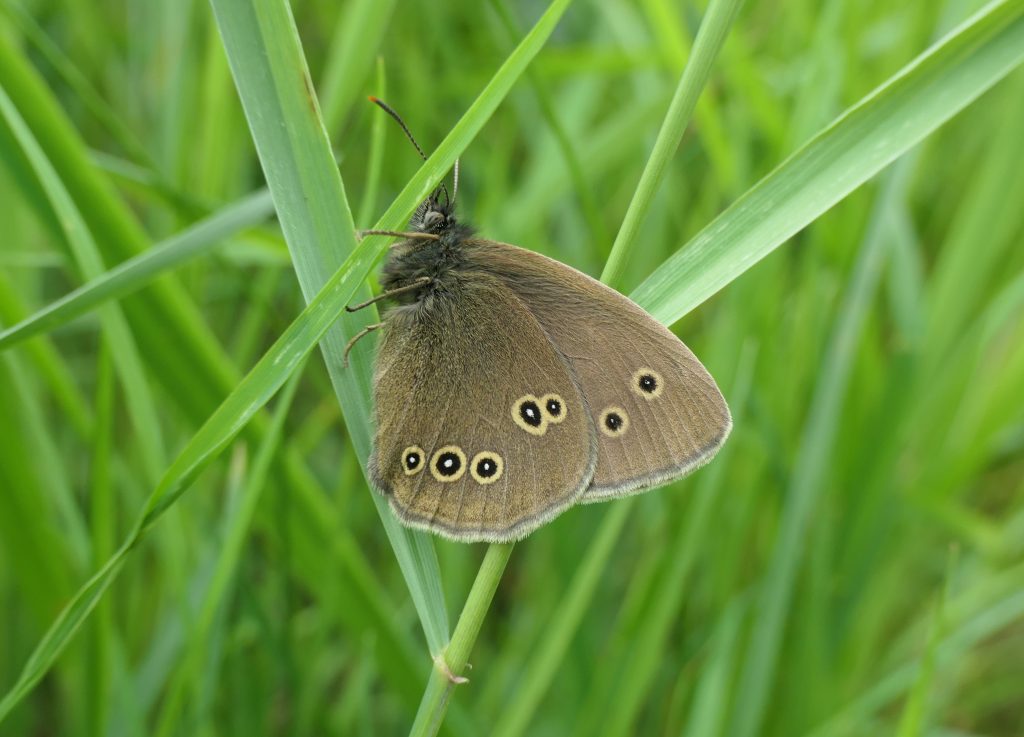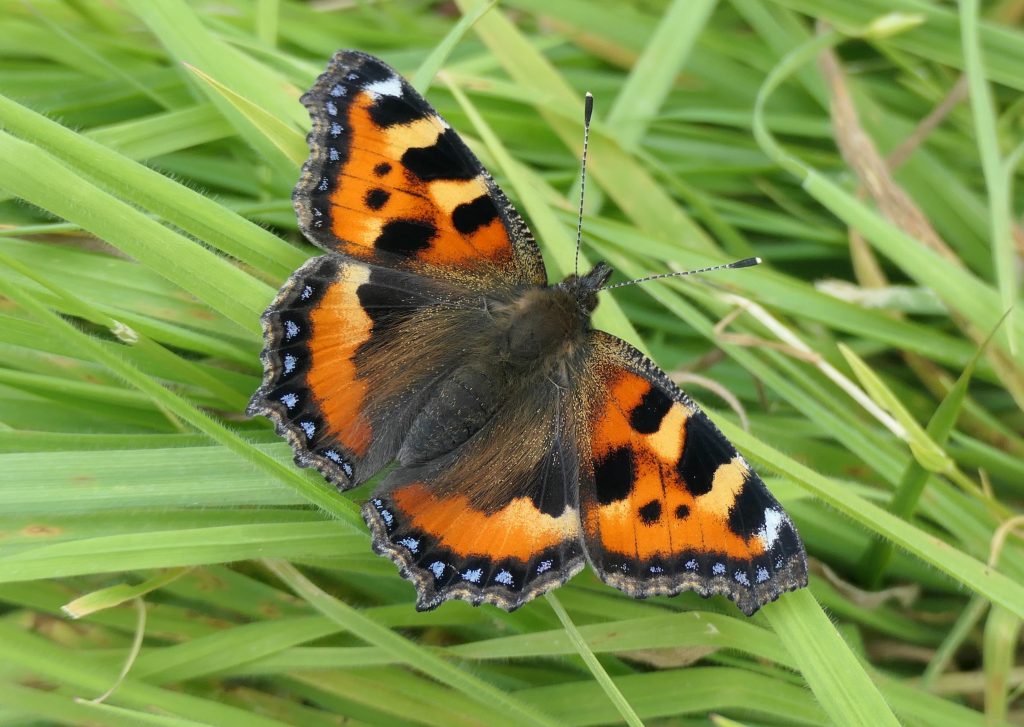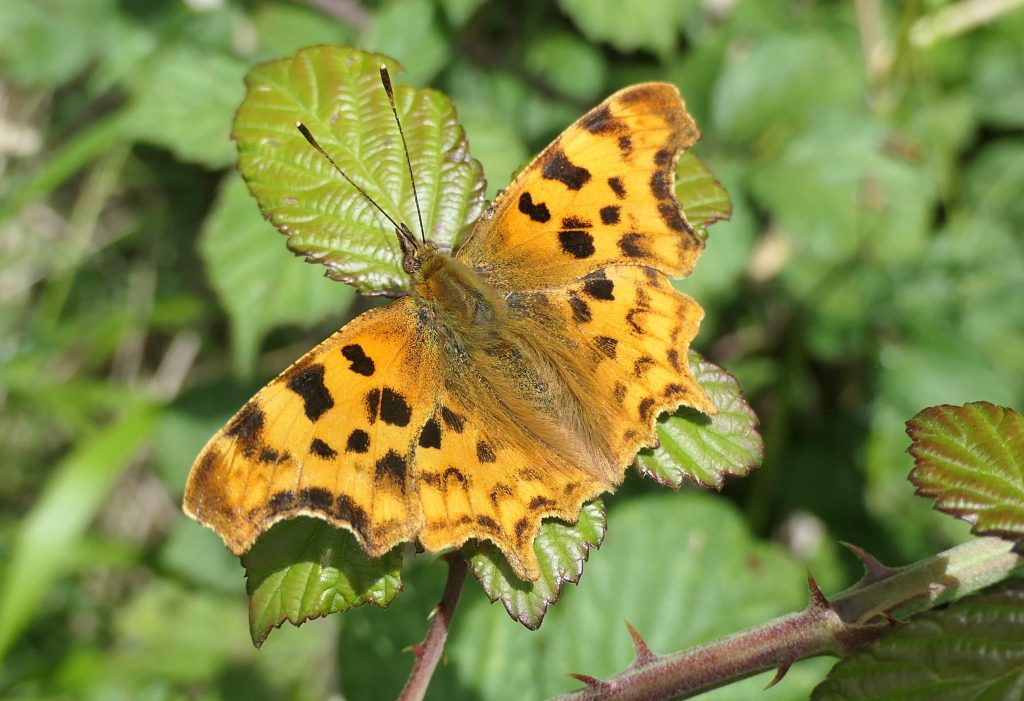
Six of the best: spring butterflies visiting nature-friendly gardens now

Butterfly Conservation Ireland is delighted to see the sunshine return to our lives this April, and our butterflies are making the most of the opportunity to get out to feed, seek mates, lay their eggs, and, in some cases, to migrate. We would love you to get out and about to see and record our butterflies, and to record butterflies in your garden. Anyone can join our garden butterfly monitoring scheme, and you will receive a report on how our garden butterflies are doing early in 2027.

Our recording form is here:  https://butterflyconservation.ie/wp/wp-content/uploads/2017/12/National-Garden-Butterfly-Survey.pdf

Any record of any butterfly or moth can be emailed to us. The way to do this is described here: https://butterflyconservation.ie/wp/records/

The records for 2026, so far, are here: https://butterflyconservation.ie/wp/records/2026-2-2/

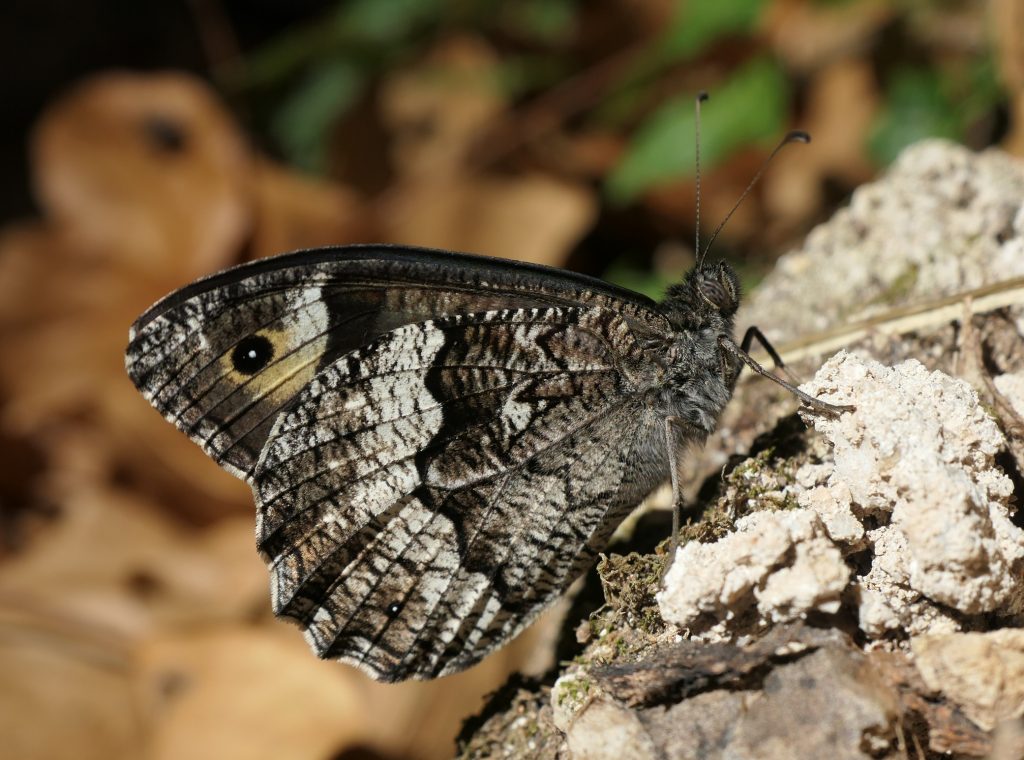
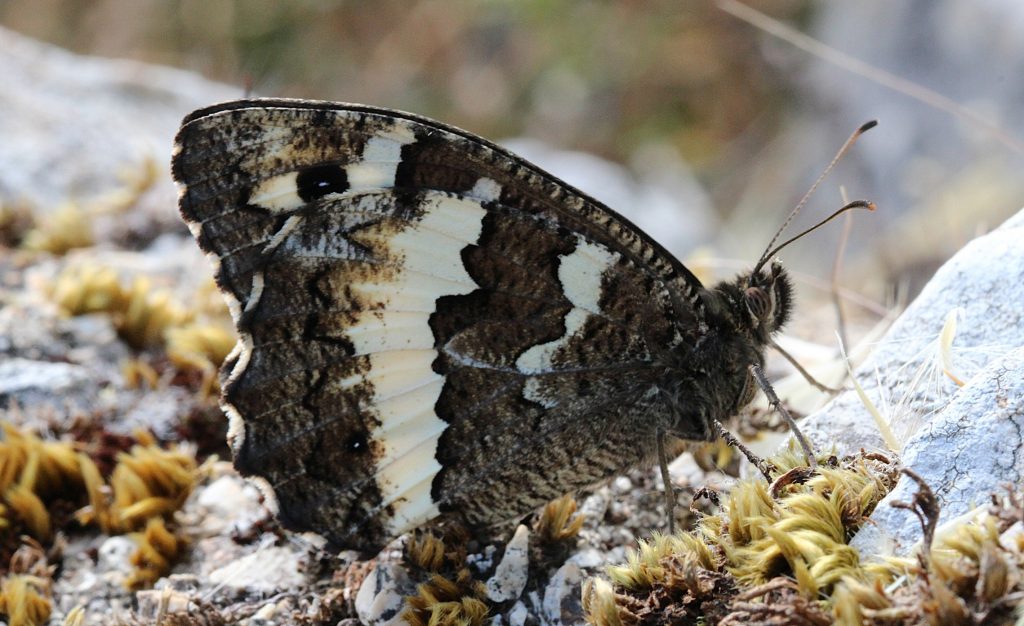
Here are six butterflies visiting gardens now.

All are on the recording form, so get out into the garden and see if they are there. The more butterfly species your garden has, the better it is for nature.

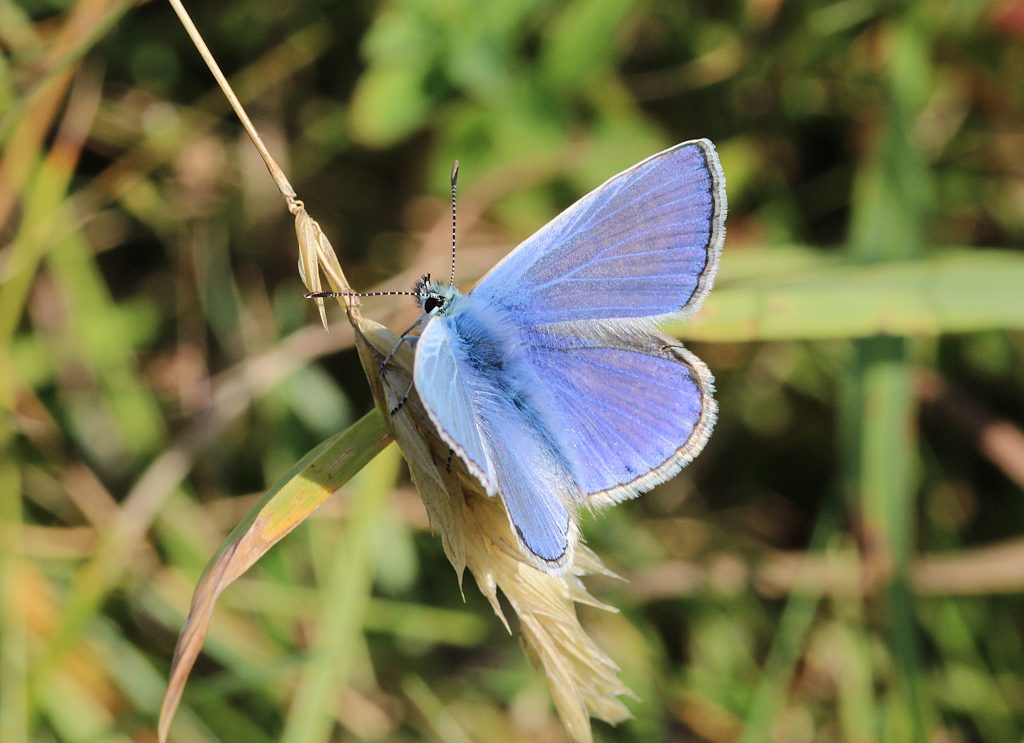
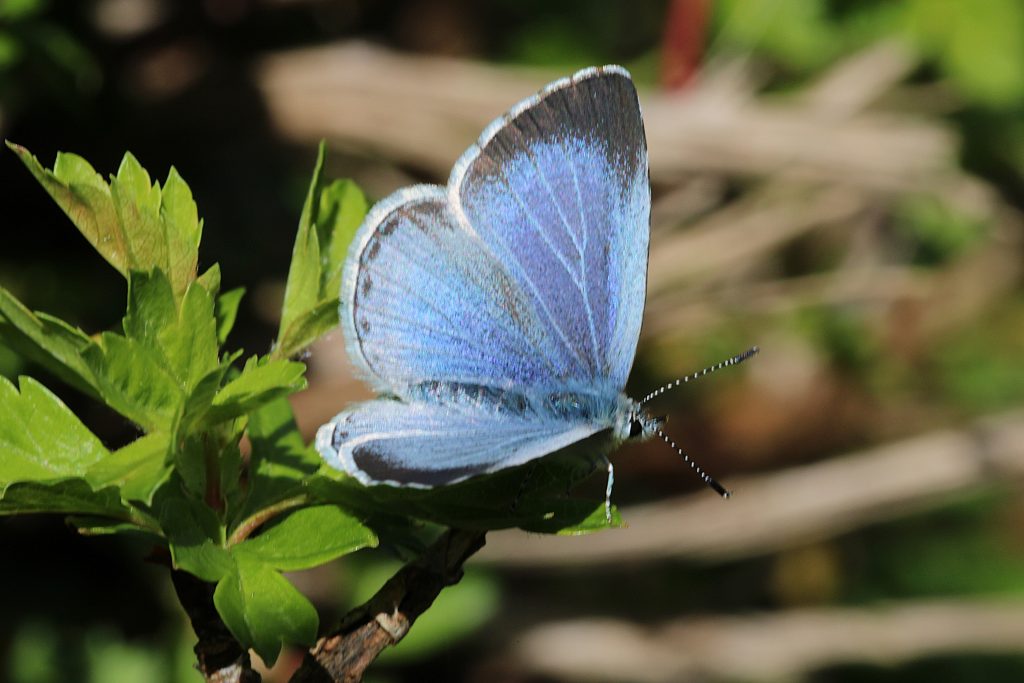
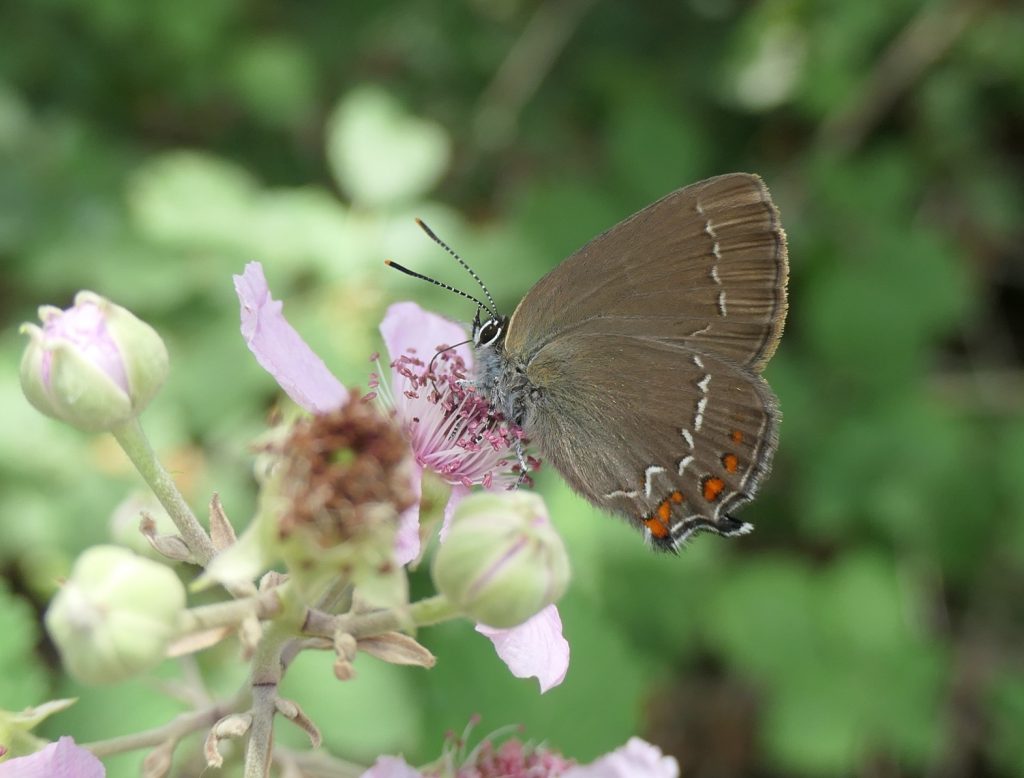
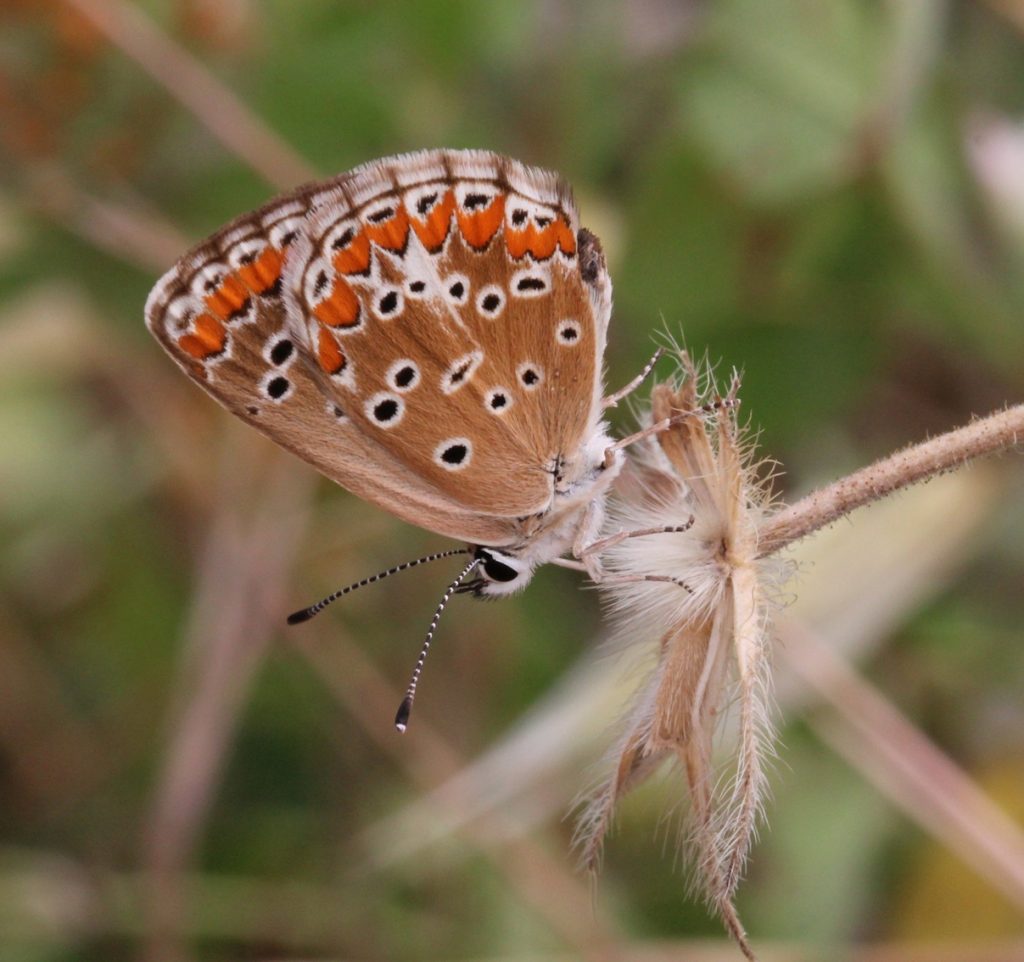
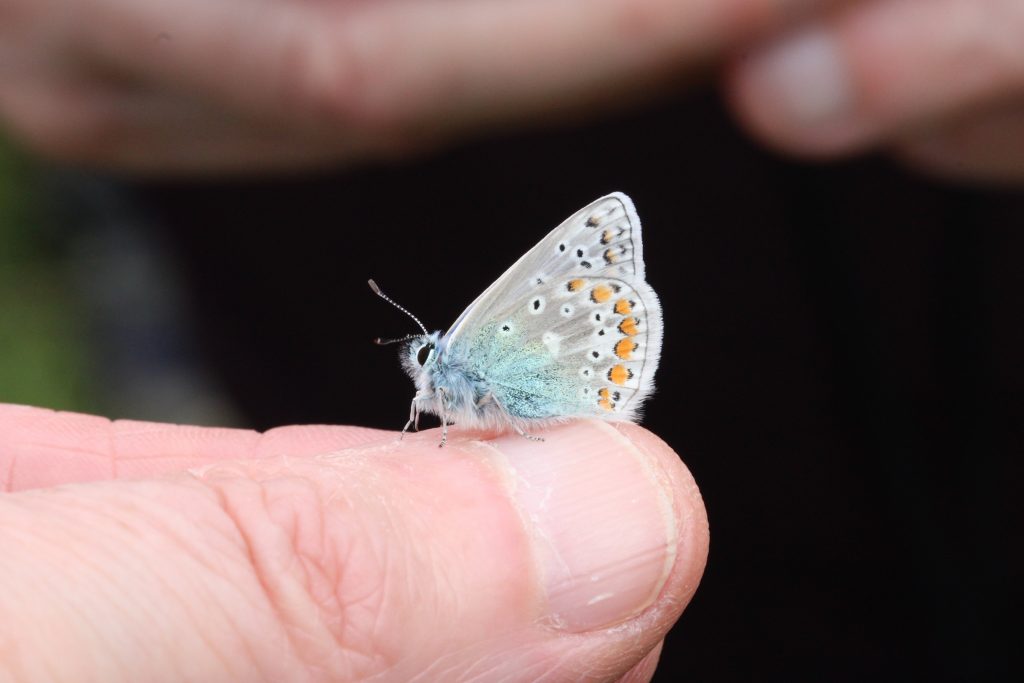
The Holly Blue is the greatest butterfly fan of our gardens. It loves gardens, especially in suburbia,  even more than wild habitats! A sunny, sheltered garden containing shrubs is ideal for this gorgeous, lilac blue marvel. The spring females lay eggs on a range of garden shrubs, including dogwood and firethorn, but their favourite is Holly. It lays eggs very happily on Alder Buckthorn, if you have this much rarer plant. Later in the year, second-generation Holly Blues lay their eggs on flowering Ivy, so don’t cut it back until late winter.
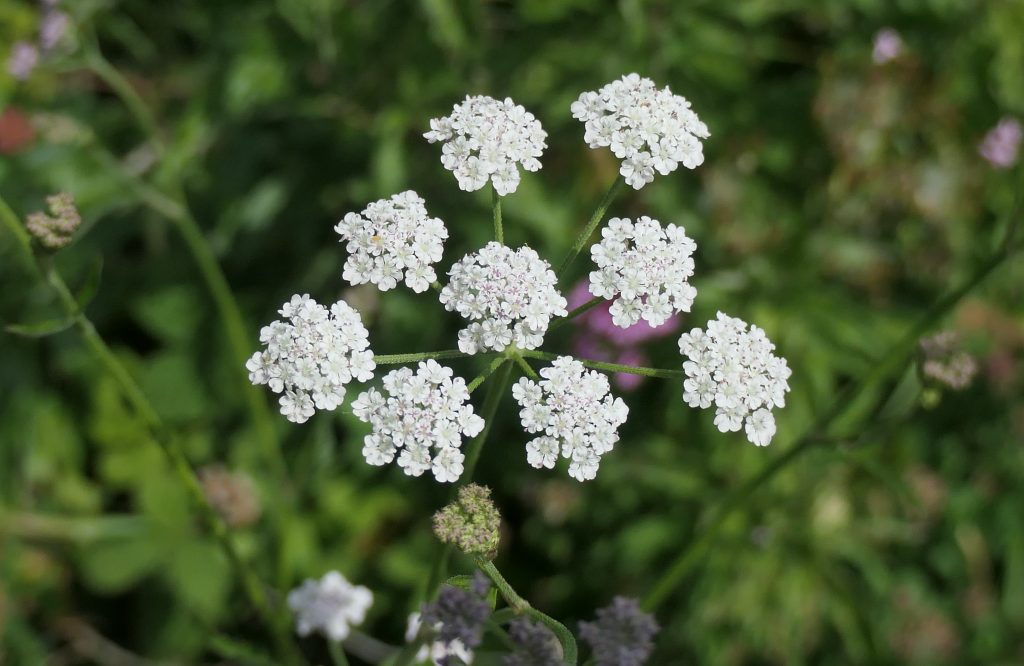
Orange-tip male, underside. This one is resting on Cow Parsley, taking a break from arduous patrolling in sunny weather. Despite appearances, it does not spend the whole day in flight, but takes breaks to feed, rest and bask, at times doing all three at once.
Orange-tip male upperside: this male is basking. The black scaling on the wing bases near the thorax and the black thorax draw heat to his flight muscles, essential in sunny but still quite cool weather. This butterfly likes wilder gardens with taller vegetation and damp grassland growing that lovely spring bloom, Cuckoo-flower.
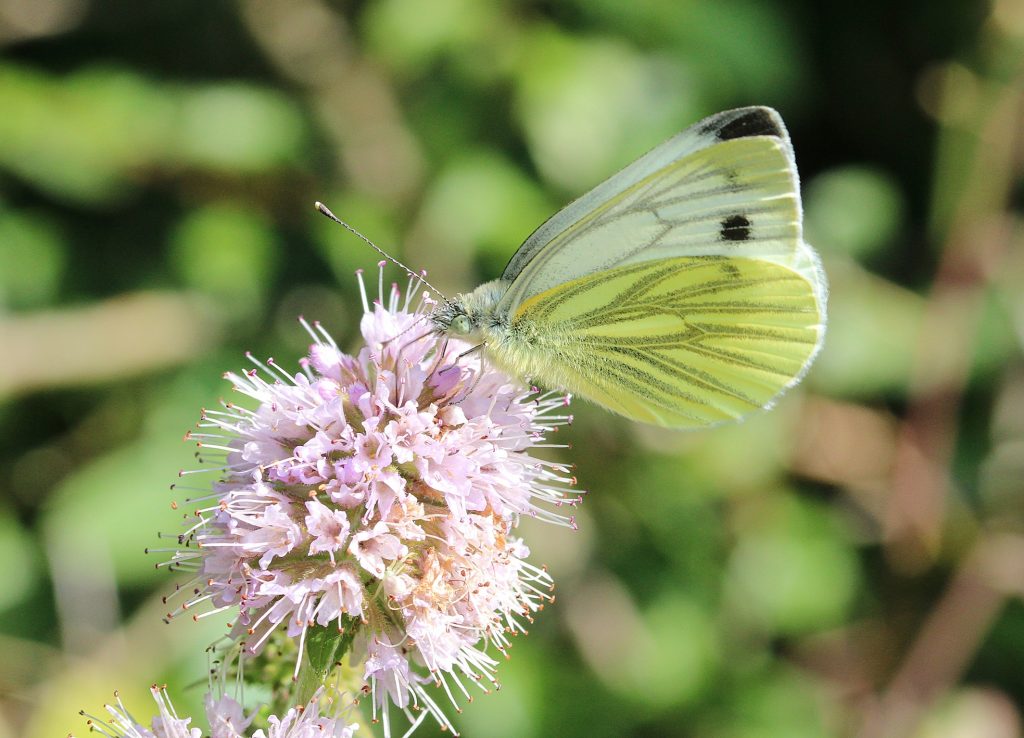
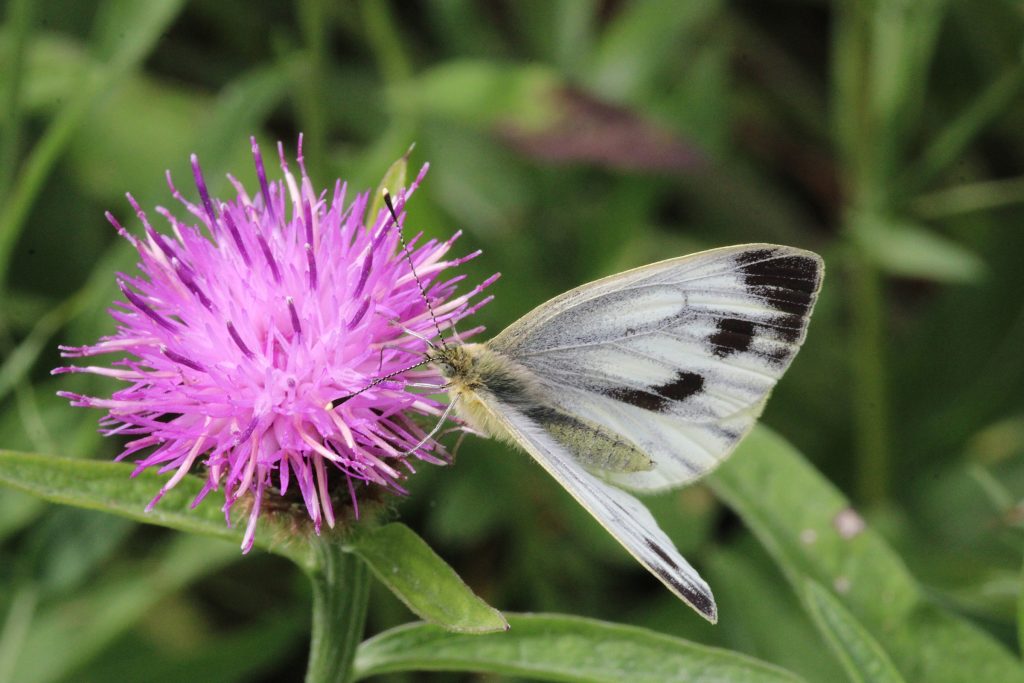
The Green-veined White shares the habitats of the Orange-tip, as well as some of its larval foodplants, but avoids competing with its showy companion by using different parts of the foodplant. Another difference is that the Orange-tip produces only one generation each year. The Green-veined White can have three.
The Speckled Wood is Ireland’s most recorded butterfly, and if your garden has some native hedging with tall wild grasses close to the hedge, you should see this butterfly. You will never see it in numbers, because the highly aggressive territorial males expel any intruding males. Females, of course, are welcome to enter his domain.
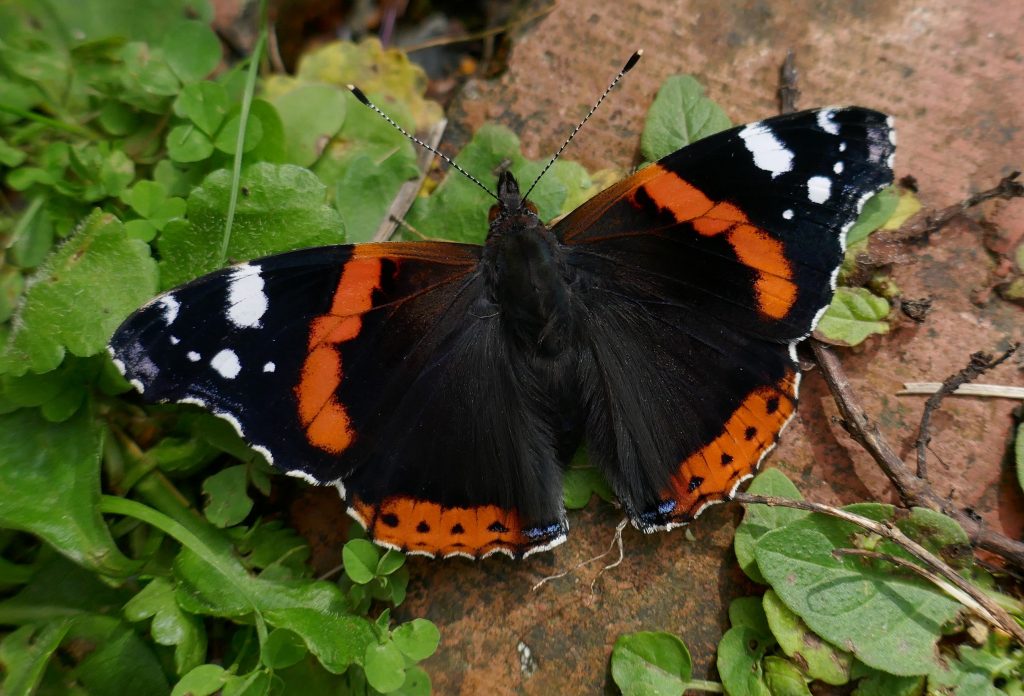
The Red Admiral is a migrant, and we have been getting multiple reports of its arrival in Ireland since early April. This butterfly is a male, alertly scanning a hedged lane for females and rival males. The Red Admiral is already bust laying eggs, so spare that nettle patch!
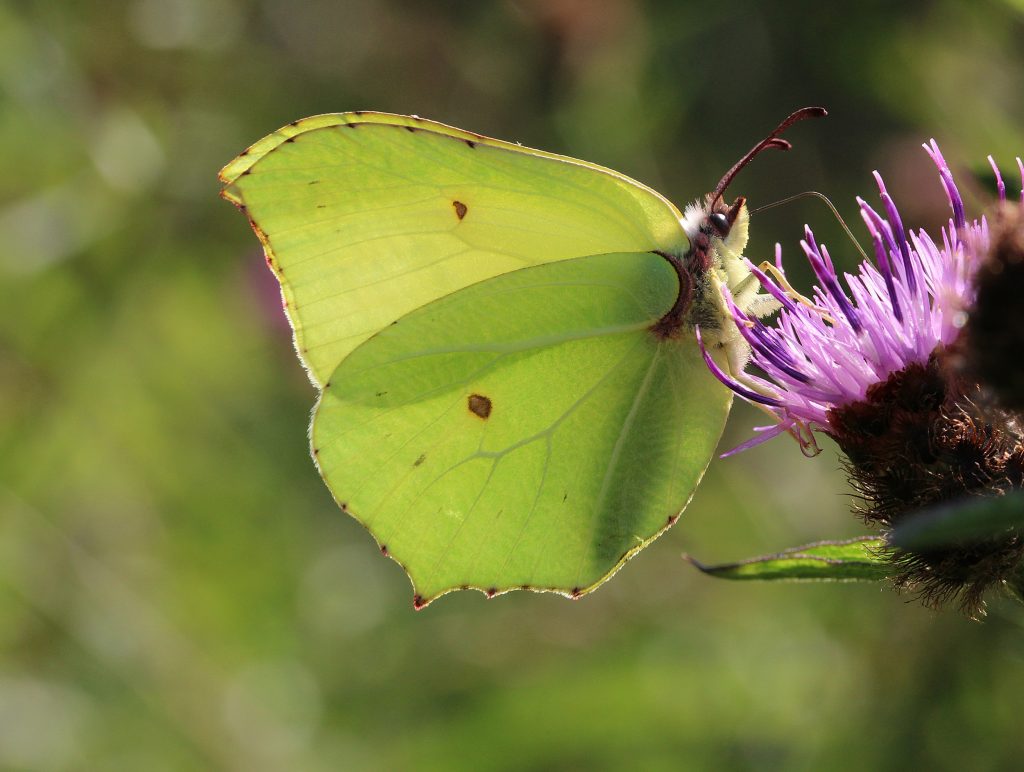
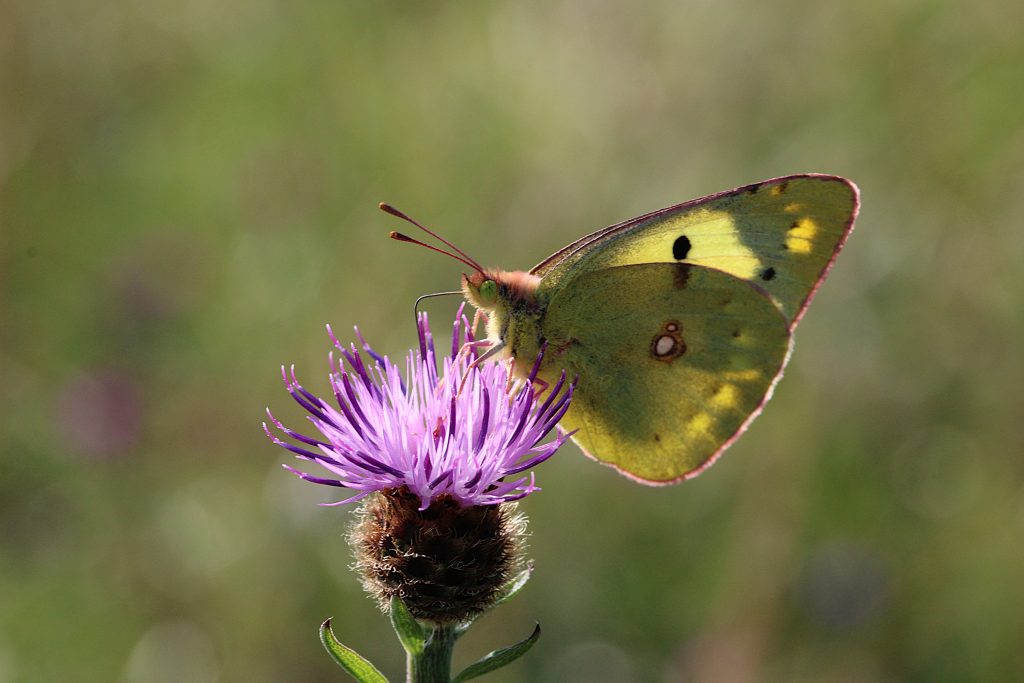
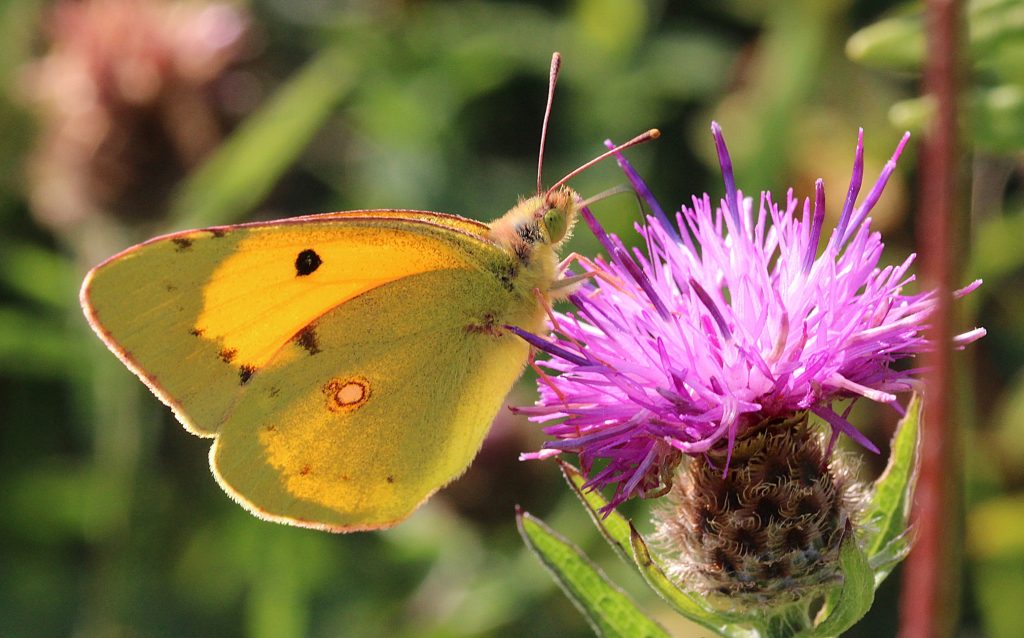
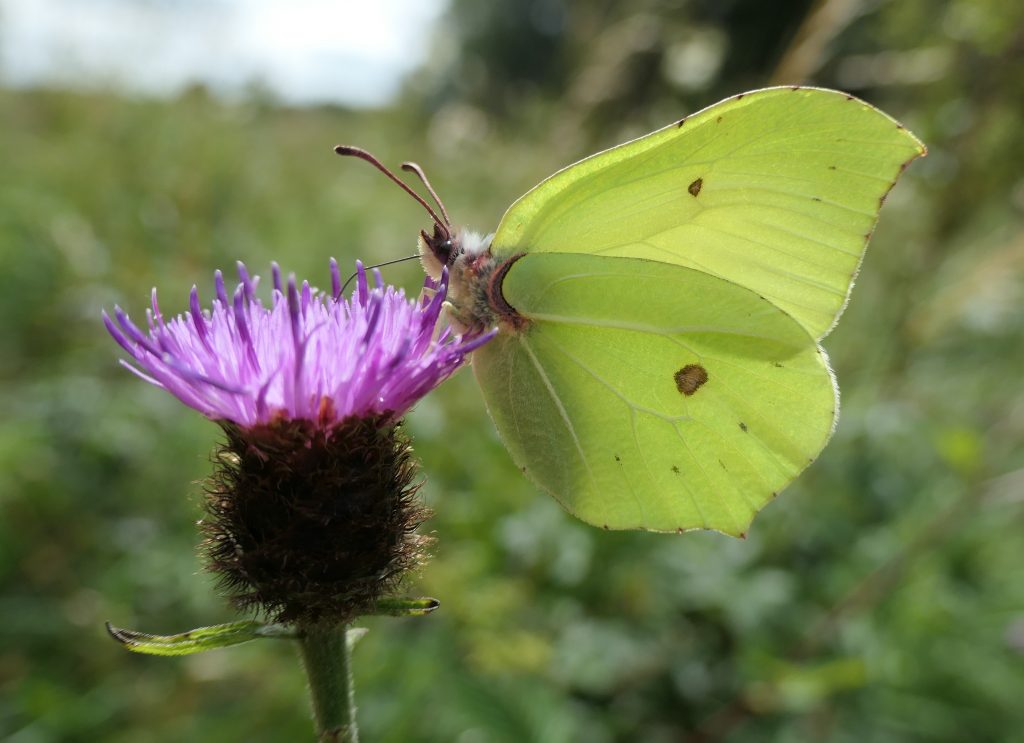
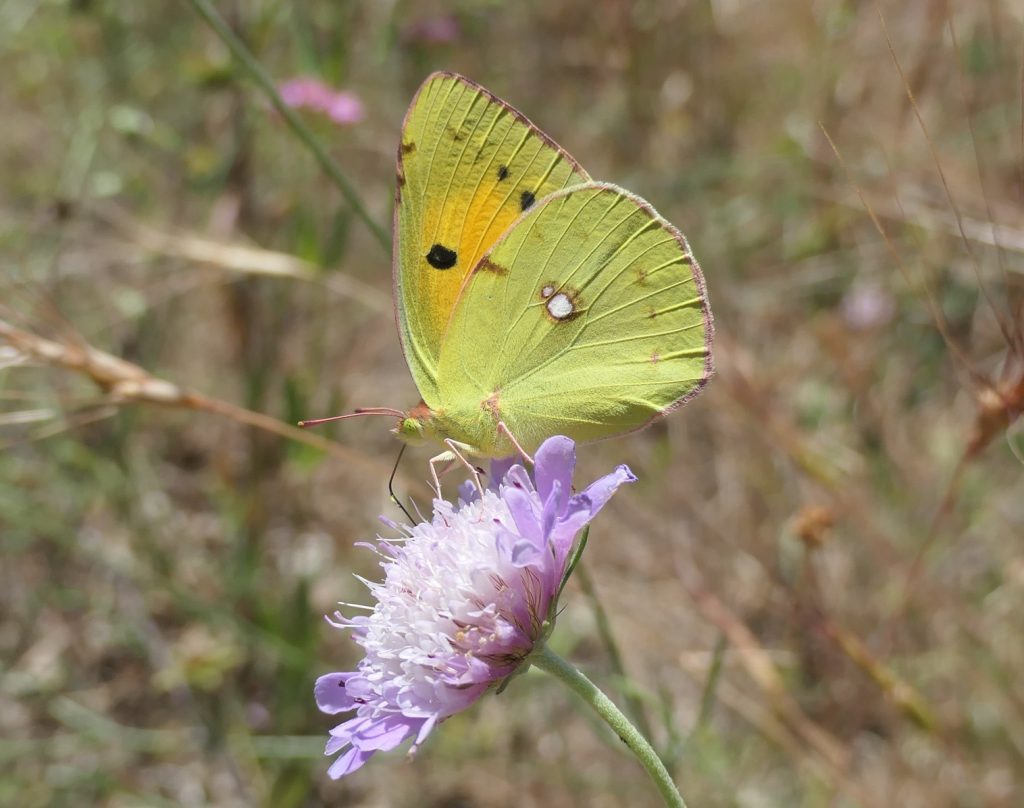
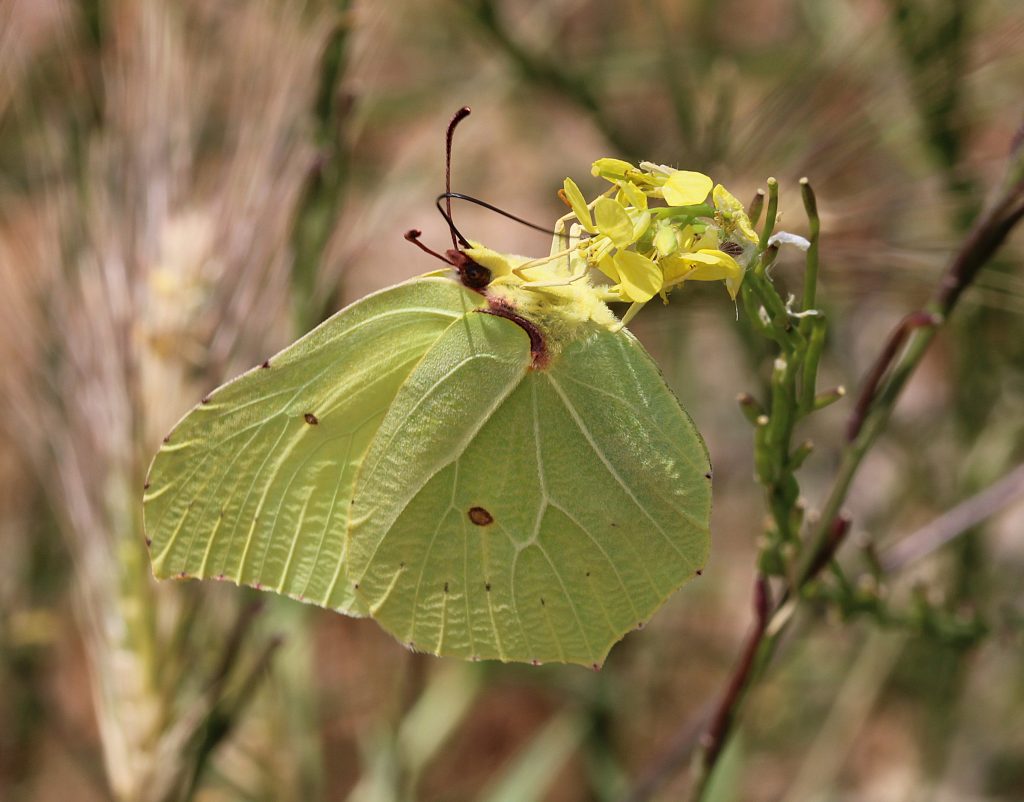
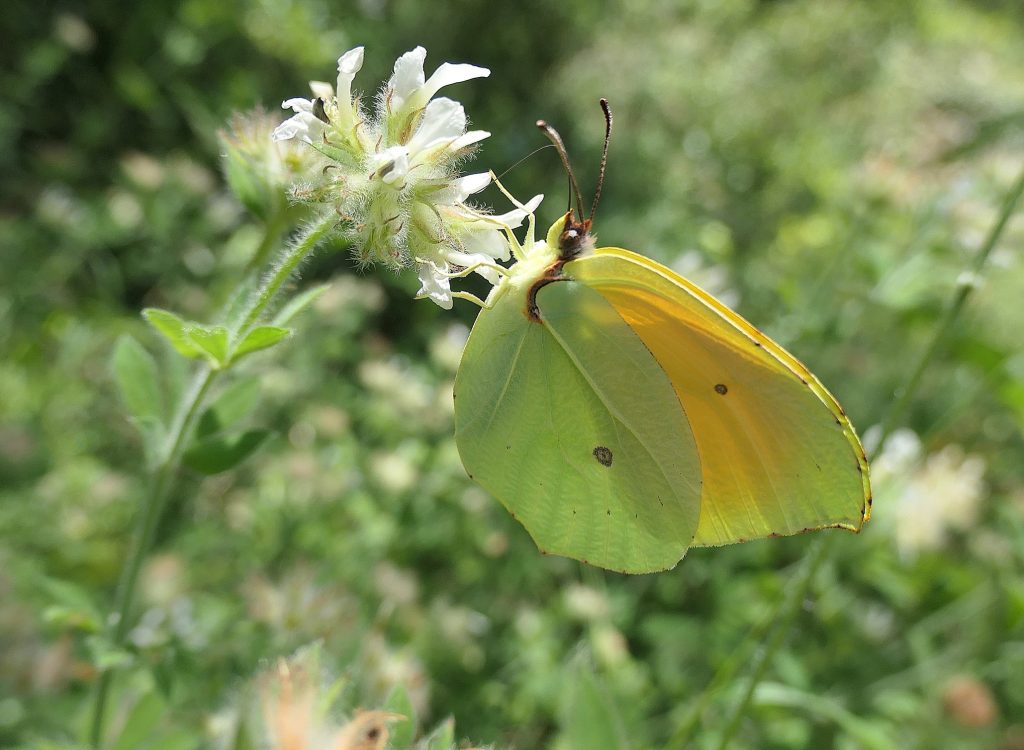
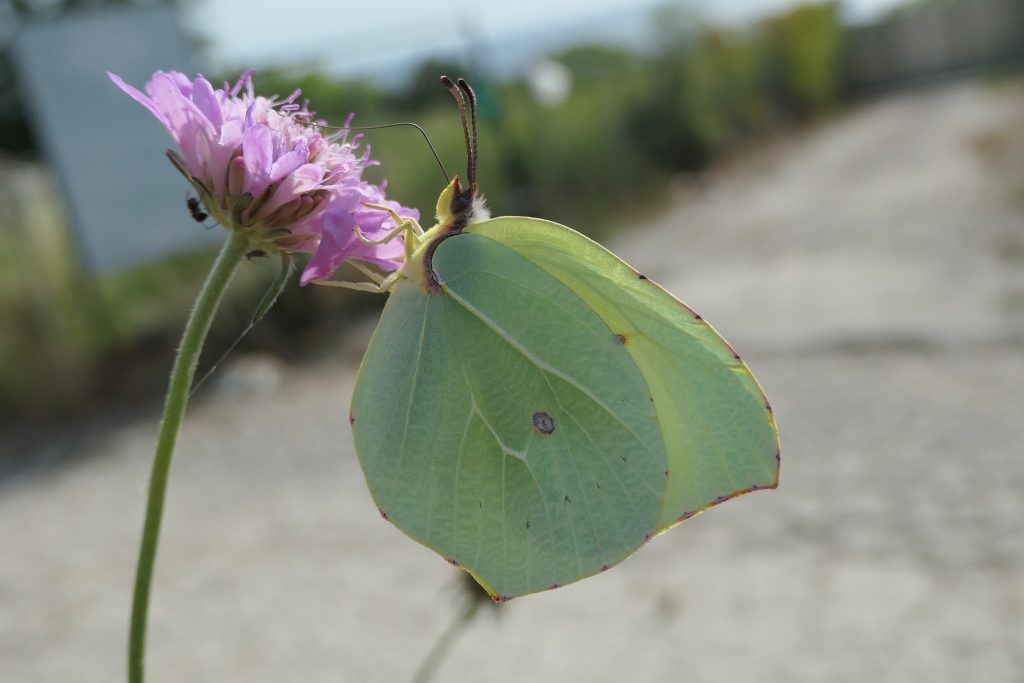
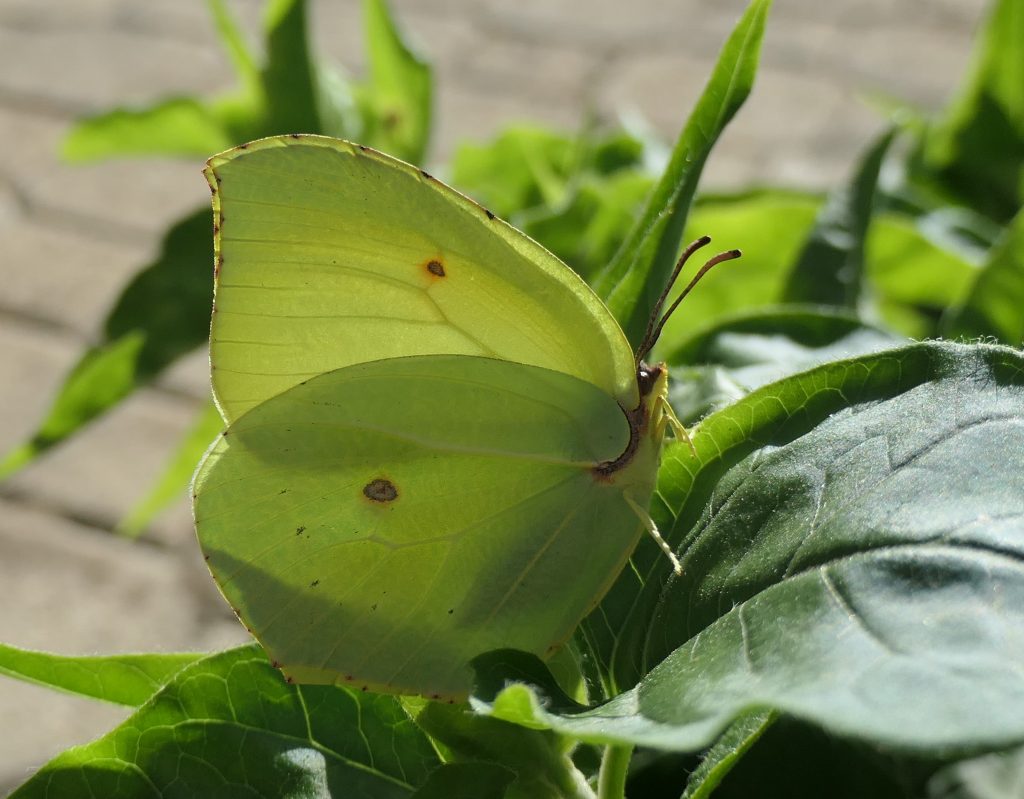
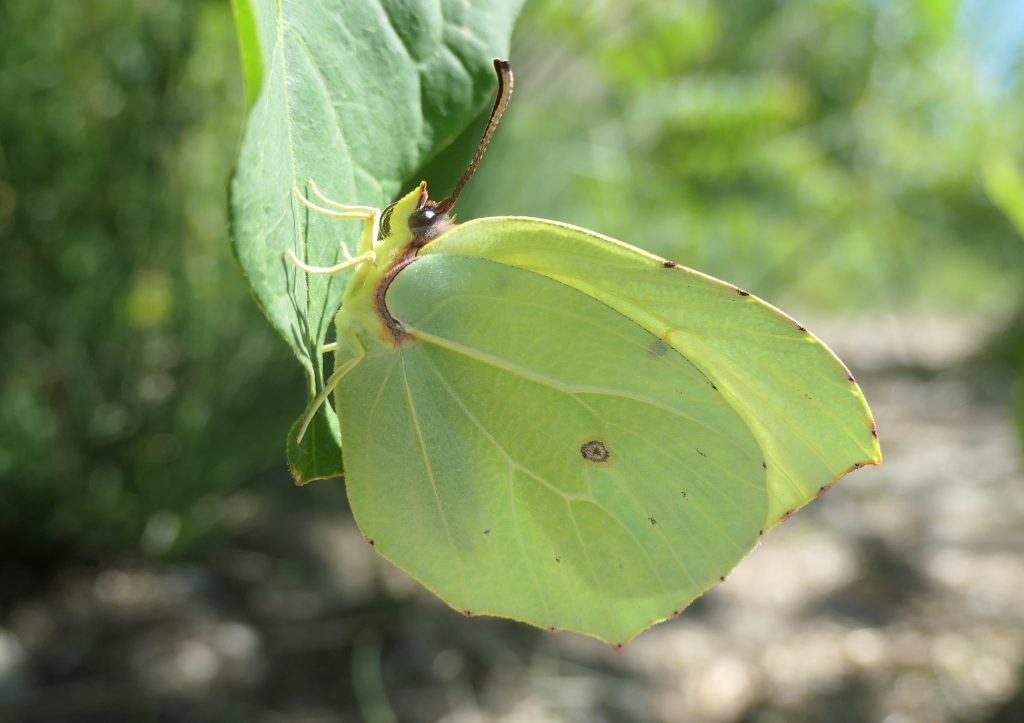
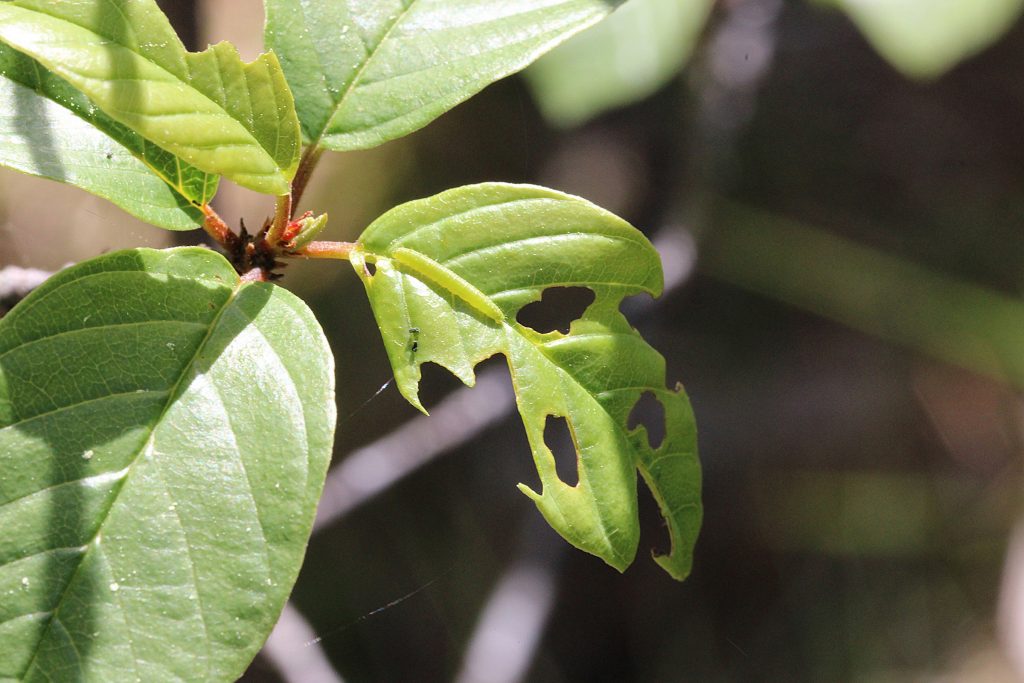
The Brimstone visits gardens in areas where it occurs, but it is not a garden butterfly in Ireland as it is in England. Still, the lovely sulphur-yellow males are unmistakable and worth looking out for. Growing Purging Buckthorn and or Alder Buckthorn in a sunny place in your garden is the best way to encourage spring visits from this cheerful-looking butterfly.

Gardens are important for some butterflies. Butterflies do not ‘end up’ in gardens; they appear in gardens for a purpose. This might be to seek nectar, shelter, mates, breeding plants or hibernation sites.  By catering to these needs, you are making a difference to the conservation of nature in general, not just to butterflies.  For information about how to do this, see https://butterflyconservation.ie/wp/butterflies/gardening-for-butterflies/

All photographs were taken during April 2026.

All photographs copyright J. Harding.


Spring Sights: early April

I recently visited a large Dublin garden centre and checked their stock. I didn’t see a single native flower for sale, but there were a few native flowering trees, such as native oak, imported from the EU.

Native flowers and trees sourced from wild Irish seed are far better for native wildlife than non-indigenous plants, some of which damage habitats.

Here are some spring-flowering natives you should look out for now, and use for your wildlife planting in school grounds, work grounds, community green spaces, gardens, parks and any land you have under your control.

Early Dog-violet Viola reichenbachiana. This likes dry, calcareous conditions such as on hedge banks and drier areas in woods. It feeds the caterpillars of our three woodland fritillary butterflies.
Common Dog-violet Viola riviniana also feeds our woodland fritillaries, is less fussy about soil chemistry and occurs throughout Ireland, in woods, hedges and unfertilised open grassland.
Colts-foot Tussilago farfara likes rough ground on unfertilised soils. It is an early nectar source for early-flying insects.
Hands up those who love the Dandelion Taraxacum agg. Everyone’s hand should be up. Ask this Brimstone butterfly if he likes to see this gorgeous mini sunflower sprayed with nasty chemicals. This is a great nectar source and probably the most important food source for butterflies, bees and flies in March and April.
Wood Anemone Anemone nemorosa is an indicator of ancient woodland. It is at its best in April and May, and its foliage provides lovely ground cover.
Primrose Primula vulgaris is used by early insects for nectar. It loves a shady spot, so it’s a great plant for those places the sun rarely reaches. Prolong flowering by cutting the withered flowers below the receptacle (i.e., the stalk below the swollen flower base).
Cowslip Primula veris likes open grassland. It is less used by insects but still a lovely addition to the spring meadow.
Lesser Celandine Ficaria verna grows in profusion in damp, shaded soils to deliver a golden sheet of much-needed colour after a drab winter. Holly Blue and other butterflies take their nectar.
Marsh Marigold or Kingcup Caltha palustris is another golden delight, but look in marshy places for this beauty. A perfect plant for your pond margin or marsh.
Greater Stitchwort Stellaria holostea is just appearing now. It decorates dry, non-acid soils on hedgebanks with its bridal-white petals.
Common Blackthorn Prunus spinosa flowers appear before the leaves. These blooms are enjoyed by many spring-flying insects.

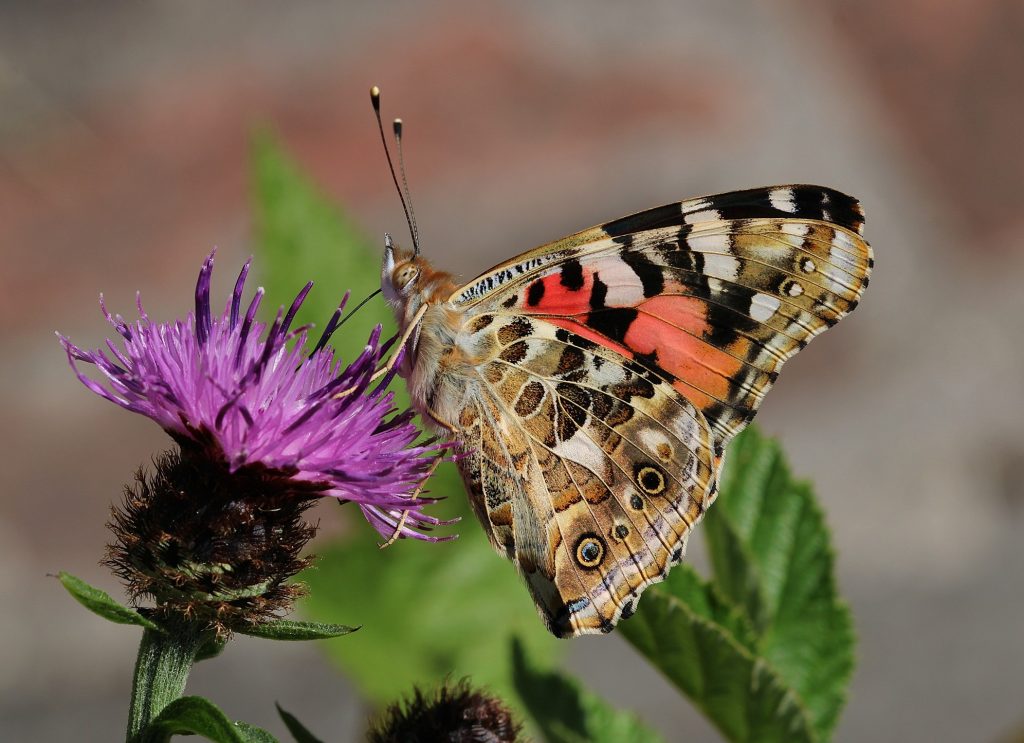
This April, we are seeing our native resident butterflies take to the air to feed and breed. They are being joined by other insects, including two migrants, the Red Admiral and Painted Lady. Here are recently taken photographs of species flying in early April.

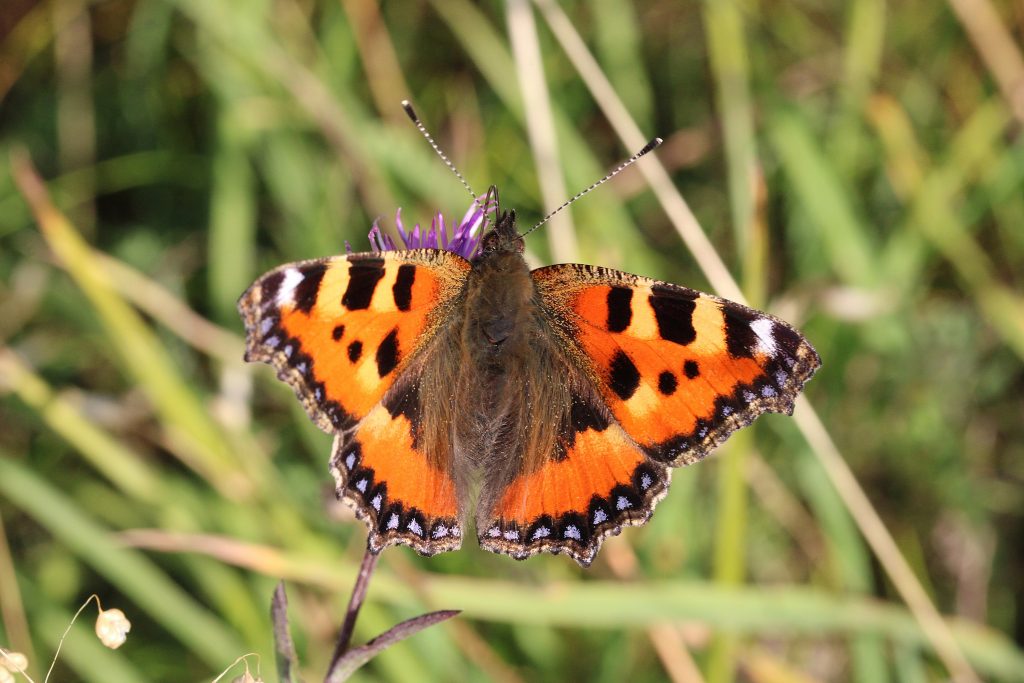
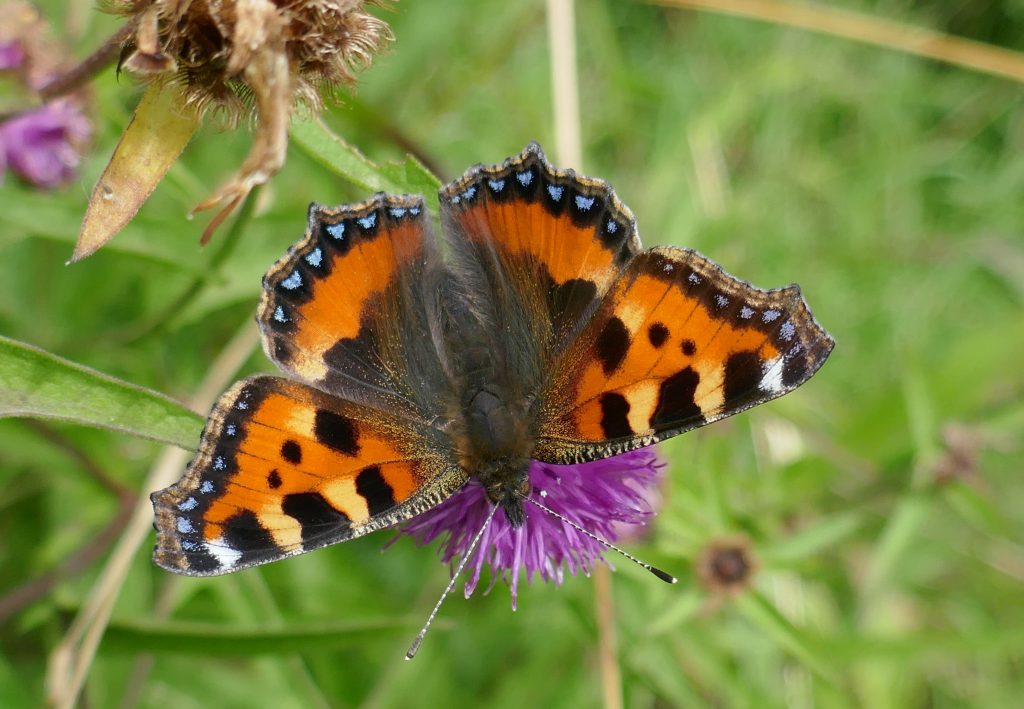
The Small Tortoiseshell will cheer anyone up. This one hibernated in my house, and on release, went straight to an accommodating Dandelion for its first meal of 2026.
This Red Admiral is basking on young nettles. Egg-laying is already underway for this recently arrived migrant.
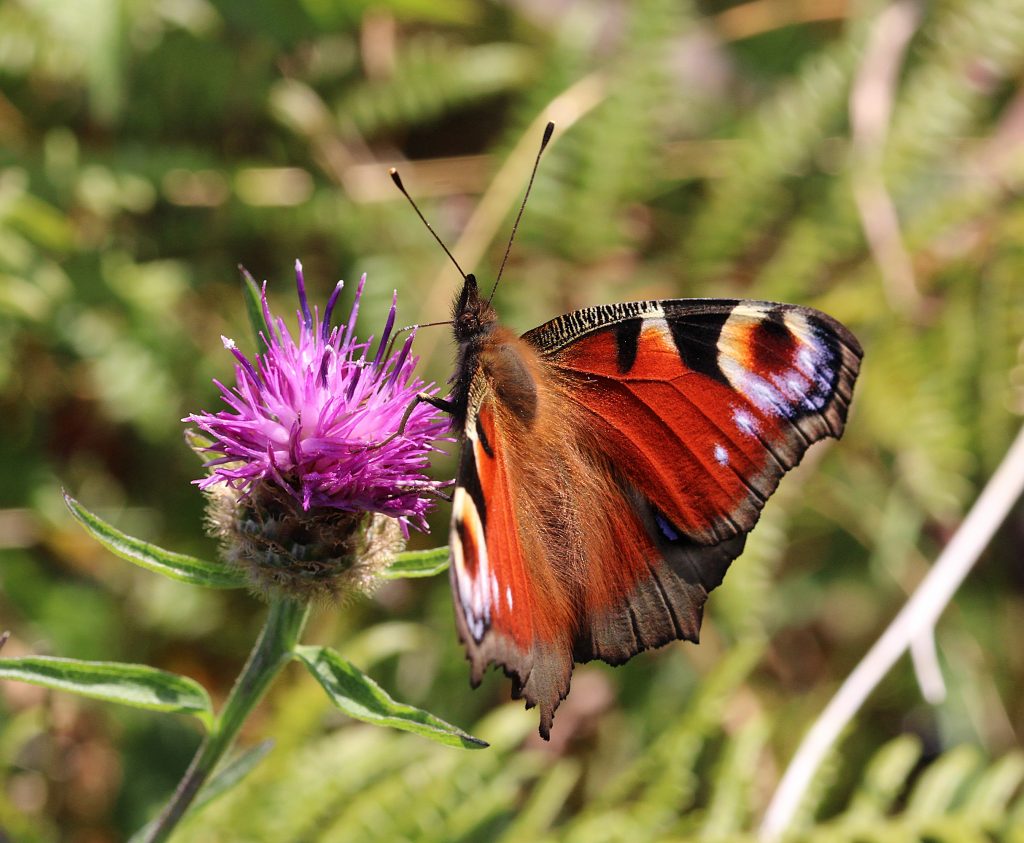
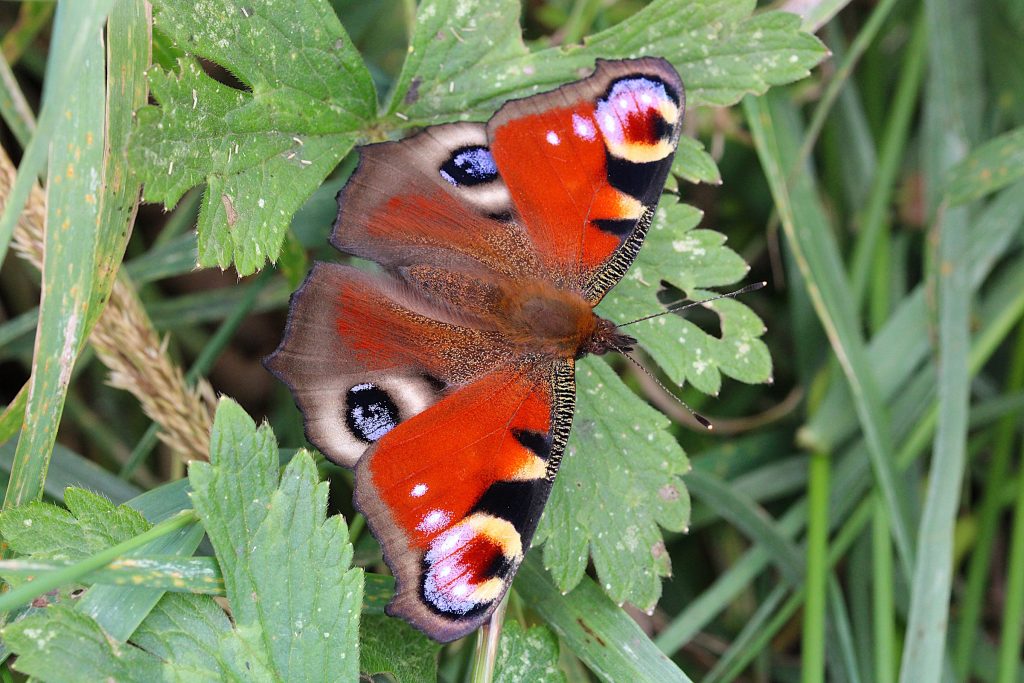
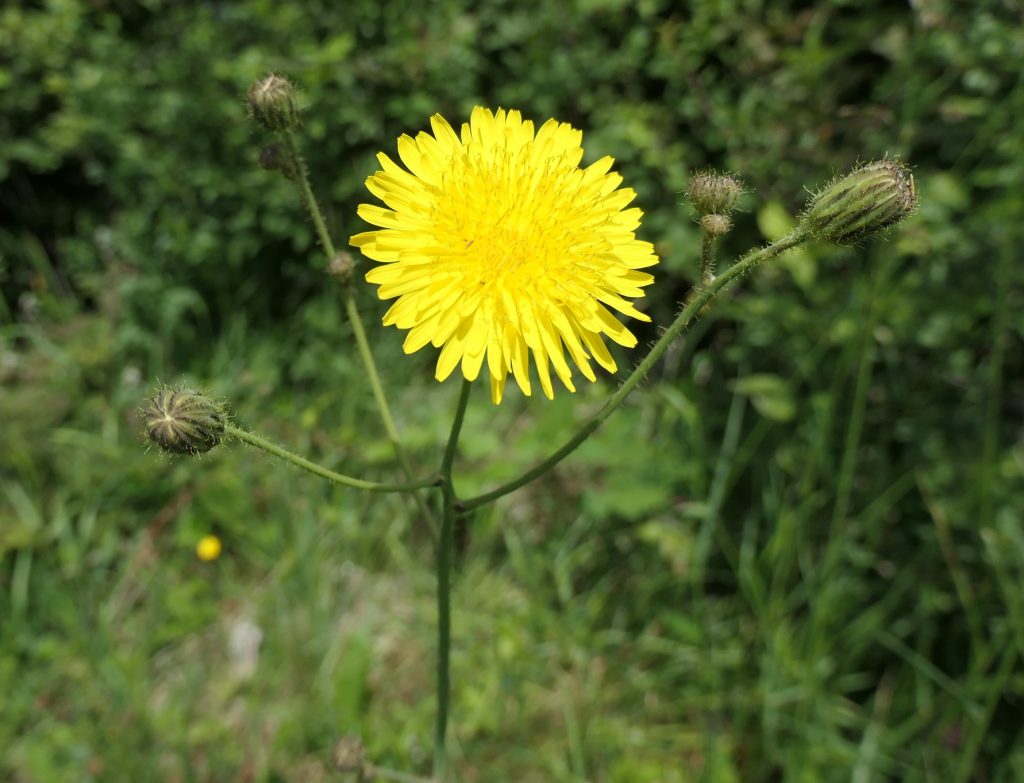
The Peacock is never at its summer best in spring, but still has the beauty that draws notice. Please take note of the flower it feeds on!
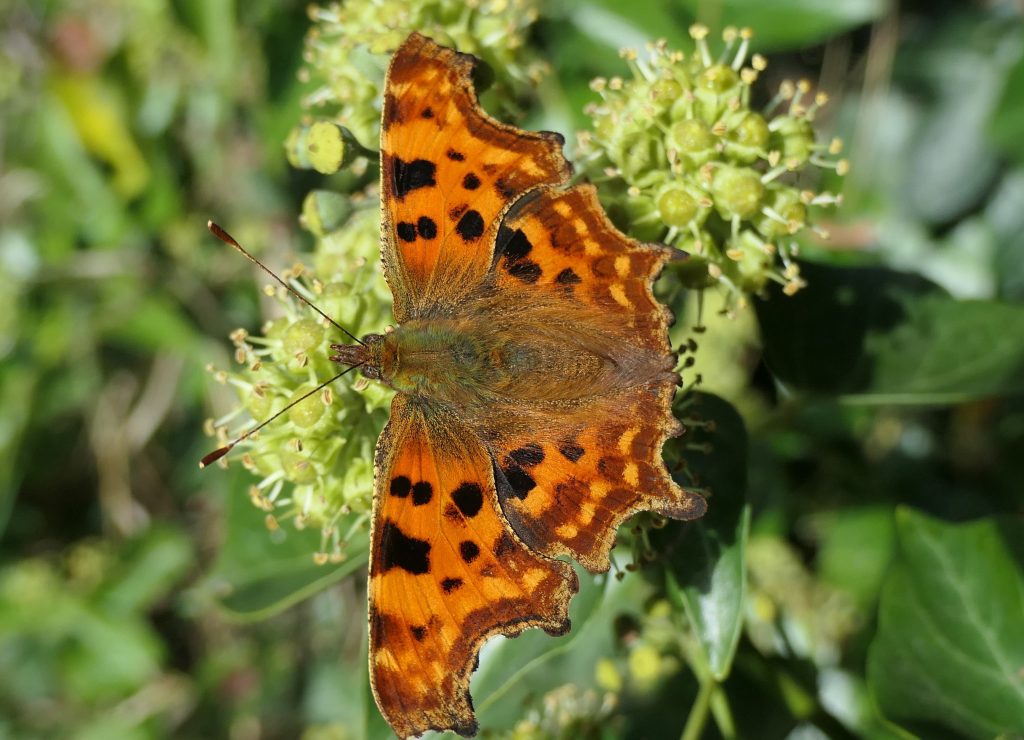
A male Comma basking on Cow Parsley. He has established his territory along a wooded lane.
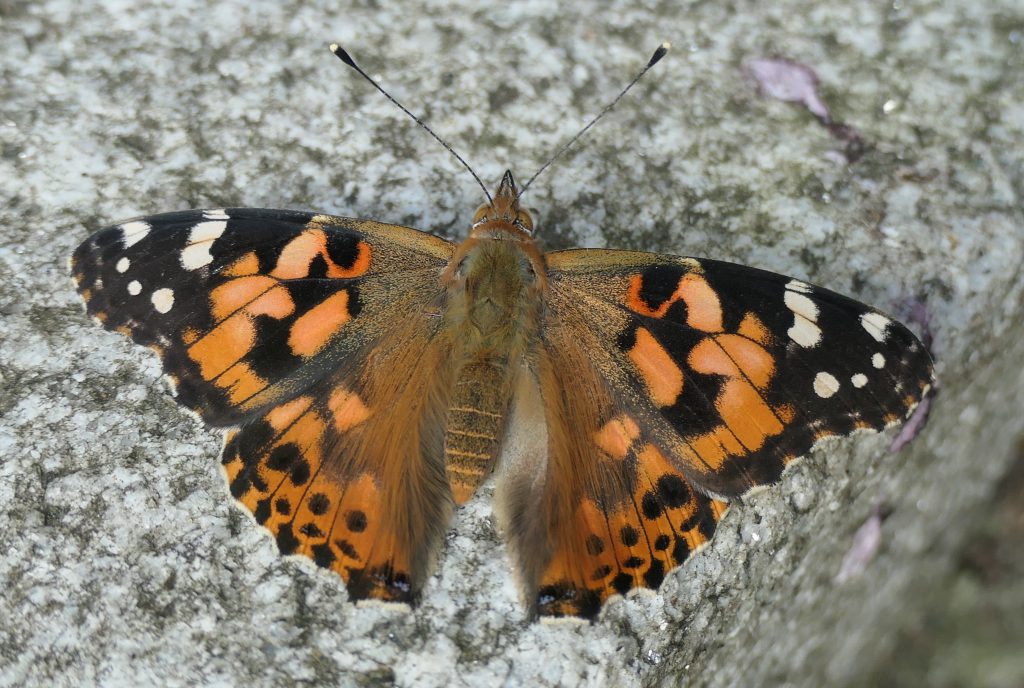
Ashley Dowling sent in this excellent photograph of a Painted Lady. We don’t often receive a large influx of this migrant early in April, but this year we are receiving reports from several counties, especially Kilkenny, Kildare and Dublin. Keep a sharp eye out for it and send us your records. See https://butterflyconservation.ie/wp/records/
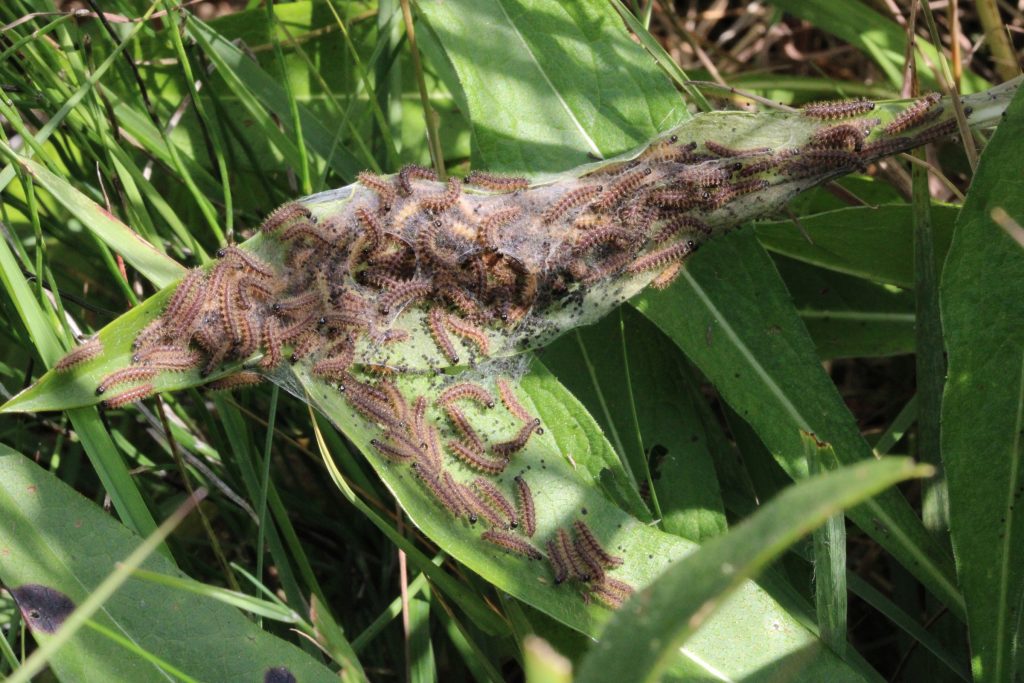
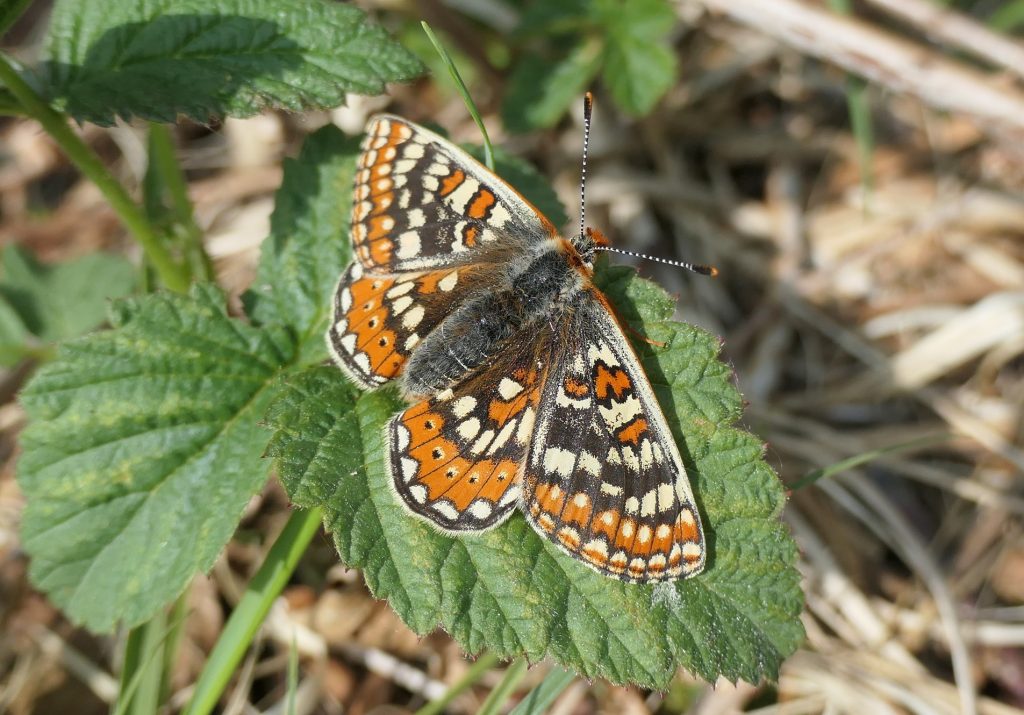
Let’s not forget butterflies still in the larval stage. These Marsh Fritillary caterpillars have reached their fifth instar. A further moult will occur before the final larval growth stage, which precedes the pupal stage.
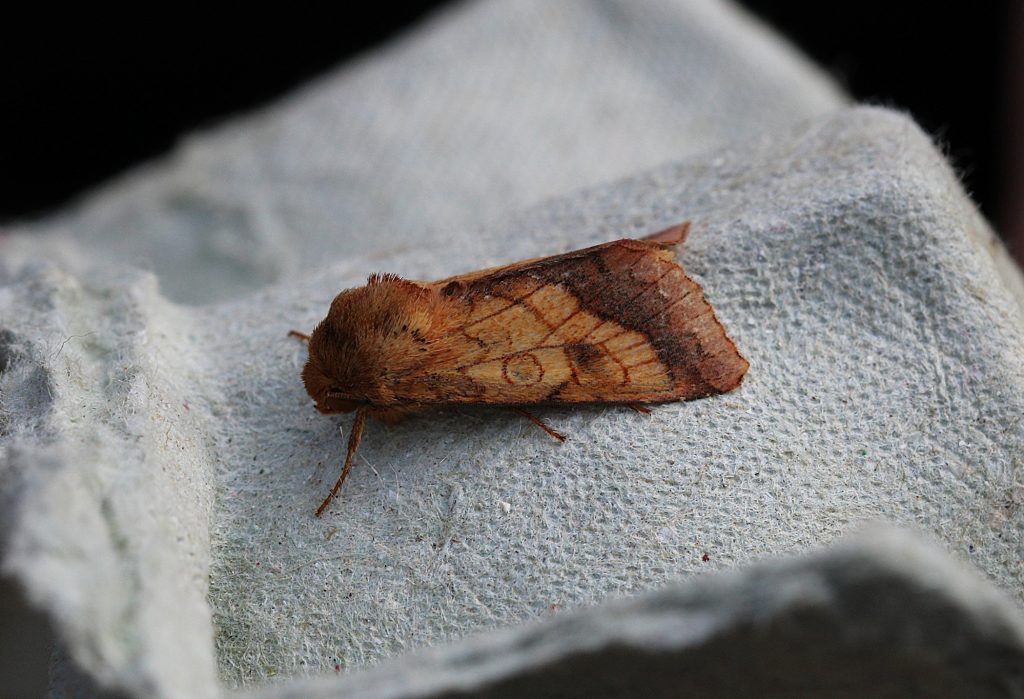
The Hebrew Character is our most abundant spring flying moth. It is strictly nocturnal, and feeds on willow flowers.
Drone flies are extremely common in early spring, having overwintered as adult flies. Sheltered, sunlit places will have plenty.
The Seven-spot Ladybird is another characteristic sight in our spring. Colourful and friendly-looking, this beetle is the gardener’s friend, devouring aphids and greenflies in its larval and adult states.
While much less conspicuous, the Ten-spot Ladybird can also be found in gardens, having woken after a long winter.

Spraying land with chemicals means most of the plants and animals featured above will be killed. There is a dreadful habit of spraying vegetation in spring. Don’t do it. It is anti-social, unhealthy and destructive. The alternative is to enjoy nature. Cut and mow if you must control vegetation.

All images copyright J. Harding except Painted Lady copyright Ashley Dowling.


Signs of Spring

Spring

Nothing is so beautiful as Spring –
When weeds, in wheels, shoot long and lovely and lush;
Thrush’s eggs look little low heavens, and thrush
Through the echoing timber does so rinse and wring
The ear, it strikes like lightnings to hear him sing;
The glassy peartree leaves and blooms, they brush
The descending blue; that blue is all in a rush
With richness; the racing lambs too have fair their fling.

What is all this juice and all this joy?
A strain of the earth’s sweet being in the beginning
In Eden garden. – Have, get, before it cloy,
Before it cloud, Christ, lord, and sour with sinning,
Innocent mind and Mayday in girl and boy,
Most, O maid’s child, thy choice and worthy the winning.

Gerard Manley Hopkins, North Wales, May 1877

It is now March, not May, so the explosion of vitality and sound is yet to come. For Hopkins, spring is a time of happy innocence, a time to grab its joy, “Have, get, before it cloy,” before it sours “with sinning.”

Our disrespect for our world is expressed not only through direct action but also through ignoring the beauty around us. If we are unaware of nature, its destruction can occur without anyone knowing enough to cry stop. We are running out of Edens to love and enjoy.

We seem to want to squeeze money from our Edens. Be it wind and solar energy installations on bogs to fuel more data centres (not to bring down energy bills), motorways to knock a few minutes off a journey (the N18 through orchid-rich grassland in County Clare), wetlands drained to bring more land into intensive, nutrient-boosted agriculture, we always want to find a ‘use’ for nature. We continue to degrade our planet:

Generations have trod, have trod, have trod;
And all is seared with trade; bleared, smeared with toil;
And wears man’s smudge and shares man’s smell: the soil
Is bare now, nor can foot feel, being shod.

(God’s Grandeur, Gerard Manley Hopkins, 1877, published 1918)

Yet, in the following lines, Hopkins moves from this bleak picture of man’s greedy exploitation to celebrating nature’s resilience:

And for all this, nature is never spent;
There lives the dearest freshness deep down things;
And though the last lights off the black West went
Oh, morning, at the brown brink eastward, springs —
Because the Holy Ghost over the bent
World broods with warm breast and with ah! bright wings.

Indeed, it does seem that spring restores nature. What was bare becomes clothed in foliage, glassily emerald in crystal spring light. Animals detect increasing day length and temperature, calibrating their breeding season accordingly.
Hopkins wrote his poetry before the ferocious onslaught of intensive agriculture, before an excavator or a single spread of slurry or a dose of artificial fertiliser could destroy ancient habitats in an afternoon. I wonder if Hopkins would write God’s Grandeur if he were alive today. Could his powerful Christian faith still inspire his view that nature can recover?

Nevertheless, some poets see nature’s beauty in the ugliest of settings. It is a gift to see beauty in the midst of unedifying situations.  In Elizabeth Bishop’s double sonnet, The Prodigal, the sickening conditions of a putrid pigsty are juxtaposed with images of beauty and hope, offering the prodigal worker courage:

But sometimes mornings after drinking bouts
(he hid the pints behind a two-by-four)
The sunrise glazed the barnyard mud with red;
The burning puddles seem to reassure.
And then he thought he almost might endure
His exile yet another year or more.

Nature is deeply ingrained in our culture. Elizabeth Bishop references the biblical parable of the prodigal son, who wasted his father’s resources on depraved living before toiling in a pigsty, which wrought a sobering influence, causing him to “finally make up his mind to go home.”

Home for the first humans in the Book of Genesis was a garden, in effect, the natural world before Adam and Eve began to exploit its riches for selfish reasons and were exiled by God. Significantly, their punishment was to become farmers, feverishly tilling the soil to survive, rather than live a full life in harmony with nature in Eden.

Harmonious living with nature, once lost, was unrecovered. The prodigal son wanted to escape the tough life of intensive farming, so he swallowed his pride and returned to his father, offering himself as a servant.
What’s the point of this?

In neither example did the protagonists understand what it was to live in harmony with nature. There had to be a better, more exciting future out there. Casting aside their identities to live as they arrogantly pleased, life became miserable, and they lost what was good and true in their lives.
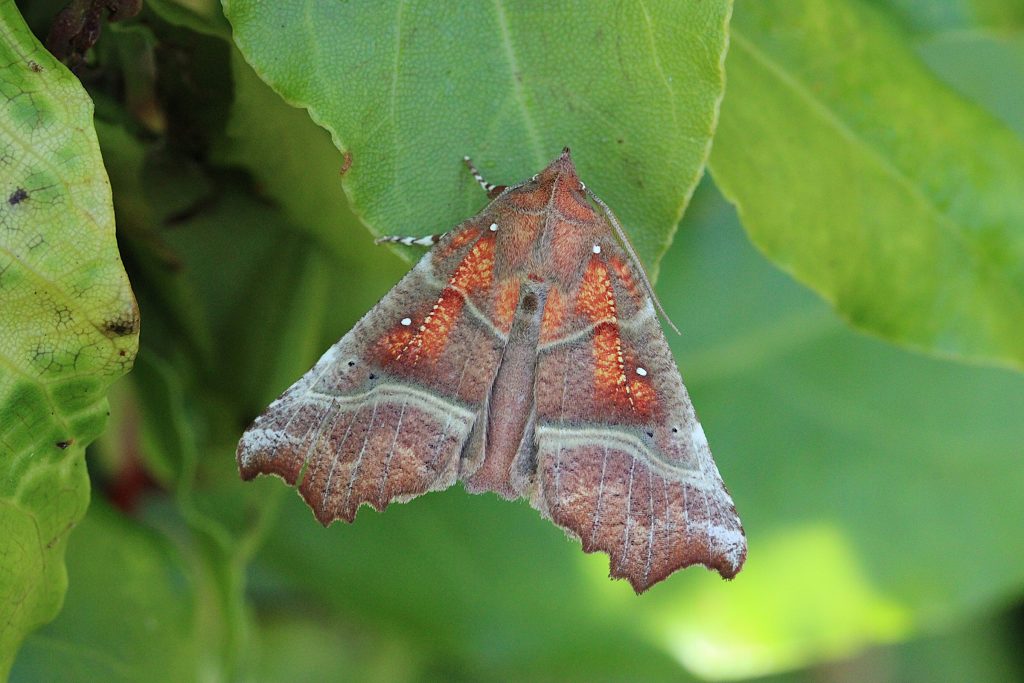
Today, we have so badly damaged our countryside that only small pockets of Eden remain. We visit our Edens to see our favourite butterfly, bee, and flower, but we have to leave them as we return to the banality of the general countryside. Our towns could be much better for nature too, but we have to spray, tidy, trim and decorate with non-native garden centre gaudies that offer nothing to wildlife. These often contain no pollen, nectar or other food for those creatures that would share our built environments if we let them.

I believe in hope. And every spring I see it.  The butterfly’s life cycle is a reminder of nature’s ability to deliver beauty. An ugly, spiny wriggling worm will, if it endures, become a glowing butterfly. A gelatinous, slimy mass of spawn will yield a joyous, leaping frog.

All they need to fulfil their potential is our humility. We are not masters of nature. We need to live with nature, not exploit nature.

Close-up of a fourth instar Marsh Fritillary caterpillar.  Photo 7 March 2026
These Marsh Fritillary larvae have fed and are basking communally to raise their body temperatures to activate the enzymes needed for food digestion. Photo 7 March 2026
Marsh Fritillary caterpillars feeding on Devil’s-bit Scabious leaves. The caterpillars are stripping the upper layer of the leaf, the epidermis. In their next growth stage (fifth instar), they can eat entire leaf sections.  Photo 7 March 2026
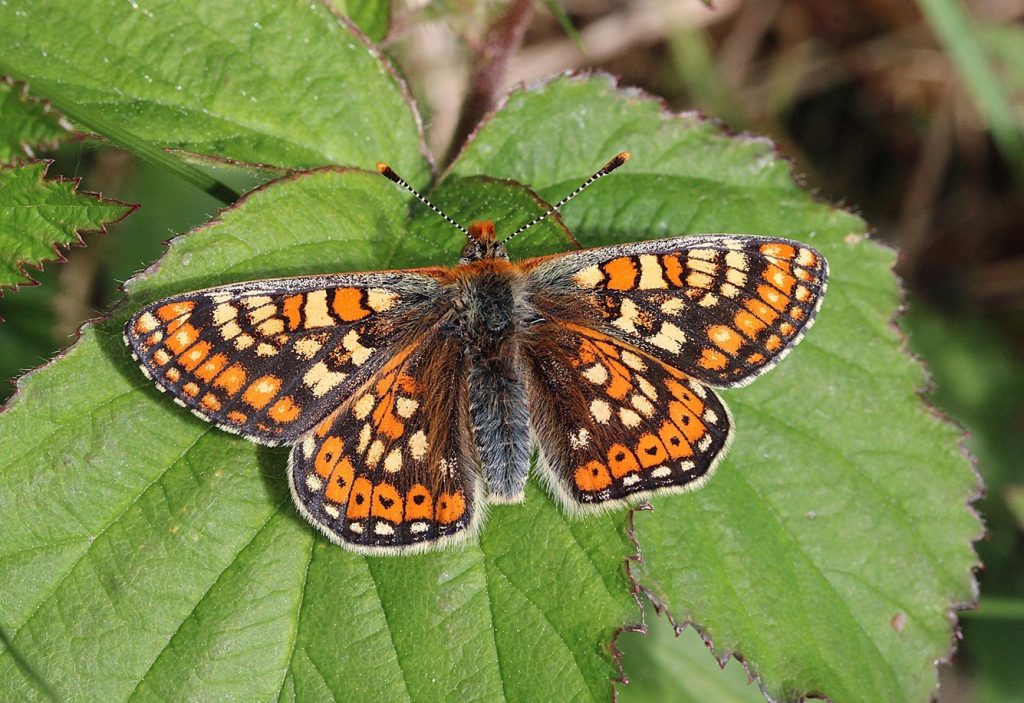
Marsh Fritillary adult butterfly. Photo 31 May 2024
Frog spawn is one of spring’s most exciting signs.
The Brimstone butterfly often emerges from hibernation in March. The male’s lovely daffodil-yellow brings a splash of colour to a landscape still draped in its winter hues. Photo 7 March 2026


Lullybeg Management Day Report 28 February 2026

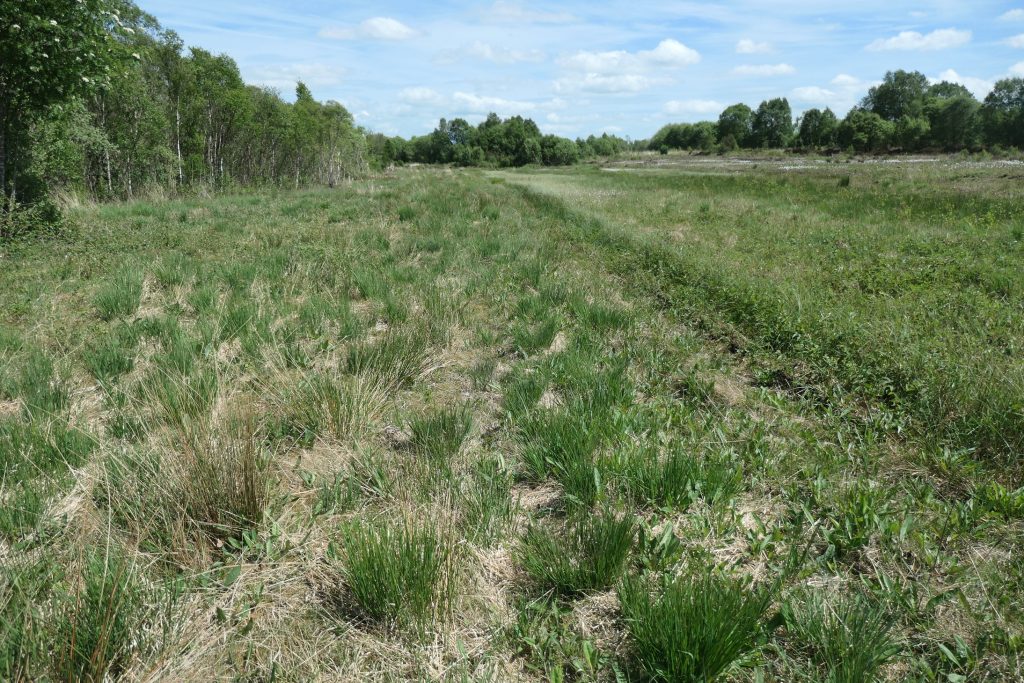
Conditions allowed us to get out in the field with dry and bright weather until 3 pm when it clouded over, and rain threatened. Our objective was to clear the scrub from the area adjoining the open corridor linking Lullybeg and Lullymore.

The scrub was not obstructing or narrowing the corridor, but it was shading the area, limiting its use by butterflies, especially the Marsh Fritillary and Small Heath.

The area is used by the Marsh Fritillary, but only where direct sunlight reaches the grassland early in spring. This area has produced some interesting aberrations, with one extreme example shown here.

Marsh Fritillary aberration, Lullybeg, County Kildare. Photo J. Harding. Image published by UK Butterflies at https://www.ukbutterflies.co.uk/aberrations.php?species=aurinia
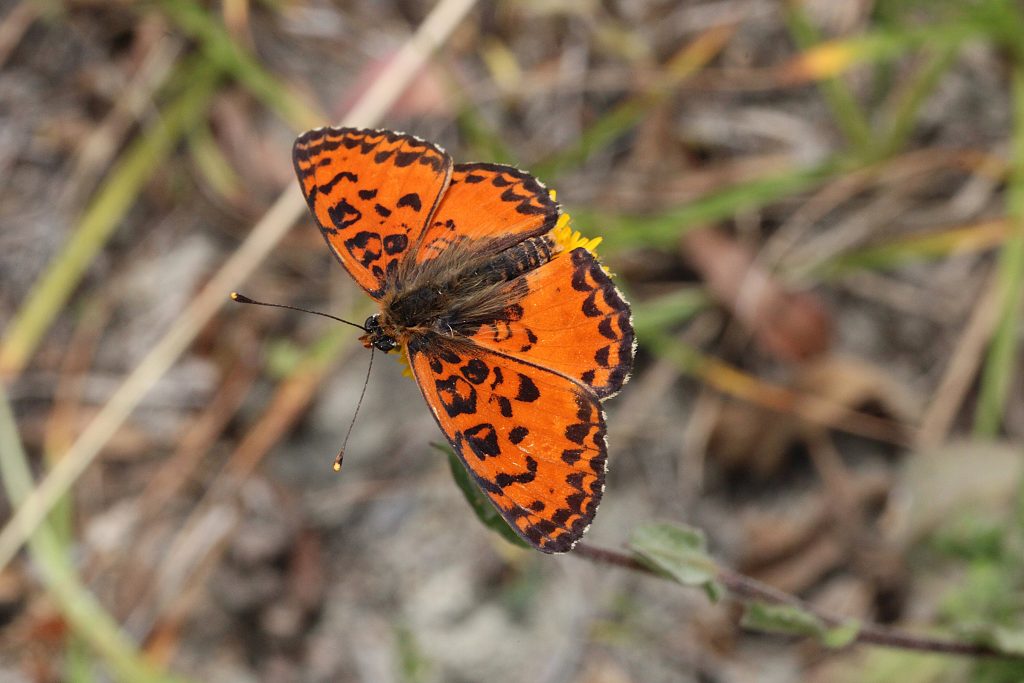
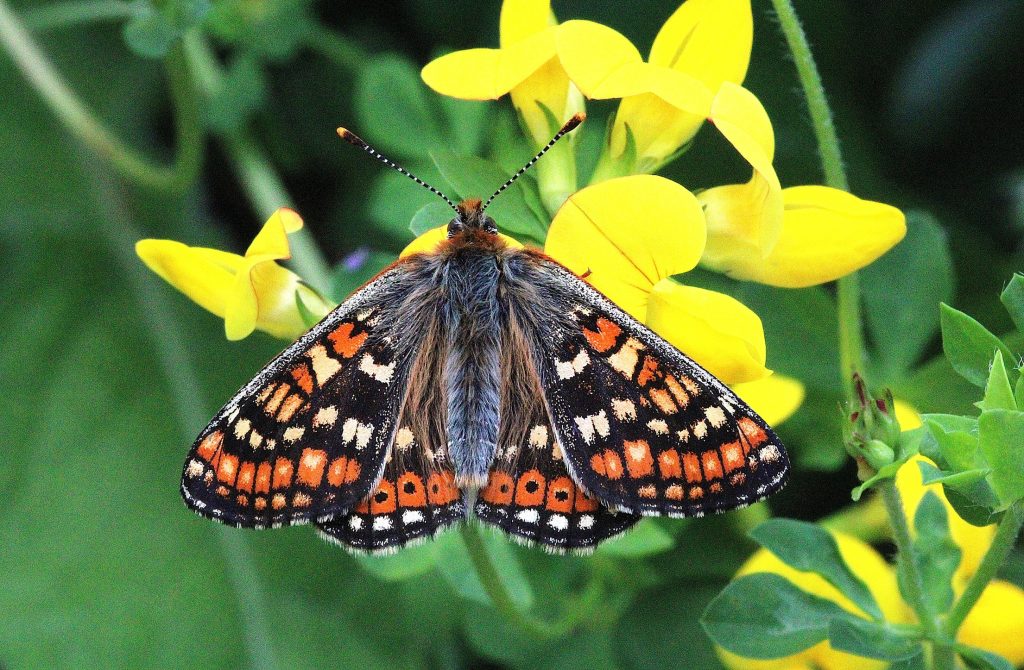
Marsh Fritillary aberrant male, Lullybeg corridor, Co. Kildare. Photo J. Harding.
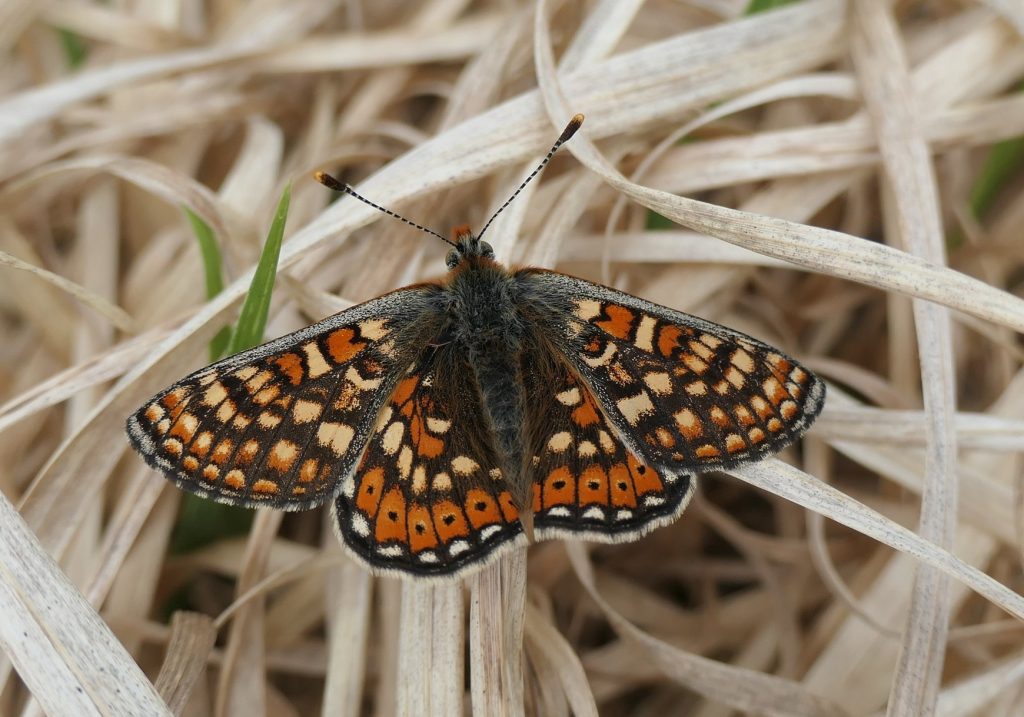
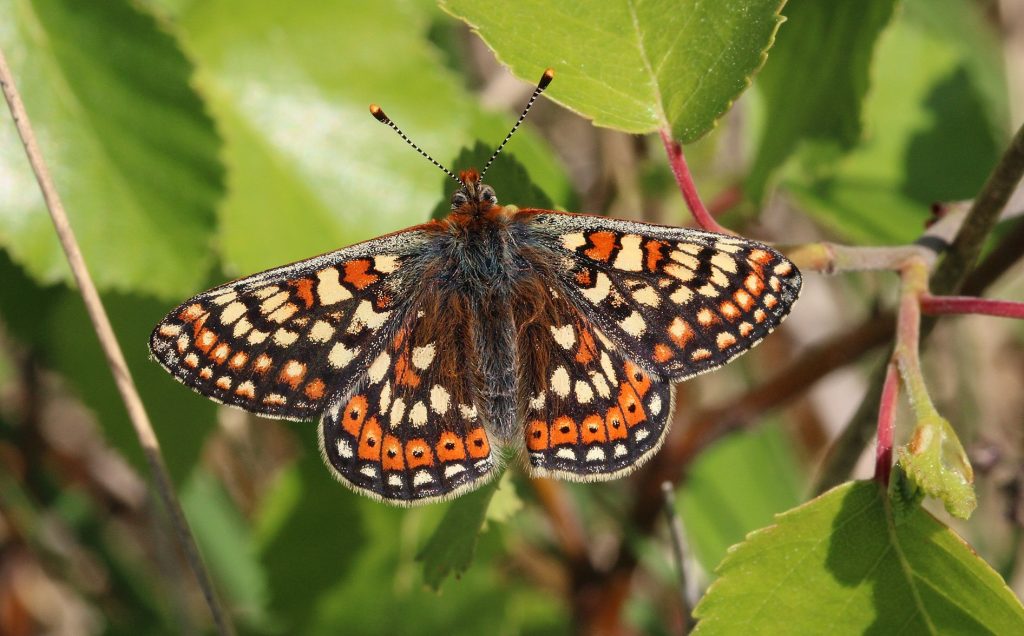
The Marsh Fritillary, typical form. Photo J. Harding.
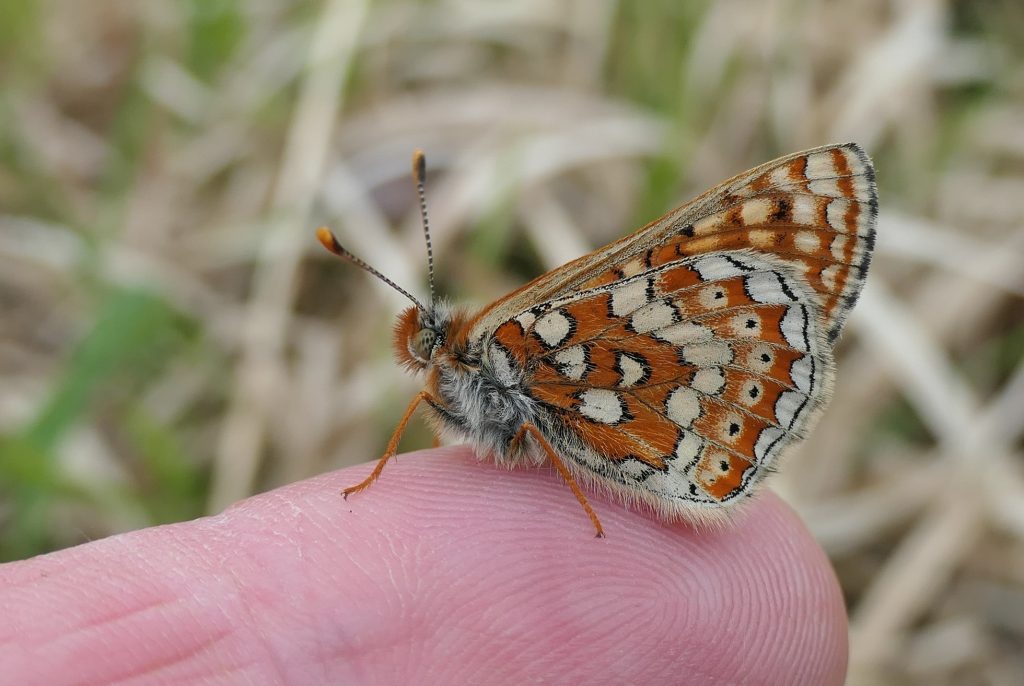
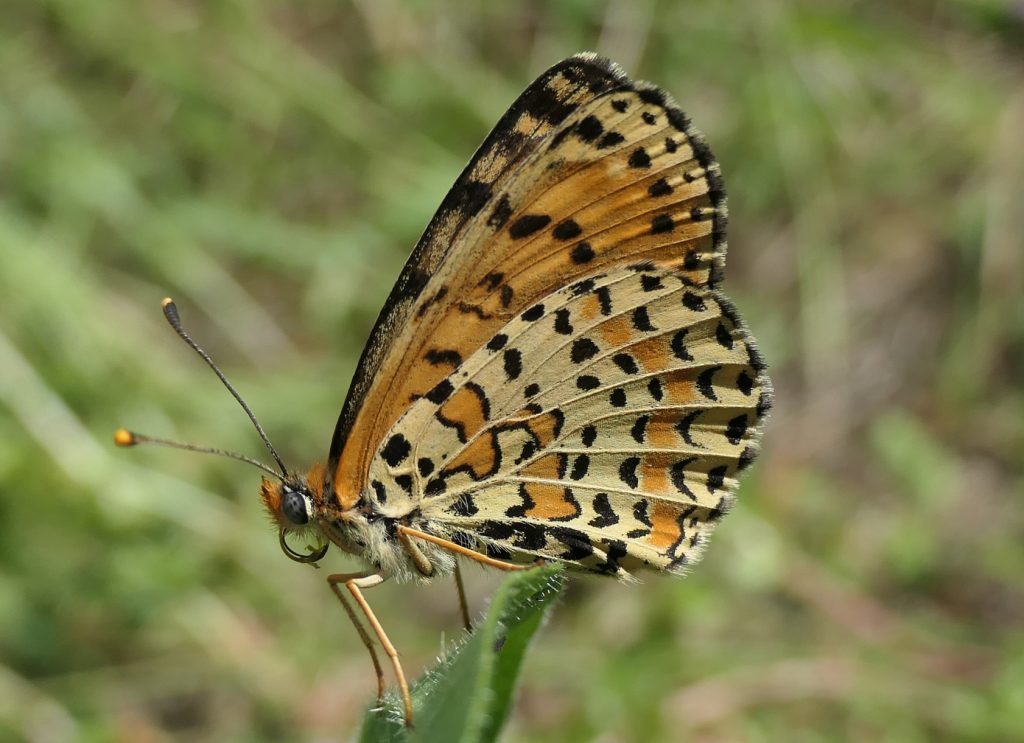
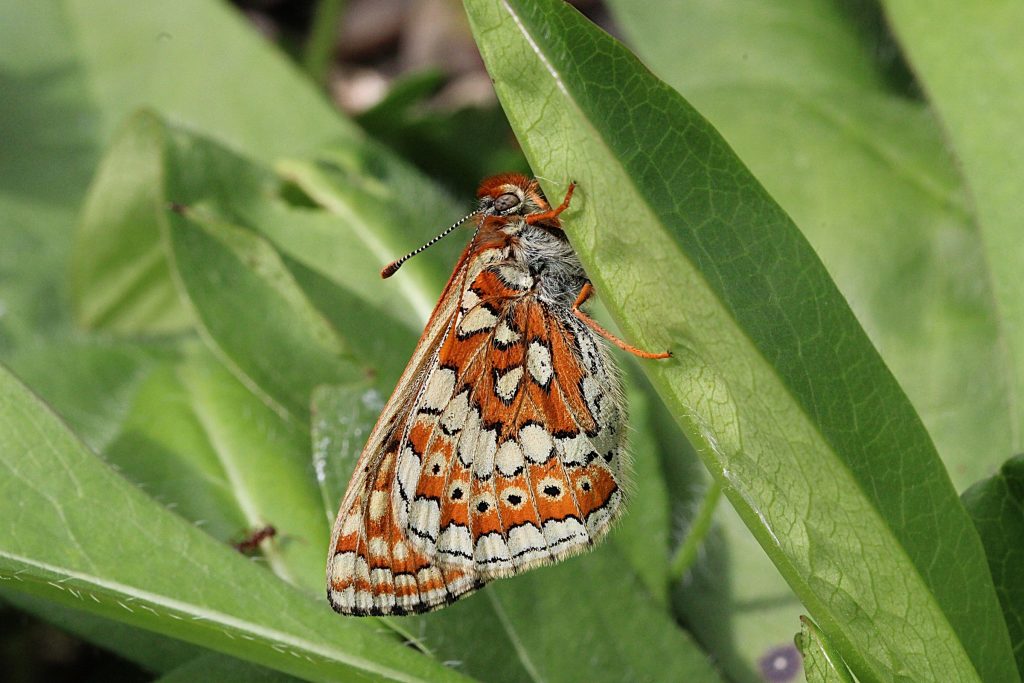
Marsh Fritillary underside, typical form. Photo J. Harding.

We managed to clear most of the area targeted and piled up the material to clear the ground. We hope the partly cleared area will develop woodland vegetation such as Common Dog-violet, to feed the Silver-washed Fritillary.

A more extensive clearing programme using machinery has also been applied to maintain the corridor and reserve, enhancing the habitats for all the moths, butterflies and other invertebrates in the area.

Thanks to all who help on the work days, which creates a purposeful, conservation experience for everyone involved. We need higher turnouts, and we hope to see this at our next work day on Saturday, 7th November 2026.


Good Butterfly News Stories

Our environment has seen severe declines in quality. There is no hiding this fact. Some of this is detailed in the state’s latest report on the quality of EU-protected habitats in Ireland, published by the National Parks and Wildlife Service in 2025. The report has found that 90% of habitats remain in Unfavourable status, with half showing ongoing declines.

The forthcoming updated red list for Ireland’s butterflies will make for grim reading. The decline figures are loud and clear, published annually by the National Biodiversity Data Centre in its reports on the findings of the Irish Butterfly Monitoring Scheme and in the recently published book, An Atlas of Butterflies in Ireland 2010-2021.

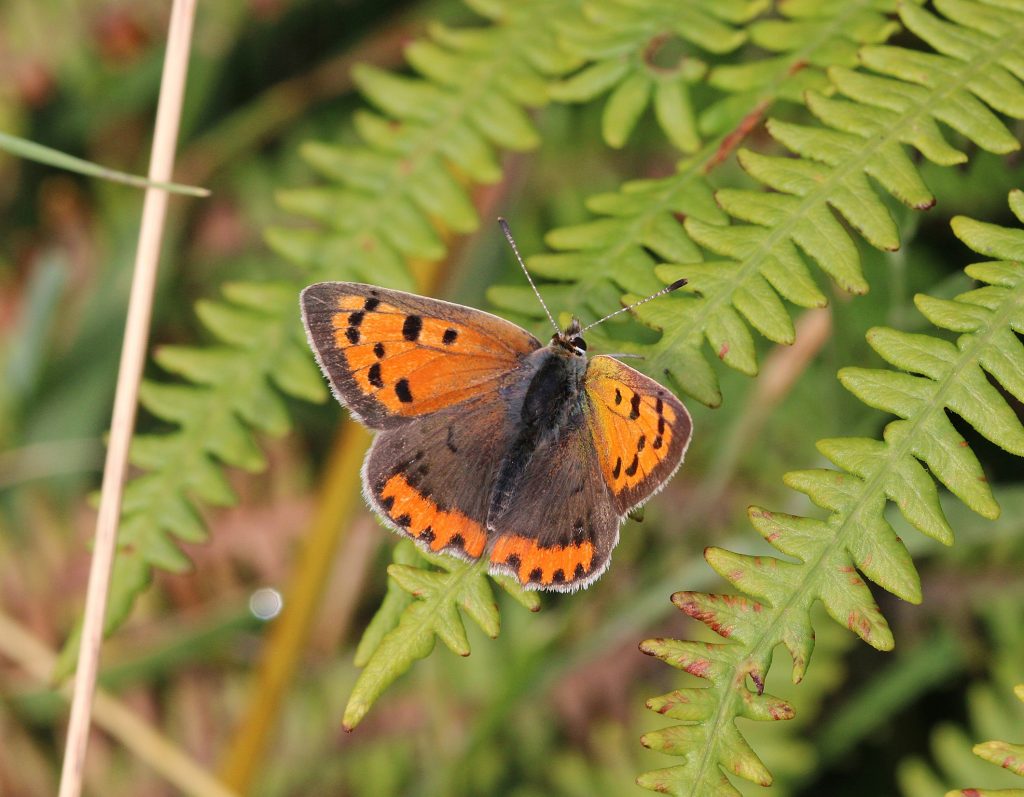
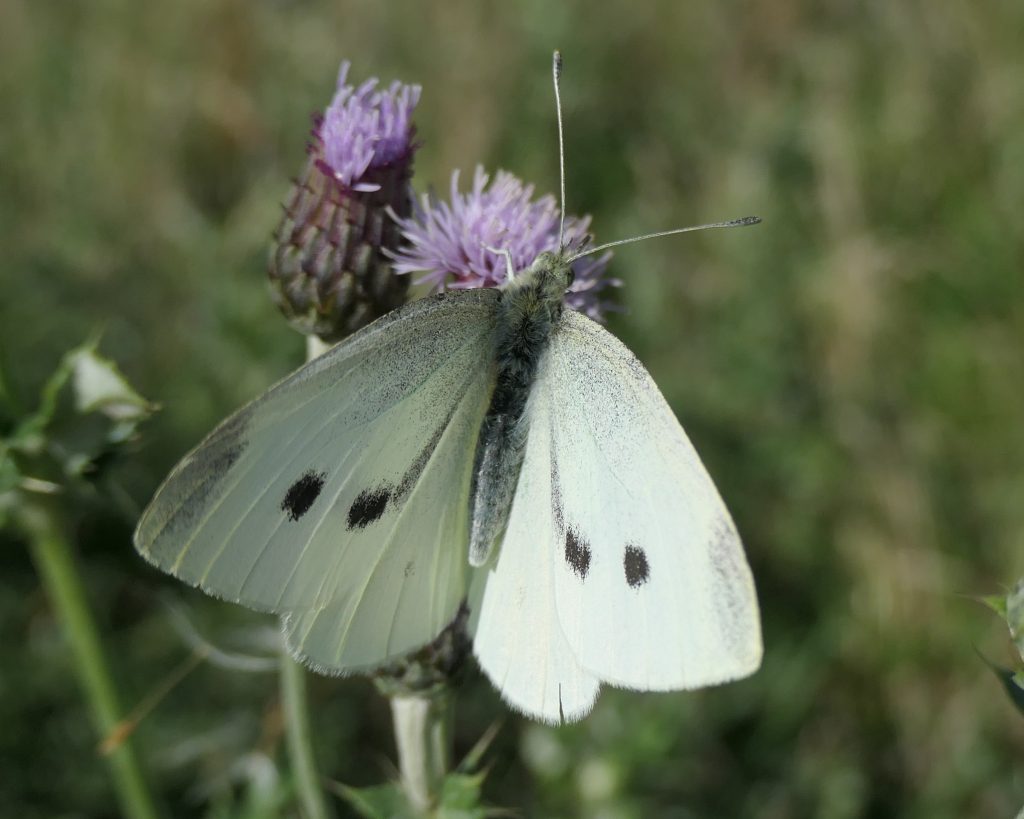
All the common white and common brown butterflies are in trouble, along with our commonest Lycaenids (the family including the blues, Small Copper and hairstreaks). Even the Small Tortoiseshell has suffered declines. Some less common, more specialised species are being imperilled by the habitat damage referenced in the 2025 NPWS report.

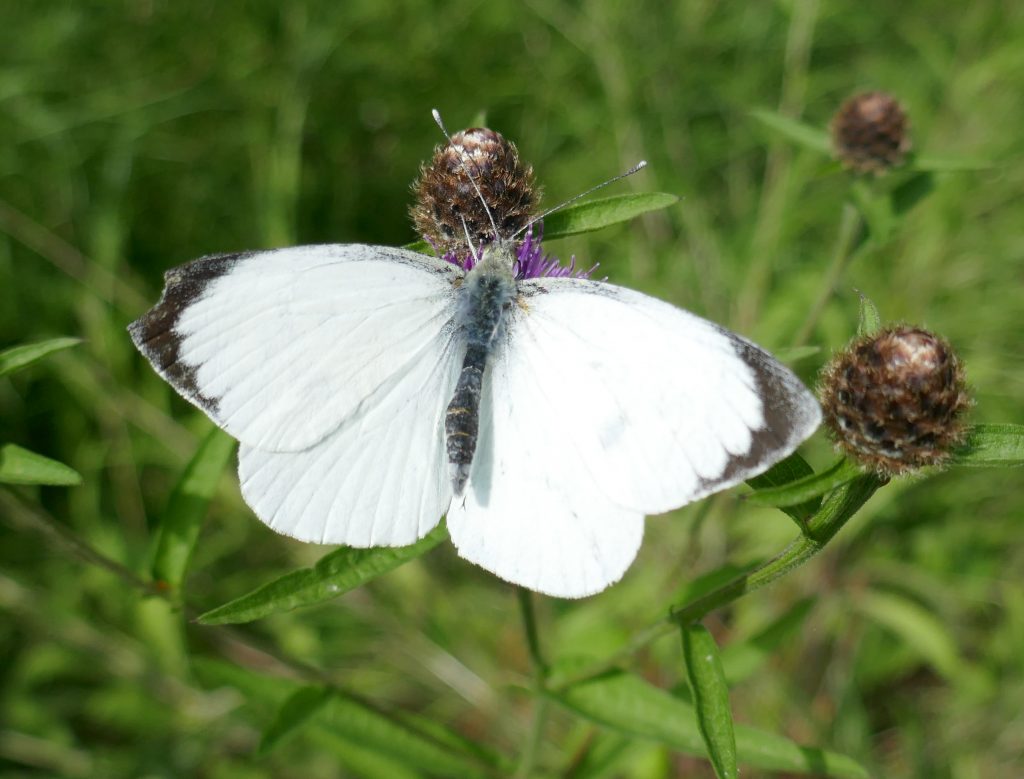
Large White on Red Clover. Photo © J. Harding

This article is not intended as a sweetener or to obfuscate the biodiversity crisis. However, the full story must be told, and this includes positives.

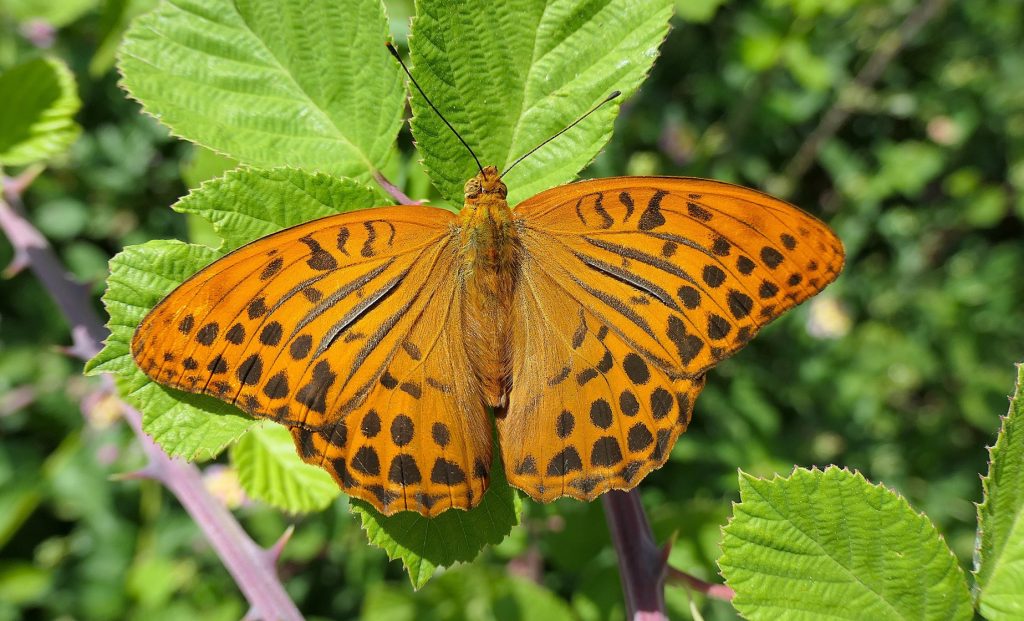
An Atlas of Ireland’s Butterflies 2010-2021 shows that the Silver-washed Fritillary has increased its distribution. It has increased from 377 10km squares during 1995-2010 to 422 10km squares in 2010-2021, an 11.94% increase. Increased recording is responsible for much of the recorded increase, but it has certainly moved into new woodland that has been developing on abandoned land and where new woods have been deliberately created.

Silver-washed Fritillary (male). Photo © J. Harding

Strangely, the species is more widely distributed in Ireland than in Britain. It is absent from Scotland, despite occurring nearby in Northern Ireland, such as Ballycastle Forest, Antrim, 31km from Scotland. It is rare or absent from North Wales and most of Northern England, and areas in the Midlands. Its strongholds are in South Wales and across the south of England, especially in the south-west. It is expanding its distribution in England, and was recently seen near Newcastle’s border with Northumberland, after an absence of over 170 years (https://www.bbc.com/news/articles/cly9zd9zr9do). It appears that some are being released into woods far beyond its known range, by nature lovers who long to see it return. It was remarkably abundant in the New Forest, Hampshire, in the 19th century. That is certainly not true of the area today, where I have seen only occasional individuals.

We should rejoice in the increase of our most iconic woodland butterfly. Increasing shade in developing plantation forestry will shade it out of some woods, but the increase in woodland and mature scrub elsewhere may offset or more than compensate for any such loss. It is also a resilient butterfly, capable of hanging on for many years in small, suitable areas of woodland until more becomes available. This can happen when woodland spreads naturally or where felling occurs, leaving some non-timber trees like birch, when trees are thinned, or woodland sites are restored by the removal of non-native trees, which has occurred in some woods owned by Coillte, the state forestry body. Creating clearings, turning points and widening rides in plantation forestry can also create new habitat. Another example of how a new habitat can appear was observed in plantation forestry in Lullybeg, County Kildare, when many tall Lodgepole Pines died during the extreme cold in 2010, leaving hardier trees like Scots Pine and Downy Birch in place to produce an open, brighter wood.

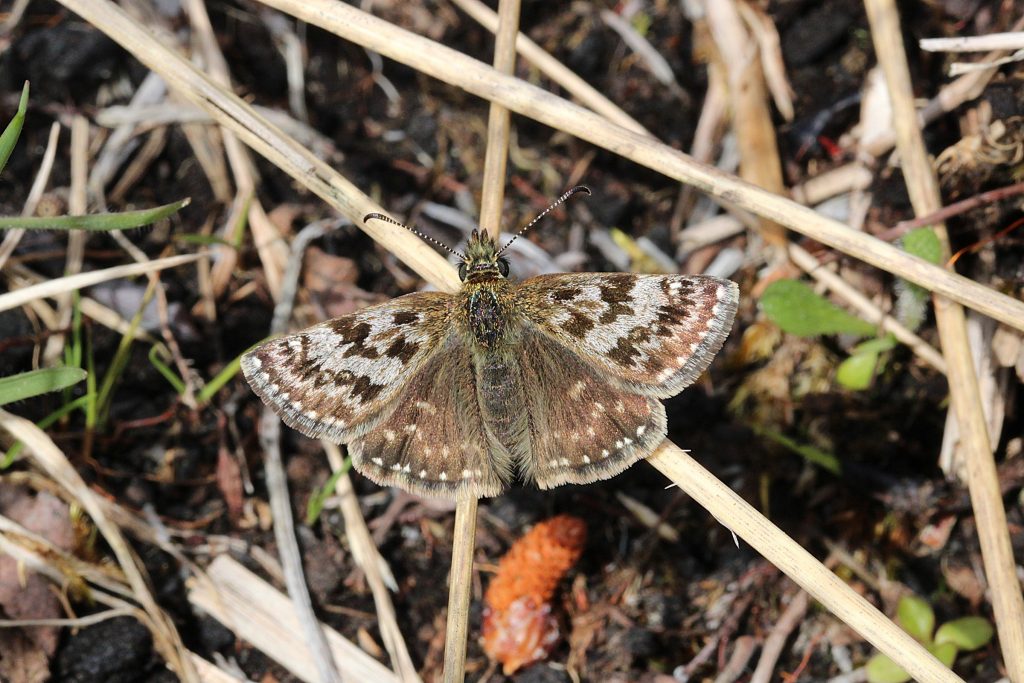
Dingy Skipper female on coutover bog. © J.Harding.

Another species that has been shown to increase its distribution is the Dingy Skipper.  This localised butterfly was found in 128 10km squares from 1995-2010 and in 161 10km squares during the period 2010-2021, a 25.78% increase.

What is behind this increase? Increased recording is a factor, but others include increased management of suitable grassland habitat funded by agri-environmental schemes. During the period 2010-2015, 242 ha of scrub were removed to restore Annex I priority grassland in the Burren (Dunford and Parr, 2020). This is done to increase and maintain a priority habitat, orchid-rich calcareous grassland, a habitat highly favoured by the Dingy Skipper. Laying tracks in plantation forestry also helps when limestone aggregate is laid to improve access. This is often carried out with the clearing of overhanging and encroaching tree and scrub material, adding light and warmth to the track, encouraging the butterfly to breed and disperse. Ending peat production on state-owned bogs has helped in some bogs where drier areas, such as gravel fields, occur. Using material dredged from canals to form berms has provided habitat for the species along areas of the Royal Canal, such as east of Enfield and near the Leinster Viaduct.

Marsh Fritillary (underside) on Rough Hawkbit, on Lullybeg Reserve. Photo © J. Harding
The Marsh Fritillary is protected under the Habitats Directive. Sites holding core populations and the surrounding landscape holding potential habitat must be protected and managed for this butterfly’s long-term survival. © J. Harding

The Marsh Fritillary, a butterfly whose extraordinary fluctuations in abundance make its populations notoriously difficult to track, has some positive news. Its distribution has risen from 248 10km squares in 1995-2009 to 355 10km squares during 2010-2021. There is no doubt that recording effort is responsible for some of this rise, and, importantly, just a single Marsh Fritillary butterfly was recorded in 100 of the 10km squares during 2010-2021, which is not evidence of a colony. However, even allowing for these two issues, it does not appear to have declined. NPWS reports that the overall status of Marsh Fritillary is Favourable, which represents a genuine improvement since the Inadequate assessment reported in 2019.

Holly Blue male, photo © Jim Fitzharris.

Even more impressive is the expansion of the Holly Blue. It rose by 28.42% in 2010-2021 compared with its distribution in 1995-2009. This is a clear indication of its increase. It is also likelier to produce a second and third generation in one year than it was in the past. It is a climate change beneficiary. Its lovely lilac blue adds a dynamic splash of glory to our spring and summer gardens, and it is universally welcome.

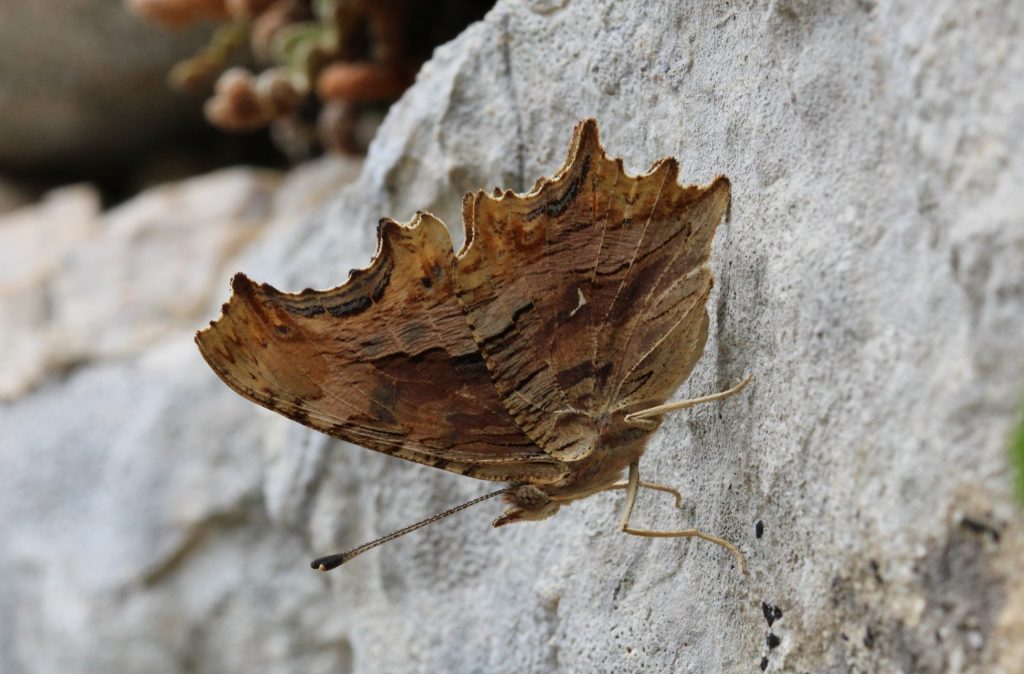
This is the dark form of the Comma butterfly. She will not breed until spring. She passes the winter by taking shelter in wooded areas. She is darker overall on her uppersides, but her undersides are very much darker than those of the light form. The dark undersides are appropriate for an over-wintering butterfly. Photo © J. Harding.
The solitary Comma caterpillar can develop in Ireland, probably because the Irish climate is warmer than it was in the past. Photo © J. Harding

The top performer is a butterfly that we didn’t have before the 21st century. The Comma has increased its distribution by 584% during 2010-2021. Up to 2010, it was found in 32 10km squares. By 2021, this reached 219, and this continues to increase. It is rapidly moving north and west. This attractive nettle-feeding butterfly (likes Wych Elm too) is now a common sight in woods in the east, southeast and parts of the midlands. Like the Holly Blue, our warming climate suits it. The Comma’s attractive caterpillar is solitary and typically hides under nettle leaves. These habits make it more reliant on ambient temperature than its communal cousins, the Peacock and Small Tortoiseshell, whose colonial larvae bask together to raise their body heat to the level needed for digestion and growth. Lower temperatures probably explain the Comma’s past absence from Ireland. It is also expanding rapidly in Scotland, which it re-entered in the early 2000s, after an absence of 140 years!

How you can help

Unless you provide larval foodplants in your garden, butterflies will not breed there, but will feed if you provide high quantities of the right flowers in the right places. Sunny, sheltered places are needed for the flowers, because few butterflies can tolerate shade in cooler climates.

Small Tortoiseshells will often feed together in gardens during September. These are on Devil’s-bit Scabious. Photo © J. Harding.

Spring flowers, March/April: Dandelion, Cuckoo Flower, Bluebell, Bugle, Primrose, Grey Willow, Goat Willow (ten-inch-long cuttings inserted 3-4 inches into soil will grow these willows, but grow away from masonry), Blackthorn, Common Daisy are all excellent native flowers in March and April.

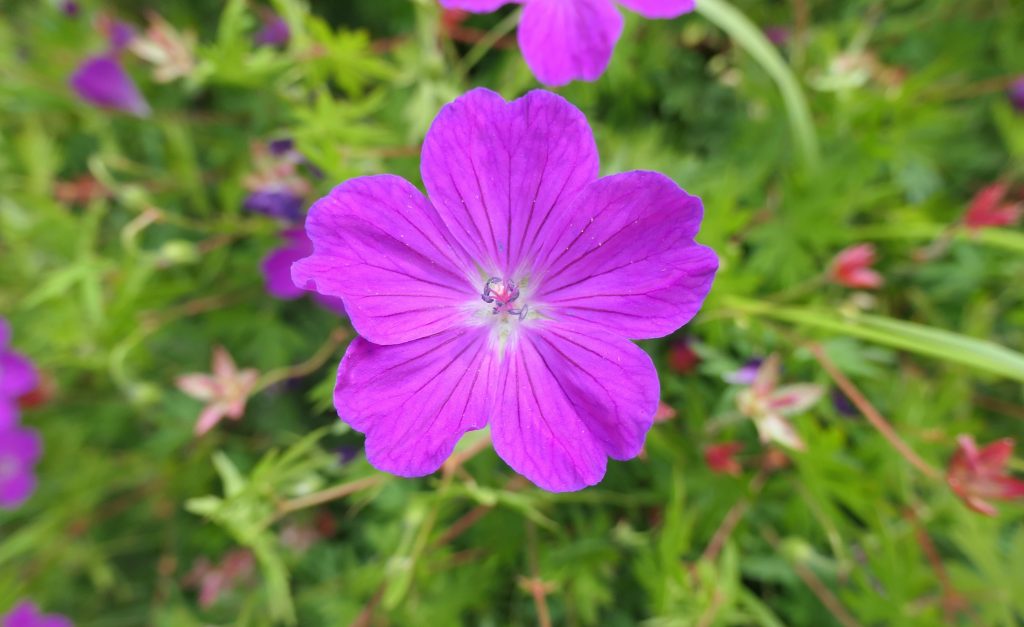
Spring Flowers, May: Hawthorn, Wild Crab Apple, Bush Vetch, Common Bird’s-foot-trefoil, Cuckoo Flower, Bloody Crane’s-bill, Common Catsear are very useful natives for butterflies.

Summer flowers, June: Ragged Robin, Bramble, Rough Hawkbit, Kidney Vetch, clovers, especially Red Clover and White Clover, will help early summer butterflies.

My garden in early summer shows Kidney Vetch, Common Bird’s-foot-trefoil and Ox-Eye Daisy.© J. Harding.

Summer flowers, July-August: Hemp Agrimony, Water Mint, Common Knapweed, Field Scabious, Common Marjoram, Creeping Thistle, Spear Thistle, Fragrant Orchid, Tufted Vetch, Purple Loosestrife (August) and Teasel are excellent for summer butterflies.

Autumn: Devil’s-bit Scabious, Common Ivy, Bramble (blackberries used by butterflies) are valuable native flowers for autumn butterflies; Argentinian Vervain Verbena bonariensis, a non-native, is outstanding.

A close view of wildflowers-Common Bird’s-foot-trefoil, Common Knapweed, Selfheal and other flora in Lesley Whiteside’s garden near Mullingar. Photo © L.Whiteside.

Note: many flowers in garden centres are unsuitable for butterflies. Nearly all are non-native, and even when natives are stocked, they are usually imported. Many garden centre flowers do not contain nectar. No matter how attractive they look, insects ignore resourceless flowers.

Grow your own native flowers. Some will be in your garden already. Others will be found nearby.  Take ripe seed from common wildflowers and sow it fresh in seed trays and plant out when ready, or sow directly onto bare soil. More advice can be found here: https://butterflyconservation.ie/wp/butterflies/gardening-for-butterflies/

Small Tortoiseshells feasting on Eupatorium growing in a wildlife garden, County Kilkenny. Photo © Robert Donnelly.

References

BBC (2025) Rare butterfly spotted for first time since 1850. Available at: https://www.bbc.com/news/articles/cly9zd9zr9do (Accessed 31 December 2025)

Dunford, B. & Parr, L. (2020) Farming for Conservation in the Burren. Pp. 56-103. In O’Rourke & Finn (2020) Farming for Nature The Role of Results-based Payments. National Parks and Wildlife Service Dublin.

Harding, J. (2021). The Irish Butterfly Book A Complete Guide to the Butterflies of Ireland. Privately published, Maynooth.

Harding, J. & Mapplebeck, P. (2025) Silver-washed Fritillary Argynnis paphia Pp 90-91. In Harding & Lysaght (2025), An Atlas of Butterflies in Ireland 2010-2021. The National Biodiversity Data Centre. Waterford.

NPWS (2025). The Status of EU Protected Habitats and Species in Ireland. Volume 1: Summary Overview. Unpublished NPWS report. Edited by: Domhnall Finch, Aoife Delaney, Fionnuala O’Neill and Deirdre Lynn


National Symbols: the case for Leylandii

Ireland has a suite of national symbols and icons familiar to most of us. The concentric circles cut into the kerbstones at Newgrange used as the Heritage Council’s logo, the General Post Office, a national monument used to symbolise the campaign to secure Irish statehood following its use as the declared headquarters of the Irish Republic in 1916, the harp, a symbol of Irish music and culture, the round towers built by monks as bell towers in the early Irish Christian and early Medieval period, Irish high crosses erected to teach the population about Christianity, the Book of Kells, representing Irish art and devotion to education and Christianity all resonate with Irish people. These are embedded in the national consciousness as visible symbols of Irishness. All are artefacts, human products.

Drumcliff High Cross with round tower remnant in the background, Drumcliff, County Sligo.

Indeed, the harp and shamrock (whatever this is) are official symbols of the Irish state, registered by the Irish State to the World Intellectual Property Organisation (WIPO) some years ago as protected emblems of the State and thereby avail of international protection under the terms of Article 6 of the Paris Convention for the protection of Industrial Property.

Aside from the ‘shamrock,’ are there any living representations of Ireland? Not officially or legally, appears to be the answer.

However, in 1990, the Sessile Oak Quercus petraea was declared Ireland’s national tree by then Taoiseach Charles Haughey, who also declared Ireland’s territorial waters as a whale and dolphin sanctuary. However, there is little to justify this designation. The only organisation that used the oak as its symbol was the Oakboys, Protestant agrarian rioters active in Ulster during the early 1760s. These opposed tithes (a tax paid to the Established Church) and a local tax levied to support local infrastructure. By 1763, the movement was suppressed.

Sessile Oak, Burren National Park, showing unstalked (sessile) acorn.

Sessile Oak occurs mainly on thin, well-drained acid soils in uplands, especially in Wicklow and in wet temperate rainforests in West Cork and Kerry. In the lowlands, it is replaced by the Pedunculate Oak Quercus robur.  However, what might support the Sessile Oak’s claim is its association with our most celebrated landscapes, such as Killarney, Glengarriff (Kerry), Glen of the Downs (Wicklow), Glenveagh (Donegal) and Rock Forest (Burren, County Clare).

Glenveagh National Park, County Donegal. Note the presence of Rhododendron ponticum in the foreground.

In these areas, it occurs as Old Oak Woodland, an EU priority habitat. The 2025 Article 17 report (a report to the EU stating the conservation status of EU-protected habitats and species) describes the sad state of this habitat:

Historical habitat loss has occurred and still continues, although at a very low level. However, the greatest ongoing pressures on these woods come from invasive non-native species such as Rhododendron ponticum, Cherry Laurel (Prunus laurocerasus) and Beech (Fagus sylvatica), and overgrazing by deer. The Overall Status assessment is Bad with a deteriorating trend, unchanged since the 2019 report.

Oak woodland near Shillelagh, County Wicklow.

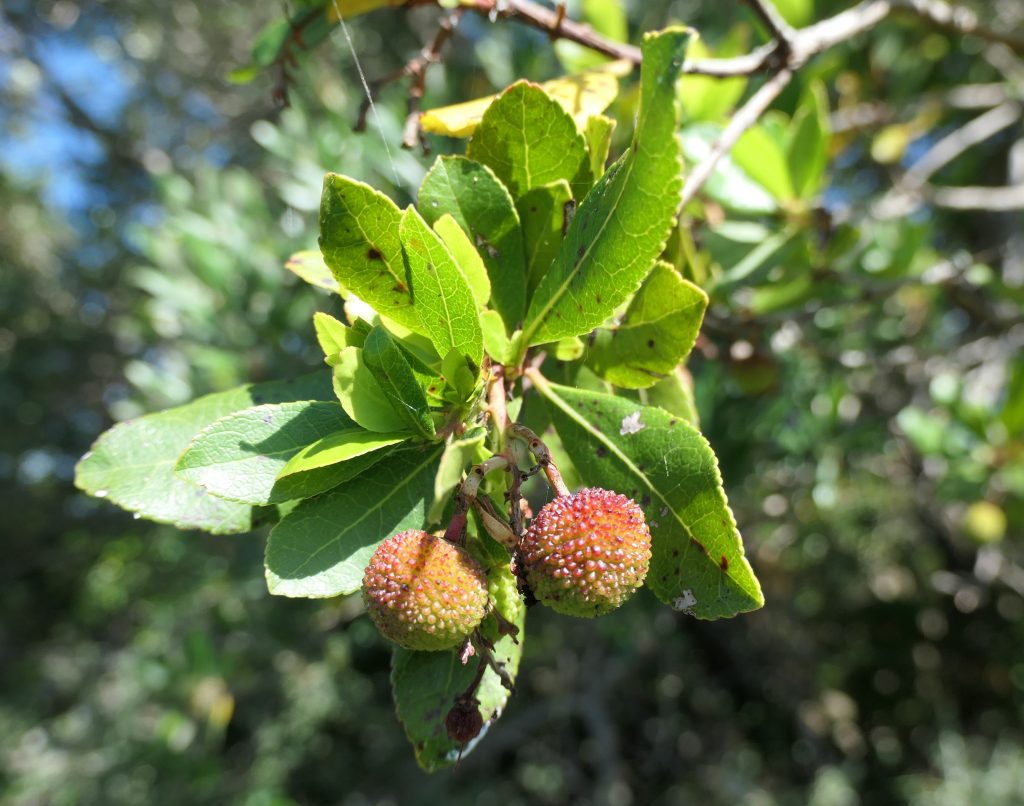
Another candidate for Ireland’s national tree is the Strawberry Tree Arbutus unedo. Attractive, unusual, and its strong association with Ireland’s iconic Killarney National Park support its cause. Confined to rocky places in Cork, Kerry and Sligo, there are doubts about whether it is a native plant, but as the pollen record confirms its occurrence here for the past 4,000 years, we might consider it an Irish plant. However, recent research by Sheehy Skeffington & Scott (2021) casts doubt on its native status in Ireland, considering it more likely to have arrived as an ancient introduction, brought from northern Iberia by miners who came to extract copper. Genetic analysis has shown that Ireland’s Strawberry Trees are closer to those found in Northern Spain than those found in Britanny. The 2021 study does not prove that the tree is an introduction, and there was no copper mining in Sligo, where it also occurs, around Lough Gill.

How is the Strawberry Tree doing? Ireland Red List No. 10 Vascular Plants records it as Near Threatened:

Population declines have been recorded at sites in Counties Cork, Kerry and Sligo, associated with a decline in habitat quality; future population reduction is suspected.

Strawberry Tree, Killarney National Park, County Kerry.

We have one widespread endemic tree (occurs only in Ireland), the Irish Whitebeam Sorbus hibernica. Surely that gives it a claim to the title, Ireland’s National Tree? It is assessed as Vulnerable, with fewer than 1000 individuals.

Whitebeam, possibly Irish Whitebeam, near Lough Fingal, County Galway.

Is there a national shrub? Gorse Ulex europaeus is a candidate. According to the website Wildflowers of Ireland,

This must be our most remarkable native shrub.  Throughout the year, the rich yellow peaflowers seem to light up the Irish landscape.  The 15-20mm long flowers, with their wonderful aroma of coconut, are borne on stems of spiny bluish-green spikes. The leaves have been modified over centuries into rigid and furrowed thorns which withstand the harsh conditions of winters at higher altitudes, making the entire bush one mass of prickles and spines. These shrubs form very many hedgerows around our fields, they line our country roads and particularly from February to May, when their flowers are in abundance, they are a sight to behold. 

Unlike the Sessile Oak, folk traditions associated with Gorse exist. It has much greater prevalence in our landscape than Sessile Oak or Strawberry Tree, conferring greater familiarity. Its golden blooms certainly catch the eye of overseas visitors.

National Mammal Candidates

Ireland lacks a national animal, but the favourite is the Irish Hare Lepus timidus hibernicus. With remains dating back to the late Pleistocene, over 11,000 years ago, it has certainly been with us for a long time. We are not very appreciative. The Irish Hare is hunted from November to March, according to The Irish Wildlife Trust. The Ireland Red List No 10 Terrestrial Mammals (published 2019) assesses it as Least Concern. The most recent estimates are 27,400 for Northern Ireland and 223,000 for the Republic. The Irish Hare is regarded as a unique subspecies, found only on this island.

Irish Hare, Lullymore, County Kildare.

The Irish Stoat Mustela erminea hibernica has some claim too. It is a near-endemic subspecies (also occurs in the Isle of Man). It has also been here for thousands of years and might have colonised along with the Irish Hare. It has been persecuted for taking poultry, but it appears to be in no danger and is assessed as Least Concern.

Popularity 

However, if popularity is accepted as a criterion for accepting a national icon, I fear the outcome. How many people have planted a native Sessile Oak or Pedunculate Oak in their garden, compared to other large trees? The same applies to shrubs.

Why not use popularity as the reason to choose Ireland’s national plants and animals?

Under this democratic consideration, how about Leyland Cypress Cupressus × leylandii, × Cuprocyparis leylandii or × Cupressocyparis leylandii as Ireland’s national tree?

It is commonly planted and much loved. Grown as both mature trees and hedging, it is ubiquitous in parks and in suburban and rural gardens. Its rapid growth makes it an effective screen, and it gives shelter from the wind.

What about Cherry Laurel as our national shrub? Our garden centres and nurseries do a roaring trade in this hedging plant. It wins the favour of more gardeners than Hawthorn, Gorse, or any native shrub. Fast-growing and evergreen, it forms a solid-looking hedge after a couple of years.

As for a national flowering herb, look no further than another garden favourite, Montbretia Crocosmia x crocosmiiflora. A hybrid (like Leylandii), it produces lance-shaped foliage and bright orange-red blooms. It expands its population with gusto, bringing an end to native hedge bank herbs by simply outmuscling these weaklings. It relishes the mild western counties and is exploding along roadsides, adding its colour to that of another rampant non-native, Fuchsia Fuchsia magellanica, another candidate for national shrub.

While Leyland Cypress, Cherry Laurel, Montbretia and Fuchsia damage our environment, these are popular with the public. We get the environment we deserve.

Species-rich habitats containing Hazel scrub and orchid-rich grassland, Burren, County Clare.

Native Trees

The best trees and shrubs to plant for nature are native species, grown from seed collected from wild sources in Ireland. These species support our moths and butterflies and many other animal groups.

A list of Ireland’s native trees can be found here:

https://consult.kilkenny.ie/en/system/files/materials/2915/Appendix%20G%20List%20of%20Native%20Trees%20and%20Shrubs%20City%20and%20County_0.pdf

The King Oak, Tullamore, County Offaly. This magnificent Pedunculate Oak is a great candidate for Ireland’s national tree.

Photographs © J. Harding


Event Planned for 21 February Postponed to 28 February

The Lullybeg Reserve management day planned for Saturday, 21 February, has been postponed due to the adverse weather forecast.

The weather forecast for Saturday, 21 February, is for rain:

A mild, breezy and rather wet day tomorrow with further outbreaks of rain moving northeastwards: https://www.met.ie/leinster-forecast.html

We will try to hold the event on the following Saturday, 28 February. This event is described below.

Saturday 28 February 2026

Scrub clearing at Crabtree/Lullybeg Reserve, County Kildare

Meet on the site at 11:00 am for habitat creation for the Dingy Skipper, Dark Green Fritillary, Narrow-bordered Five-spot Burnet moth and other species. We will uproot saplings and cut back regrowth encroaching on part of the site and place the cleared material in piles. Please bring work gloves, boots, and loppers.

Directions: This is reached from Allenwood by taking the R414 west and crossing Shee Bridge 1km from Allenwood on the left. Continue for 4 km, and the Bog of Allen Nature Centre is on the right. Turn right here and continue for 100 metres to the T-junction. Turn left here along the track and continue. Pass through three gates. After the third gate, turn sharply left along the rough forest track for 500 metres and you will see the sign for the reserve. The site grid reference is N687 256. See Discovery Series 49.
We apologise for any inconvenience.


Native Woodland Planting: A winter and early spring activity

Dull rainy days dogged our lives for the last three months, but dry spells offer the chance to venture out and do something useful. Our native woodland cover is pitifully low, generally restricted to steep slopes in remote areas of the west of Ireland. When native trees are planted, these are most often from foreign sources. This is indicated by the EU plant passport tag attached to the trees.

Importing native tree species from abroad can produce very harmful results, such as introducing non-native insects that impact our ecosystems. One organisation that has a mission to plant native wood using native trees grown from wild Irish seed is Hometree. Their organic tree nursery, based in Ennistymon, County Clare,  grows affordable native trees for woodland and hedgerow planting. Their tree output consists of

Alder – Alnus glutinosa
Downy Birch – Betula pubescens
Goat Willow – Salix caprea
Grey Willow – Salix cinerea
Hawthorn – Crataegus monogyna
Hazel – Corylus avellana
Pedunculate Oak – Quercus robur
Rowan – Sorbus aucuparia
Scots Pine – Pinus sylvestris (taken from an ancient source in the Burren)
Sessile Oak – Quercus petraea.

They offer hedgerow species:

Hedgerow Bundle (mix of 5 species)
Grey Willow, Goat Willow, Crab Apple, Wild Cherry, Elder, Hawthorn, Hazel, Sessile Oak, Downy Birch, Pedunculate Oak.

Tree bundles (25 trees from €90.80 plus postage) are selected tree mixes suited to different planting contexts. Trees are between 80 cm and 150 cm and are bare-root. Trees are available as single-species and mixed-species bundles. For example, they provide a wet Woodland Bundle that consists of  Alder, Downey Birch, Goat Willow, Hazel, and Pedunculate Oak.
A landscape-scale project, the Iveragh Peninsula European Innovation Partnership, aims to protect, restore and increase native woodland in upland areas in the Iveragh Peninsula in County Kerry. This area is within the temperate rainforest zone and is ideally located to host the rare Annex I Sessile Oak habitat.

Most nurseries do not use Irish seed from old woodland to grow native trees. Hometrees does: https://www.hometree.ie/about

Maynooth Presbyterian Church

A local project Butterfly Conservation Ireland has been involved in is the planting of native woodland in the grounds of the new Presbyterian Church in Maynooth, County Kildare. The church opened its new building in 2024, the first Presbyterian Church built in the Republic of Ireland since 1915 (Arklow, County Wicklow).  Set on just over three acres, the site is bordered by native hedges on two sides and on one side by the historic Carton Avenue, a Lime walk. The church is anxious to give back to nature, conscious that some of the land was used for the building.

Wildflower meadow and orchard at the front of the grounds. The grassland has been sown with Common Knapweed, Devil’s-bit Scabious, and Ox-eye Daisy, among other flora.

We sowed a wildflower meadow at the front of the site along with fruit trees. The idea is to have a French-style orchard that doubles as a wildflower meadow. Orchards are very good for nature, especially if the trees are not artificially fertilised and no herbicides and pesticides are applied. This will be fully organic.

At the rear of the site, bordered by Carton Avenue, over 100 native trees were planted. All are of local origin except the Pedunculate Oak, which came from Hometrees. Alder and Purging Buckthorn, Grey Willow, Downy Birch, Hazel, and Scots Pine (excellent for ladybirds) are now in place.  This will host woodland species in the years ahead, adding biodiversity and character to the grounds.

One of the Scots Pines we planted in the church grounds.

Planting locally, in your garden, in public land, in places such as church and school grounds, not only adds to nature’s resources, but watching these woods develop on your doorstep creates a pride in your area, helps to build a community and helps you to contribute to nature restoration in a meaningful way.


Here comes the rain

Here comes the rain again
Raining in my head like a tragedy
Tearing me apart like a new emotion
(Annie Lennox, Dave Stewart)

One topic that we rarely tire of is the weather. In the colloquial sense, Ireland does not have a climate; it has weather. Our weather influences every living thing in Ireland, and the irascible unpredictability of conditions permeates our national obsession with the rain, sunshine, wind, and temperature that exerts such influence over our experience of life.

Met Éireann, the state’s meteorological service, describes Ireland’s climate by referring to just two seasons: ‘Winters tend to be cool and windy, while summers (when the depression track is further north and depressions less deep), are mostly mild and less windy.’ (1) So, cool and windy and mild and less windy. As Father Ted says when giving directions, ‘The field with fewer rocks than most fields you see.’

Another constant, aside from unpredictability, is rainfall. Cold, bitter, splashy, severe, gentle, soft, relentless, intermittent, you name it, we get it, sometimes more than one form simultaneously. We are an island, surrounded by wet stuff, so, unsurprisingly, it is soaked into our national consciousness.

The rain and its best friend, the grey sky, are the reasons we love to holiday abroad. I doubt many of us like trusting our lives to Ryanair, but to get off this island to sunny climes, we need to escape by air to get our annual doses of Vitamin D.

Hay meadow and scrub in the Burren National Park, Co. Clare. Free-draining soils might suffer from increasing summer heat and dryness.  Photo J. Harding.

Even this is becoming a problem. Anyone who has holidayed in southern Europe in June, July or August over the last decade will know how unpleasant the heat has become. It is intolerable. One cannot venture outdoors after 10 or 11 am, and it is not until around 4 pm that it is safe, let alone comfortable, to put a foot outdoors. In July 2019, I arrived in Malta at two in the morning. It was 27 degrees Celsius. Many of us are now booking our sun holiday for April, and September and October for this reason. This ensures that you get the desired sunshine while temperatures are like those in a ‘nice’ Irish summer.

But will this change? Met Éireann thinks so. According to its climate change page, summers will be hotter and drier with temperatures possibly rising by more than 2°C, and rainfall decreasing by approximately 9%. Winter will be hotter and wetter, with temperatures possibly rising by more than 2°C, and rainfall possibly increasing by up to 24%. These are not baked in certainties but will depend on the degree of future climate warming.

At present, we are seeing increases in summer and winter precipitation of 2.71mm and 4.05mm per day, respectively. An increase in the global temperature average of 1.5 °C will see a 1.37% decline in summer precipitation and a rise of 11.24% in winter precipitation. By winter, Met Éireann means December, January and February. Summer is June, July and August. We are at 1. 3 °C above pre-industrial levels. Projections are made for +2 °C, +3 °C and +4 °C, if you can bear to look. (2) The magnitude of rainfall events is also expected to increase. (3)

These increases are probably partly due to natural causes, but not only to these. Science has pointed strongly at human behaviour as a leading cause of climate change.

Natural factors that influence climate are altitude, latitude, distance from the sea, ocean current, direction of prevailing winds and El Niño, which affects wind and rainfall patterns.

Another natural factor is vegetation, and human behaviour is altering the planet’s vegetation cover, especially by removing trees, adding to emissions of gases that heat the planet’s atmosphere. Human activities, especially modern farming and burning fossil fuels, add to anthropogenic global warming.

Some of the changes exceed the ability of living things to adapt. For example, decreased rainfall means that some plants that require an adequate store of water in underground tubers during their dormant periods could struggle to survive. The decline in soil moisture might have caused the likely extinction of the orchid Yellow Spider Orchid (Ophrys lacaitae) on Malta. Increased windiness causes tall flowering plants to sway, making them less accessible to pollinators. Species like the Bee Orchid Ophrys apifera, is taller, reaching up to 70 cm in height, and might be less visible to pollinators as well as harder for pollinators to reach in windier conditions. (4)

Marsh Fritillary larvae clustered together on Moor-grass. The Marsh Fritillary larvae are highly vulnerable to summer flooding.

In southern Europe, the Meadow Brown (and other species) show adaptive behaviour, coping with extreme summer heat by retreating to woods and scrub during intense summer heat and emerging later to lay eggs. If Ireland ever experiences such heat in the future, where are the woods for it to retreat to?

Some conditions do not allow for survival. Intensive farming has a major impact on wildlife by simply removing habitat or modifying it beyond the ability of plants and animals to survive. The impact of artificial fertilisers on the survival of some moth and butterfly larvae is already known. The effect of nitrates on water, air, vegetation and climate change is also well established.
Unfortunately, we tend to react when changes we don’t like are already occurring. ‘Why weren’t we warned?’ cried those badly impacted by recent flooding in Dublin and the southeast. Warnings have been published for years. It is only when the warned event happens that we ‘know’ it’s true.

A call to build flood defences was made by Dr Clare Bergin, Maynooth University, to deal with climate change-induced flooding. (5) Most of our drainage measures are designed to remove water from land asap. In fact, these measures are everywhere. Drainage ditches are found almost everywhere in Ireland, along roads, the edges of fields, alongside rivers, and in deepened and dredged rivers and streams. Bogs and fens had drainage channels dug to drain water before peat cutting could proceed. In most state-owned bogland that has been cut for peat, those not gravity-drained are kept drained by using pumps. On most state-owned peatland these pumps are still in operation, delivering vast quantities of water to rivers. Before our lowland bogs were bogs, they were lakes. Following peat extraction, they will return to being lakes, holding water rather than swelling rivers, if pumps were switched off. Here is one solution to flooding. But I don’t hear anyone mentioning it.

The way it should be; Clara Bog, County Offaly. Bogs hold enormous quantities of water. Sphagnum moss acts as a sponge; plants may hold 16 to 26 times as much water as their dry weight, depending on the species. (Bold, H. C. 1967. Morphology of Plants. Second ed. Harper and Row, New York. p. 225–229.)

Farmland must also be allowed to flood. Time was when every farm had a pond. These were filled in, and water pushed off land as fast as possible. The movement of water must be slowed, not accelerated. This water moves to the coasts. Most of Ireland’s population lives in the low-lying east, in coastal areas, near estuaries. Nowhere is more likely to see flooding.

Restoration of wetlands (marshes, both freshwater and salt, fens, bogs, wet meadows, lakes, ponds, reed beds) must be applied to both abate flooding and absorb warming gases. Our wildlife will benefit hugely too.

Now get on with it. But don’t blame nature, don’t blame the Freshwater Pearl Mussel Margaritifera margaritifera. Blame what we did to nature and reverse the damage.

Footnotes

1.  https://www.met.ie/climate/climate-of-ireland

2. https://www.met.ie/climate/climate-change

3. https://www.maynoothuniversity.ie/icarus/news/new-study-finds-climate-change-increases-flood-risk-southeast

4. Mifsud, S (2018). Orchids of the Maltese Islands. Green House, Malta.

5. https://www.rte.ie/radio/radio1/clips/22580181/