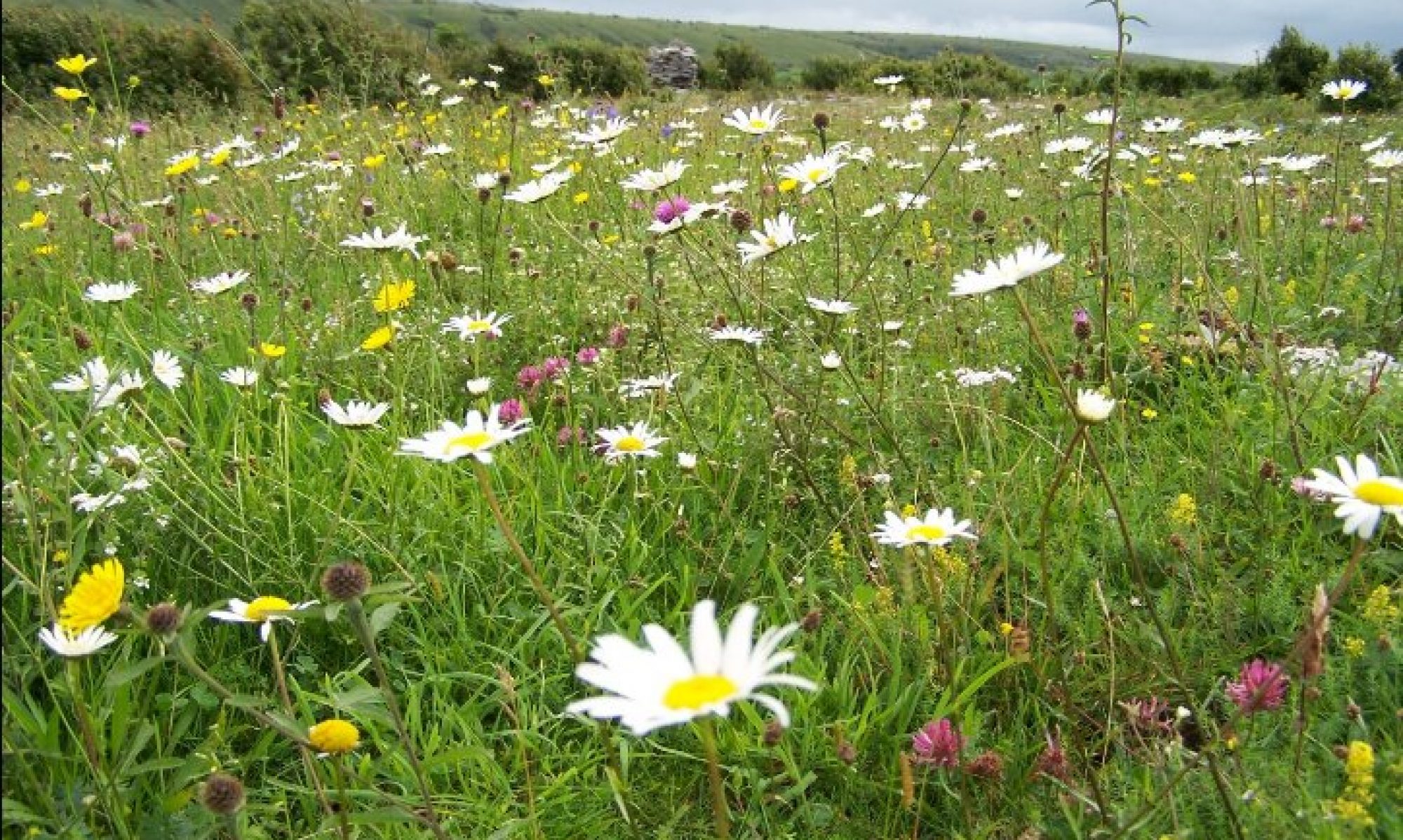
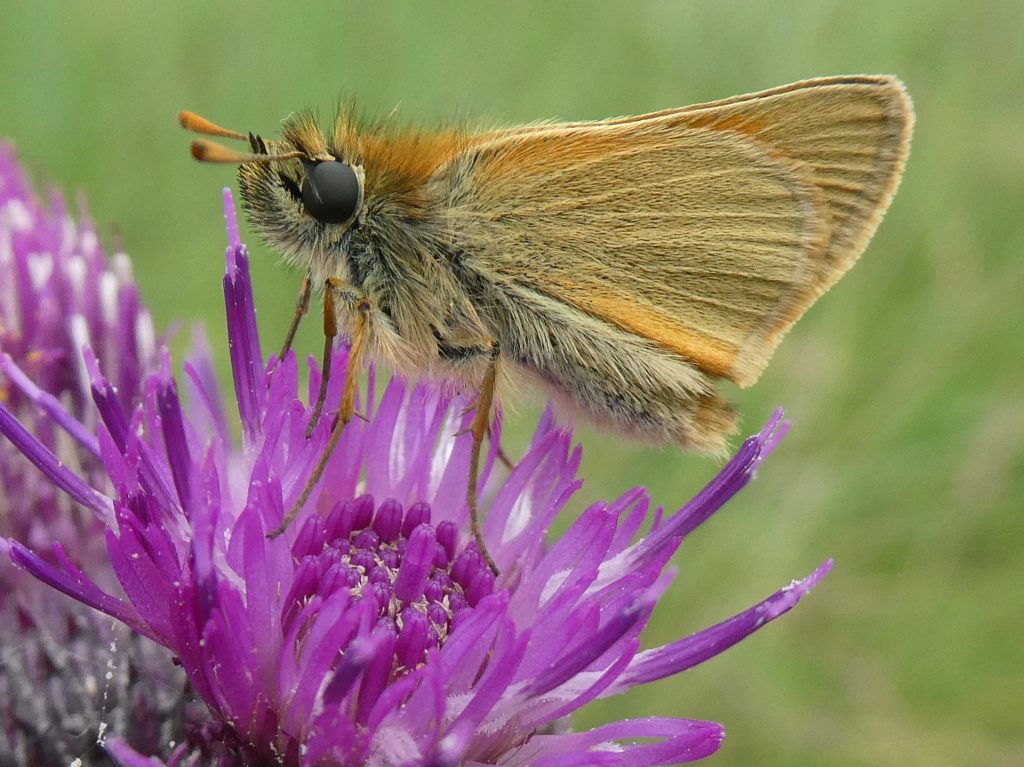
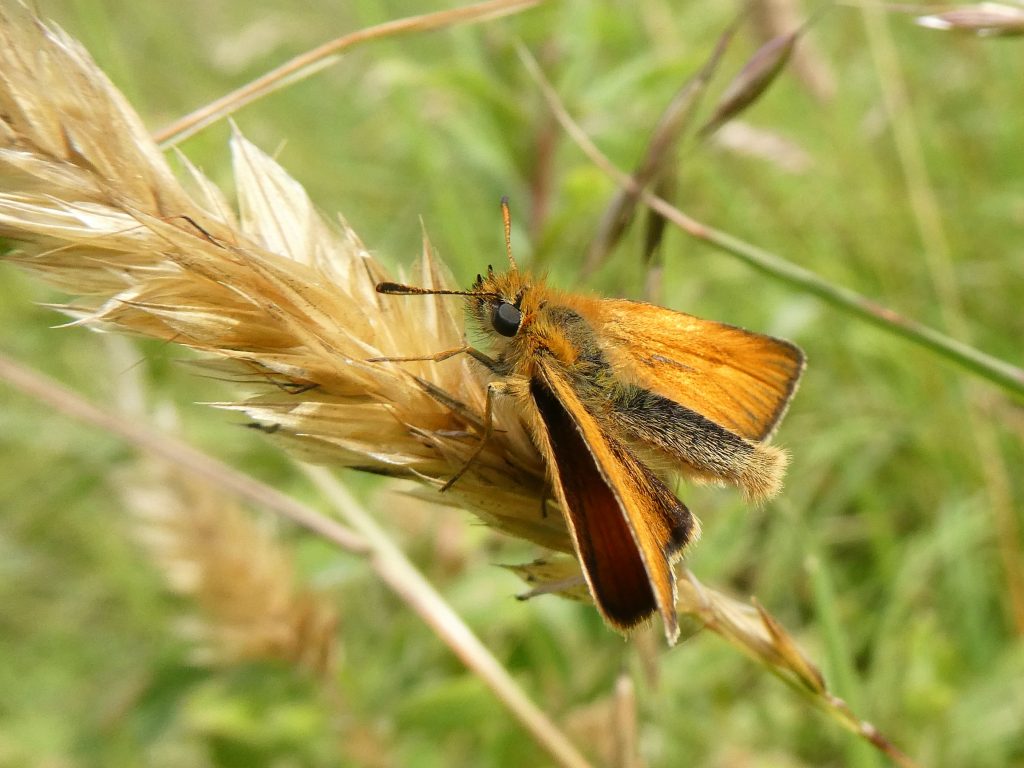
The new Red List of European Butterflies was published in December 2025. It highlights the deterioration in the population status of a large proportion of European butterflies, including common species such as the Essex Skipper Thymelicus lineola (Vulnerable), the Small Skipper Thymelicus sylvestris (Endangered) and the Small Tortoiseshell Aglais urticae (Near Threatened). The primary reason for this deteriorating trend is habitat loss, degradation and fragmentation, followed by climate change, nitrogen deposition and pesticides, such as neonicotinoids.
The following article summarises the key overall findings of the report and states its recommendations, and, as an exemplar, details the causes of decline of one of Europe’s rarest butterflies, the Nevada Blue Polyommatus golgus.
Europe has 501 butterfly species. For the European Red List, Europe spans the entirety of the European continent, extending from Iceland, Svalbard and Franz Josef Land in the north (islands north of Scandinavia) to the Canary Islands in the south, and from the Azores in the west to the Urals in the east, including the European part of Turkiye and most of the European parts of the Russian Federation. Cyprus, the European Macaronesian islands (the Canaries, Madeiran and the Azores archipelagos), the Spanish North African Territories (Ceuta, Melilla, and the Plazas de soberania, all bordering Morocco) are included in the assessment region.
Of the 442 species assessed (excluding 59 regarded as ‘Not Applicable’ because these are vagrants or introduced since 1500), one species is extinct: the Madeiran Large White Pieris brassicae wollastoni, a species that was restricted to the island of Madeira (Portugal), which has not been reported since 1986 and is excluded from all further percentage calculations. Of the 441 extant species, 14.7% (65 species) are considered threatened at the European level; comprising 1.4% (6 species) Critically Endangered, 7.9% (35 species) Endangered, and 5.4% (24 species) Vulnerable. A further 13.6% (60 species) of species are classified as Near Threatened. Most of these are declining rapidly in parts of their range and are in urgent need of conservation action. Within the EU27 region, there are 431 extant species, 15.8% of these (68 species) are threatened with extinction, of which 1.2% (5 species) are Critically Endangered, 9.0% (39 species) are Endangered, and 5.6% (24 species) are Vulnerable.
In addition, 15.1% (65 species) of species are considered as Near Threatened. Comparing the present Red List with the previous one (Van Swaay et al., 2010), the number of species assessed has increased from 435 to 442, due to the recognition of a few butterflies as new species. However, the percentage of species that are now threatened has increased significantly over the last 14 or so years between assessment periods. The percentage of threatened species has increased by 73% (from 8.5% to 14.7%). In pure numerical terms, this equates to an increase of 76% (from 37 to 65 species). When Near Threatened species are included, the number of species listed has risen by 54.3% (from 81 to 125).
This means that 28.3% (125 species) of extant (existing) butterflies are now threatened or Near Threatened at the European level and almost one-third (30.9%) in the EU27. These changes are partly due to some Near Threatened or Least Concern species becoming threatened in the last 10+years but also because some of the newly identified species are extremely range-restricted and declining, so immediately fall into a threatened category. The threat level of a few species has decreased since the previous assessment, often because they went through a period of rapid decline in the 1990s to qualify last time, but their rate of decline has slowed in the last decade, so they do not now reach the threshold to be assessed as threatened (at least a 30% decline in the previous 10 years).
The situation is even worse when it comes to endemic species (found only in one part of the world) for which Europe has a unique responsibility. Of the 148 extant endemic species, 19.6% (29 species) are threatened and 21.6% (32 species) are Near Threatened. Thus, over 40% of Europe’s endemic butterflies are now threatened or close to being so. Within the EU27, that proportion rises to nearly half of all endemic species (47.5%: 38 of 80 extant species). This compares to the last assessment, when 23.2% of European endemic species were threatened or nearly so and 29.5% in the EU27.
Threats to Butterflies
The biggest threats to butterflies in Europe now and in the past are habitat loss and degradation. The primary causes of these changes are agricultural intensification, wetland drainage, land abandonment and overgrazing from livestock.
As a result of these changes, many species are now suffering from the consequences of habitat fragmentation, which greatly increases the chances of local extinction.
Over the last few decades, climate change has had a major impact on European butterflies. In this new assessment, 52% (34) of all threatened species in Europe are threatened by climate change, and this number is expected to grow in future.
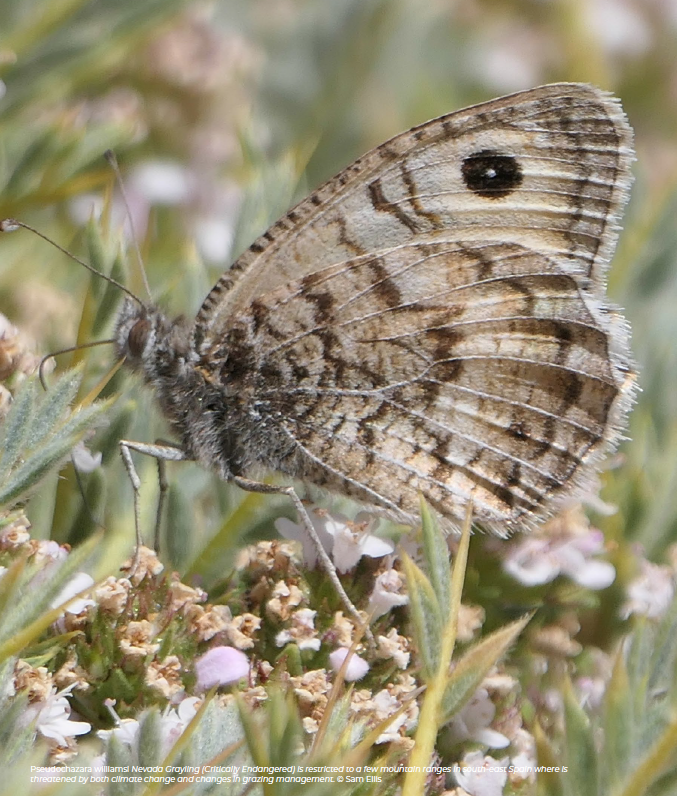
Species that live solely on mountain tops are especially threatened, for example, three Endangered endemic species in the mountain ranges of southern Spain: Zullich’s Blue Agriades zullichi, Nevada Blue and Andalusian Anomalous Blue Polyommatus violetae. Eight montane (mountain) species in Spain have also been added as Near Threatened because recent climate models predict that they will lose most of their climate space in the next 50 years (Romo et al., 2023). Some endemic species are extremely rare.
The Piedmont Anomalous Blue Polyommatus humedasae, ranked Critically Endangered, occurs in the Coyne Valley in North-west Italy, with five or fewer populations. It lives on scrubby slopes between 800-1000m and uses Common Sainfoin Onobrychis viciifolia as its larval foodplant.
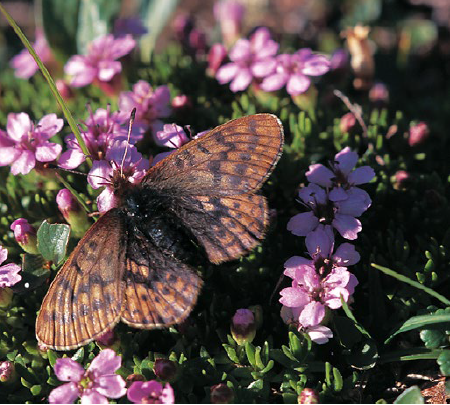
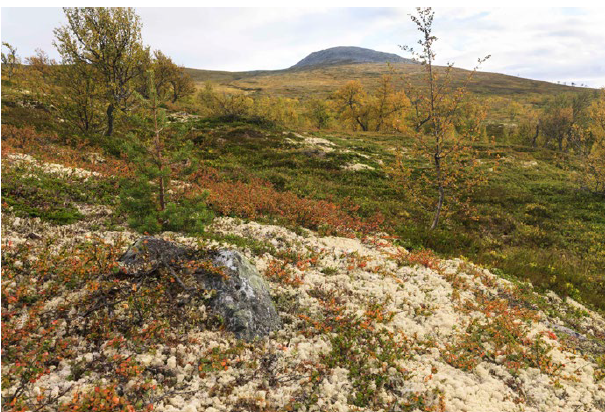
Climate change is also threatening another suite of mainly Holarctic species in the northern Alpine/Boreal zones where warmer and drier conditions are allowing scrub to spread and encroach on sensitive bog and tundra habitats. Several species are now classed as Endangered as a result, including Arctic Blue Agriades aquilo, Freija Fritillary Boloria freija, Arctic Ringlet Erebia disa and Arctic Grayling Oeneis bore (which were assessed as Least Concern in 2010); Arctic Fritillary B. chariclea, Lapland Fritillary Euphydryas iduna (Near Threatened in 2010); Polar Fritillary B. polaris (Vulnerable in 2010); and Dusky-winged Fritillary B. improba (Endangered in both assessments). In the Mediterranean region, climate change is adding new threats to species because of the increasing frequency of extreme drought and wildfires. This is threatening several endemic species that are confined to islands such as the Critically Endangered Karpathos Grayling Hipparchia christenseni (on Karpathos), as well as the Endangered Gran Canaria Grayling H. tamadabae (Gran Canaria), La Palma Grayling H. tilosi (La Palma), and Canary Brimstone Gonepteryx cleobule (Canary Islands).
Other threats that require further research include nitrogen deposition and new pesticides such as neonicotinoids, which persist in the environment.
Recommendations
This report shows that the number of butterfly species under threat in Europe has increased considerably since the last assessment (from 81 to 125 species threatened or Near Threatened). It is clear that far greater effort is needed urgently to conserve butterflies in Europe.
Butterfly Conservation Europe has published a list of Do’s and Don’ts for the species protected under the Habitats Directive (Van Swaay et al., 2012). The main recommendations for these and other butterflies are to:
1. Manage at a landscape scale (because butterflies usually exist as networks of populations across the landscape and cannot survive in the long term unless habitats are connected).
2. Maintain active pastoral systems (that are essential for many butterflies).
3. Manage for variety (as each species has its own special requirements).
4. Avoid uniform management, especially in hay meadows (as cutting can be harmful if done at the wrong time of year, but the best time varies from species to species and year to year).
5. Maintain habitat mosaics (to create a variety of habitats for different species to breed).
6. Maintain active management in woodland, as this is often essential for threatened woodland butterflies.
7. Have monitoring in place (to inform decisions on management and evaluate conservation progress).
Recommended Action
Butterfly species in Europe would benefit from a range of research and protection, such as the inclusion of threatened species in legislation, the protection and management of Prime Butterfly Areas, and the production of Species Action Plans.
Further research should include targeted surveys for species with unclear distributions, continuing to monitor butterfly populations across Europe through the European Butterfly Monitoring Scheme and ecological research to identify habitat management preferences of threatened species to underpin conservation programmes. It is also important to consider how land can be sustainably managed. For this, it would be helpful to produce and disseminate advice for the management of relevant European Priority Habitats for butterfly species.
Butterflies would also benefit from the development of measures aimed at conserving entire landscapes in Europe to reduce the impact of habitat fragmentation and isolation. Continuing to highlight threatened butterfly species in various contexts and sustaining and strengthening the network in Europe to coordinate and implement conservation is also recommended.
Site protection: 1) Take European threatened butterfly species into account when revising relevant national and regional legislation; 2) Protect and manage the network of Prime Butterfly Areas that have been identified in Europe as a priority (Van Swaay & Warren 2003). 3) Improve the protection of butterfly habitats throughout Europe, at both the site and landscape scales.
Survey, monitoring and ecological research
Species conservation: 1) Draw up Species Action (Recovery) Plans (SAPs) for threatened European species, prioritising those where an SAP has been identified as an urgent conservation action; 2) Develop and implement conservation projects for Europe’s most threatened butterfly species.
Land management: 1) Produce and disseminate land management guidance for relevant European Priority Habitats and for relevant European threatened species; 2) Ensure that all semi-natural habitats are managed appropriately for threatened butterflies and ensure continuation of traditional agricultural and forestry management systems on which so many species depend; 3) Develop measures to conserve entire landscapes in Europe and reduce the impact of habitat fragmentation and isolation; 4) Research and develop measures to reduce the impact of climate change on threatened European butterflies.
Advocacy: 1) Use the Red List assessment data and analyses to produce a European butterfly atlas.
Partnership building: Sustain and develop the existing effective network of partners through Butterfly Conservation Europe, to enable the above conservation measures for European threatened species to be coordinated and implemented.
Nevada Blue
This attractive blue butterfly is about the size of the Common Blue. The male is bright blue with a turquoise sheen on his uppersides. The female has chocolate brown uppersides with orange markings near the wing edges. The undersides are pale buff with black spots with a white halo and orange submarginal spots, better defined in the female, with males showing clear orange on the hindwing underside only. The butterfly flies in a single generation, from late June to late July. Its caterpillar eats the leaves of Kidney Vetch Anthyllis vulneraria arundana, overwintering as a small caterpillar.
The Nevada Blue (131-134 chromosomes) was separated from the Turquoise Blue Plebicula dorylus (147-151 chromosomes) in 1960, arising from chromosome analysis.
The butterfly lives on dry, steep, sparsely vegetated, calcareous rocky slopes in Sierra Nevada (Granada and Almería provinces), Sierra de Cazorla (Jaén province), Sierra Seca, Sierra Guillimona and La Sagra (north of Granada province), where it was found in just 14 10km squares. It is an endemic, confined to these areas in southern Spain where it occurs as two subspecies, Polyommatus golgus golgus (from 2400-3000m) and P. g. sagratrox (from 1900-2350m). These do not occur together and occupy different habitat types.
Nevada Blue subspecies Polyommatus golgus golgus occurs mainly on north-facing slopes and at the summits and is rarer on drier eastern slopes. Low shrubs (juniper and broom) and grassy places occur in the habitats used. P. golgus habitat at Sierra Nevada remains under the snow for at least half of the year. Snow cover protects against extreme cold and windy conditions and plays an important role in the water supply and humidity conditions of these ecosystems.
The northern populations of the Nevada Blue subspecies sagratrox live in four nearby mountains on clearings of Black Pine Pinus nigra woodlands and at higher elevations on cushion shrub communities with Hedgehog Broom Erinacea anthyllis. There are five main areas in Spain where the species is present, and they are all legally protected.
However, this does not mean the populations are safe.
The Red List of European Butterflies ranks the species as Endangered using the IUCN criteria B1ab (iii,v)+B2ab(iii,v).
B1ab(iii,v) means the extent of occurrence is severely fragmented or the number of locations is low and that a continuing decline was observed, estimated or inferred in (iii) area, extent and or quality of the habitat and (v) number of mature individuals.
B2ab(iii,v) means the area of occupancy is severely fragmented or the number of locations is low and that a continuing decline was observed, estimated or inferred in (iii) area, extent and or quality of the habitat and (v) number of mature individuals.
Threats to the species were examined in ten locations. In El Veleta, a ski slope was created, removing the habitat used by the butterfly. The ski station was enlarged, a development that has been associated with water pollution, waste accumulation and atmospheric nitrogen deposition. Visitor pressure led to trampling of vegetation, while livestock grazing, whether light or heavy, is also a threat.
La Sagra also recorded trampling and grazing as threats.
In Sierra De Guillimona, overgrazing is the chief threat detected during fieldwork. Adults of the species were recorded only in the extensively grazed areas and in the surrounding heavily grazed areas, the butterfly was not observed.
The population of Empanadas in the Sierra de Cazorla (located between the provincial borders of Jaén and Granada) is subject to extensive grazing by sheep and goats. The threat for this population would be that the grazing regime increases, but the Natural Park officers are already aware of the potential problem and will control the situation.
The impact of climate change on habitats is the main problem the species faces. Some of the observed consequences of this change are drought, increased temperature and reduction of snow coverage. If these impacts of climate change continue, the range of the species would be displaced to higher areas where the habitat might not be suitable. For the populations living in the highest areas of the mountains, these changes would mean their extinction. For all the other populations, the climate change impact would mean a substantial reduction in the area occupied by the population.
In 2012, a year of low rainfall in El Veleta, a drought occurred, and few butterflies were seen that year.
Illegal collecting in La Sagra and Guillimona was recorded as a cause of decline, although collecting is rarely regarded as an important cause of decline.
While the issues of urbanisation, tourist impacts, grazing and collecting are being addressed, climate change cannot be affected locally. All that can be done is to influence governments to reduce emissions.
References
Munguira, M.L., Castro, S., Barea-Azcon, J.M., Olivares, J. and Miteva, S. (2015c). Species Recovery Plan for the Sierra Nevada Blue Polyommatus (Plebicula) golgus. Butterfly Conservation Europe. https://api.semanticscholar.org/CorpusID:130477367
Van Swaay, C., Warren, M., Ellis, S., Clay, J., Bellotto, V., Allen, D.J. and Trottet, A. (2025). Measuring the pulse of European biodiversity. European Red List of Butterflies. Brussels, Belgium: European Commission. https://doi.org/10.2779/1280375