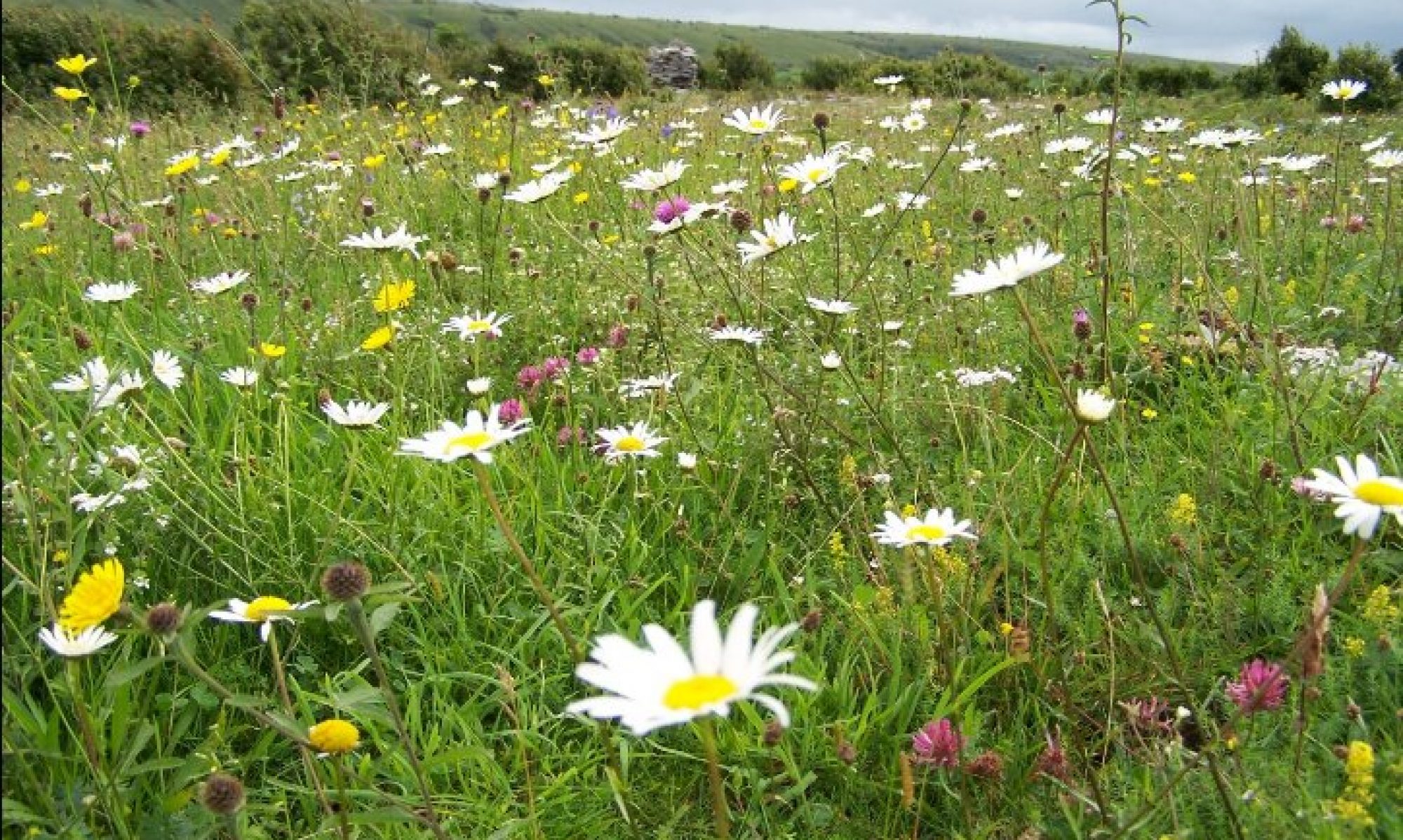
Our environment has seen severe declines in quality. There is no hiding this fact. Some of this is detailed in the state’s latest report on the quality of EU-protected habitats in Ireland, published by the National Parks and Wildlife Service in 2025. The report has found that 90% of habitats remain in Unfavourable status, with half showing ongoing declines.
The forthcoming updated red list for Ireland’s butterflies will make for grim reading. The decline figures are loud and clear, published annually by the National Biodiversity Data Centre in its reports on the findings of the Irish Butterfly Monitoring Scheme and in the recently published book, An Atlas of Butterflies in Ireland 2010-2021.
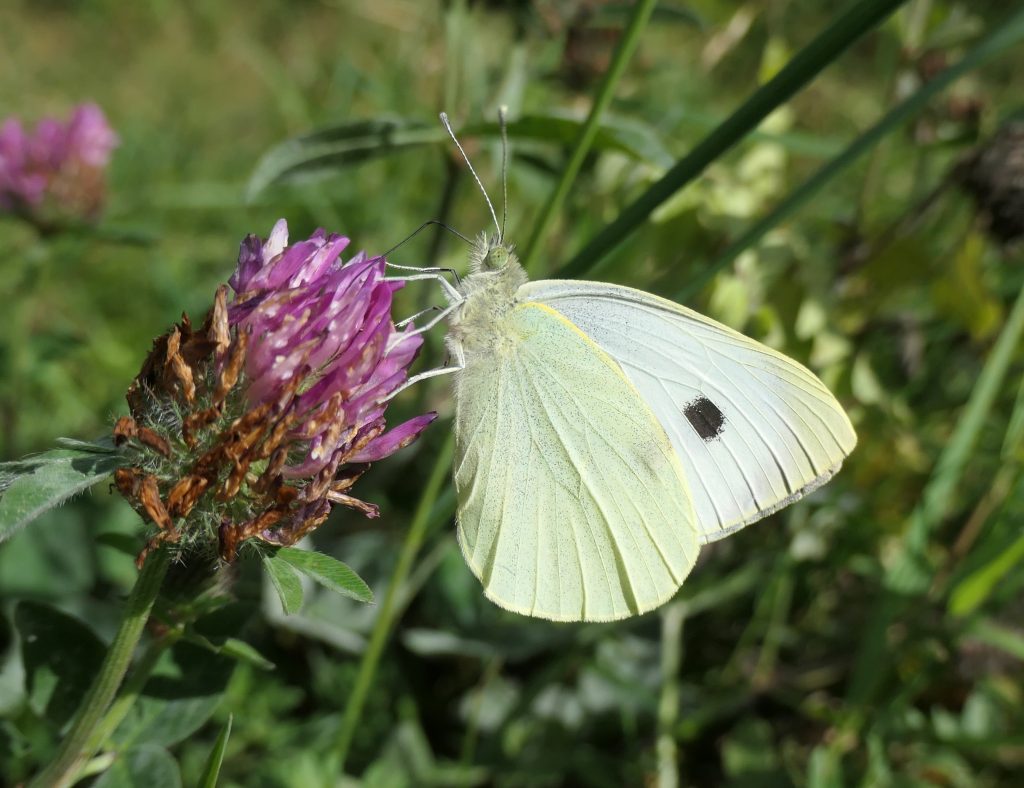
All the common white and common brown butterflies are in trouble, along with our commonest Lycaenids (the family including the blues, Small Copper and hairstreaks). Even the Small Tortoiseshell has suffered declines. Some less common, more specialised species are being imperilled by the habitat damage referenced in the 2025 NPWS report.
This article is not intended as a sweetener or to obfuscate the biodiversity crisis. However, the full story must be told, and this includes positives.
An Atlas of Ireland’s Butterflies 2010-2021 shows that the Silver-washed Fritillary has increased its distribution. It has increased from 377 10km squares during 1995-2010 to 422 10km squares in 2010-2021, an 11.94% increase. Increased recording is responsible for much of the recorded increase, but it has certainly moved into new woodland that has been developing on abandoned land and where new woods have been deliberately created.
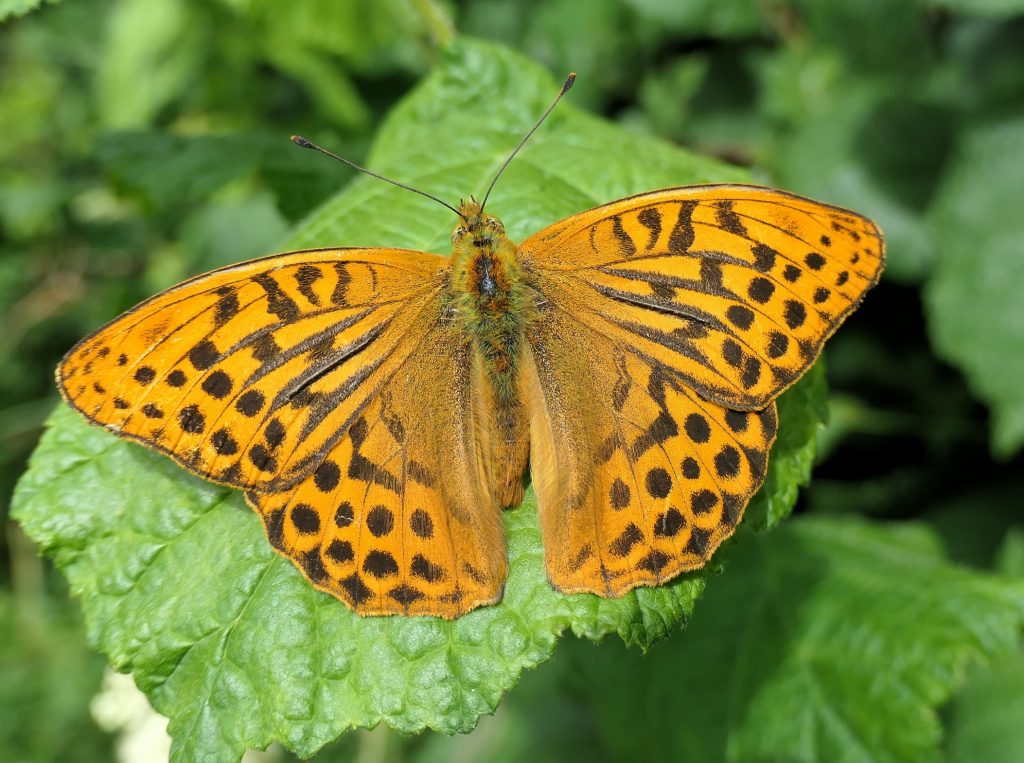
Strangely, the species is more widely distributed in Ireland than in Britain. It is absent from Scotland, despite occurring nearby in Northern Ireland, such as Ballycastle Forest, Antrim, 31km from Scotland. It is rare or absent from North Wales and most of Northern England, and areas in the Midlands. Its strongholds are in South Wales and across the south of England, especially in the south-west. It is expanding its distribution in England, and was recently seen near Newcastle’s border with Northumberland, after an absence of over 170 years (https://www.bbc.com/news/articles/cly9zd9zr9do). It appears that some are being released into woods far beyond its known range, by nature lovers who long to see it return. It was remarkably abundant in the New Forest, Hampshire, in the 19th century. That is certainly not true of the area today, where I have seen only occasional individuals.
We should rejoice in the increase of our most iconic woodland butterfly. Increasing shade in developing plantation forestry will shade it out of some woods, but the increase in woodland and mature scrub elsewhere may offset or more than compensate for any such loss. It is also a resilient butterfly, capable of hanging on for many years in small, suitable areas of woodland until more becomes available. This can happen when woodland spreads naturally or where felling occurs, leaving some non-timber trees like birch, when trees are thinned, or woodland sites are restored by the removal of non-native trees, which has occurred in some woods owned by Coillte, the state forestry body. Creating clearings, turning points and widening rides in plantation forestry can also create new habitat. Another example of how a new habitat can appear was observed in plantation forestry in Lullybeg, County Kildare, when many tall Lodgepole Pines died during the extreme cold in 2010, leaving hardier trees like Scots Pine and Downy Birch in place to produce an open, brighter wood.
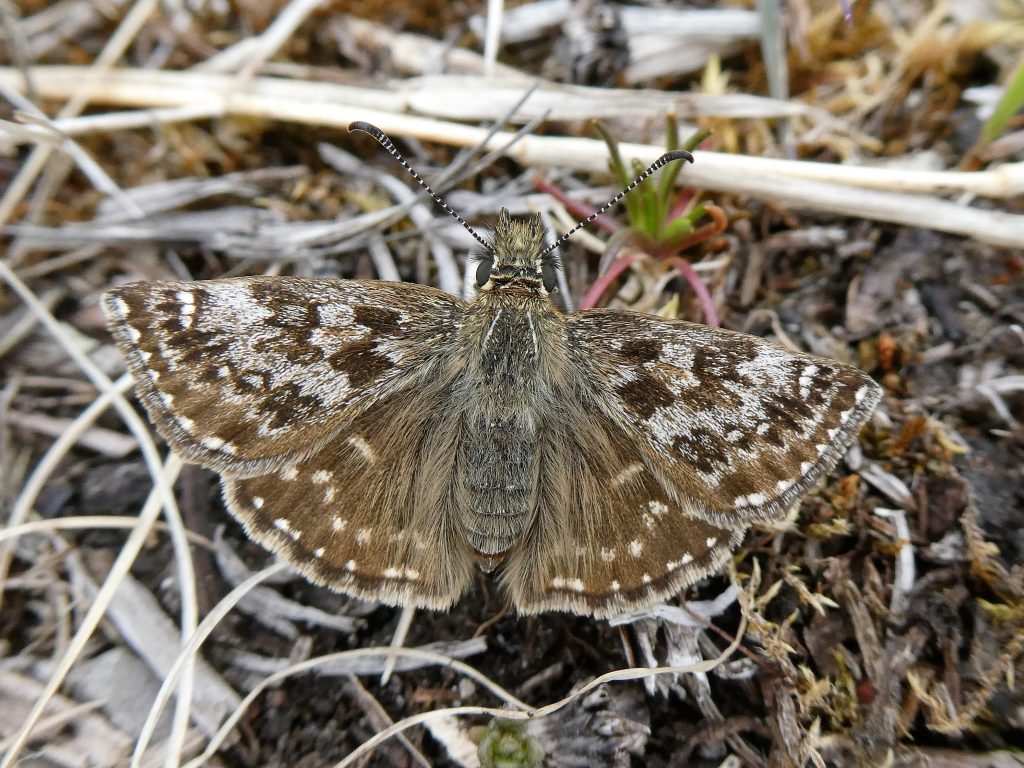
Another species that has been shown to increase its distribution is the Dingy Skipper. This localised butterfly was found in 128 10km squares from 1995-2010 and in 161 10km squares during the period 2010-2021, a 25.78% increase.
What is behind this increase? Increased recording is a factor, but others include increased management of suitable grassland habitat funded by agri-environmental schemes. During the period 2010-2015, 242 ha of scrub were removed to restore Annex I priority grassland in the Burren (Dunford and Parr, 2020). This is done to increase and maintain a priority habitat, orchid-rich calcareous grassland, a habitat highly favoured by the Dingy Skipper. Laying tracks in plantation forestry also helps when limestone aggregate is laid to improve access. This is often carried out with the clearing of overhanging and encroaching tree and scrub material, adding light and warmth to the track, encouraging the butterfly to breed and disperse. Ending peat production on state-owned bogs has helped in some bogs where drier areas, such as gravel fields, occur. Using material dredged from canals to form berms has provided habitat for the species along areas of the Royal Canal, such as east of Enfield and near the Leinster Viaduct.
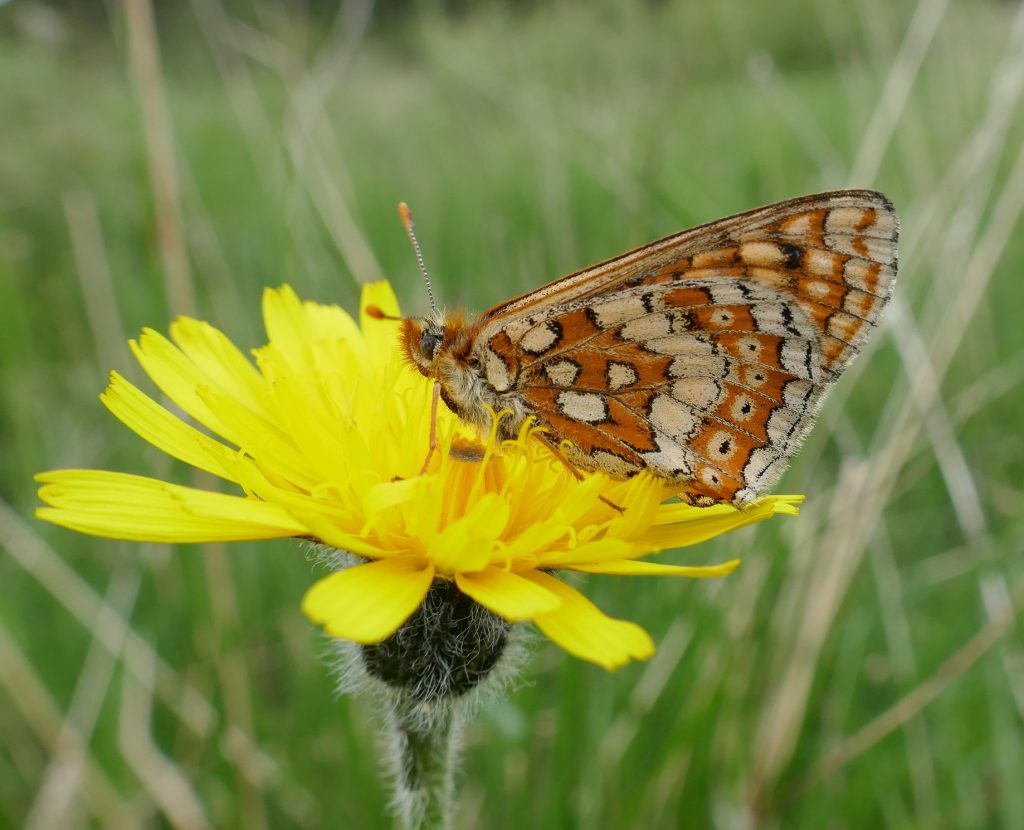
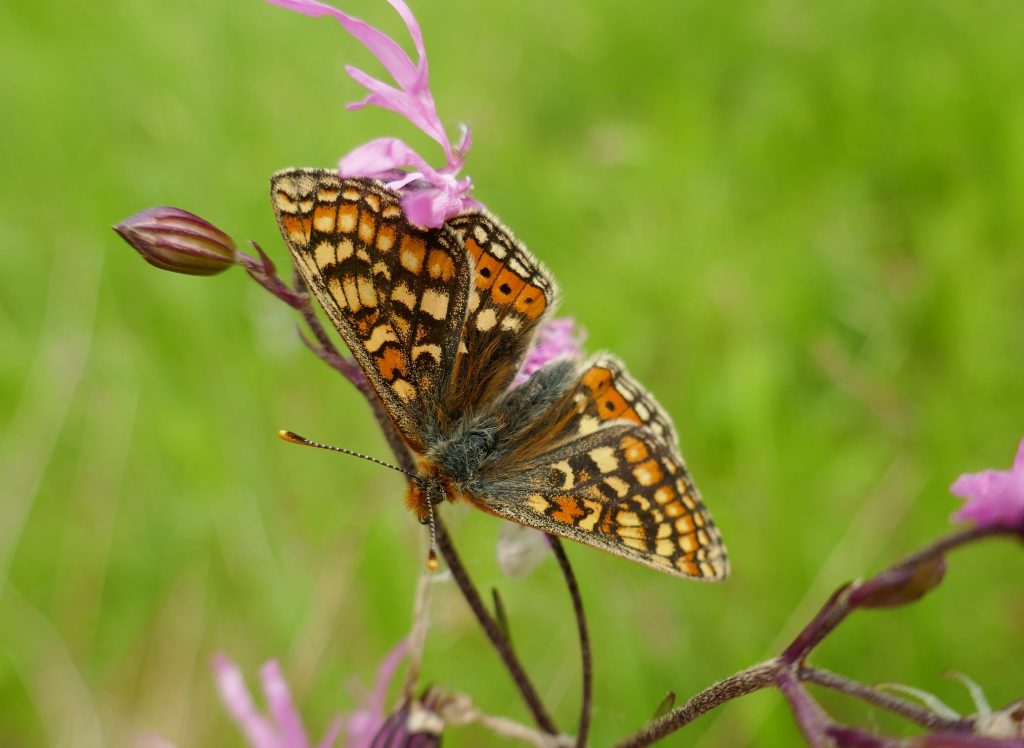
The Marsh Fritillary, a butterfly whose extraordinary fluctuations in abundance make its populations notoriously difficult to track, has some positive news. Its distribution has risen from 248 10km squares in 1995-2009 to 355 10km squares during 2010-2021. There is no doubt that recording effort is responsible for some of this rise, and, importantly, just a single Marsh Fritillary butterfly was recorded in 100 of the 10km squares during 2010-2021, which is not evidence of a colony. However, even allowing for these two issues, it does not appear to have declined. NPWS reports that the overall status of Marsh Fritillary is Favourable, which represents a genuine improvement since the Inadequate assessment reported in 2019.
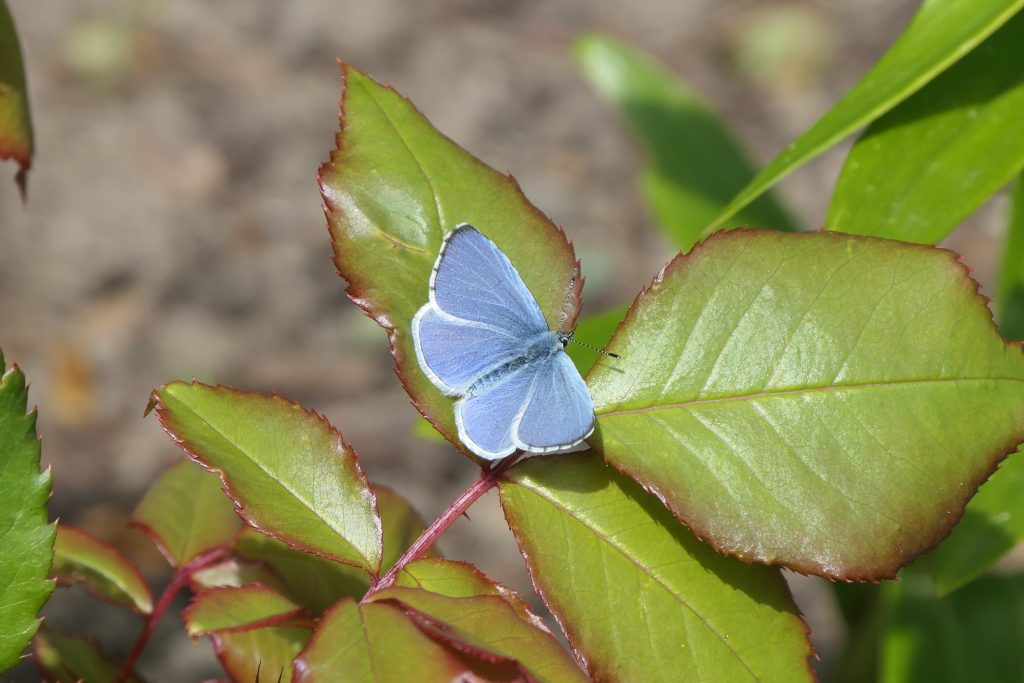
Even more impressive is the expansion of the Holly Blue. It rose by 28.42% in 2010-2021 compared with its distribution in 1995-2009. This is a clear indication of its increase. It is also likelier to produce a second and third generation in one year than it was in the past. It is a climate change beneficiary. Its lovely lilac blue adds a dynamic splash of glory to our spring and summer gardens, and it is universally welcome.
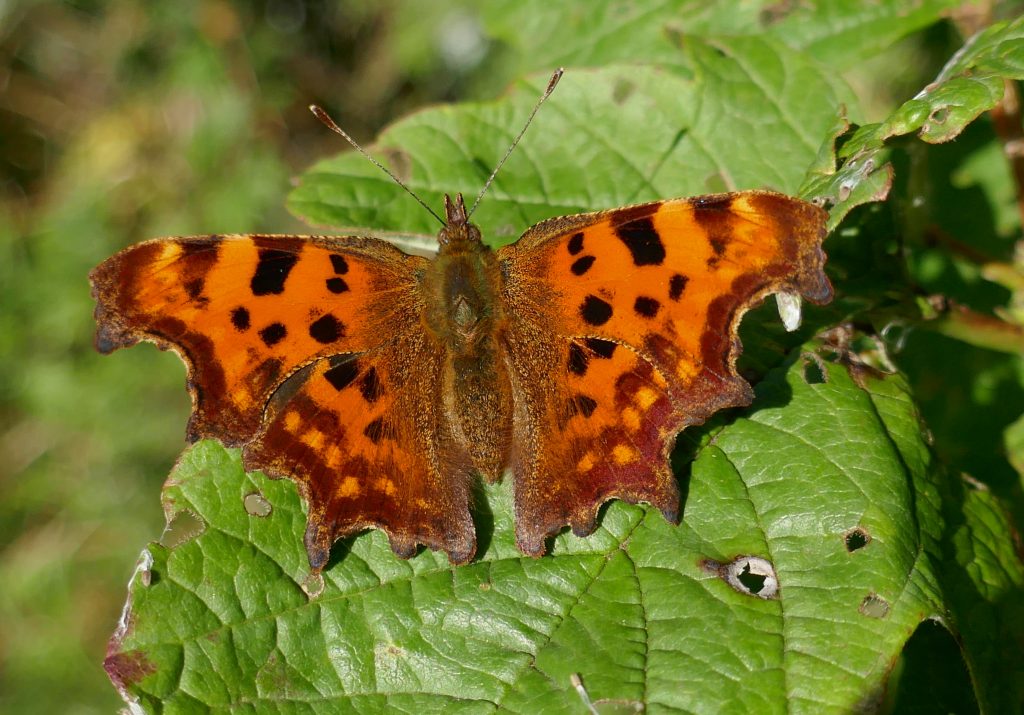

The top performer is a butterfly that we didn’t have before the 21st century. The Comma has increased its distribution by 584% during 2010-2021. Up to 2010, it was found in 32 10km squares. By 2021, this reached 219, and this continues to increase. It is rapidly moving north and west. This attractive nettle-feeding butterfly (likes Wych Elm too) is now a common sight in woods in the east, southeast and parts of the midlands. Like the Holly Blue, our warming climate suits it. The Comma’s attractive caterpillar is solitary and typically hides under nettle leaves. These habits make it more reliant on ambient temperature than its communal cousins, the Peacock and Small Tortoiseshell, whose colonial larvae bask together to raise their body heat to the level needed for digestion and growth. Lower temperatures probably explain the Comma’s past absence from Ireland. It is also expanding rapidly in Scotland, which it re-entered in the early 2000s, after an absence of 140 years!
How you can help
Unless you provide larval foodplants in your garden, butterflies will not breed there, but will feed if you provide high quantities of the right flowers in the right places. Sunny, sheltered places are needed for the flowers, because few butterflies can tolerate shade in cooler climates.
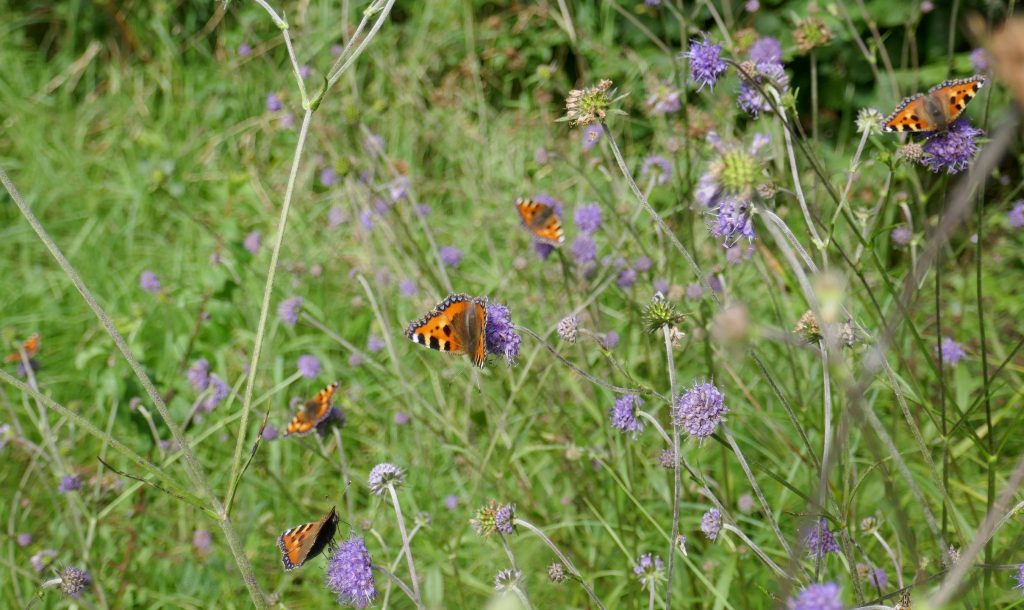
Spring flowers, March/April: Dandelion, Cuckoo Flower, Bluebell, Bugle, Primrose, Grey Willow, Goat Willow (ten-inch-long cuttings inserted 3-4 inches into soil will grow these willows, but grow away from masonry), Blackthorn, Common Daisy are all excellent native flowers in March and April.
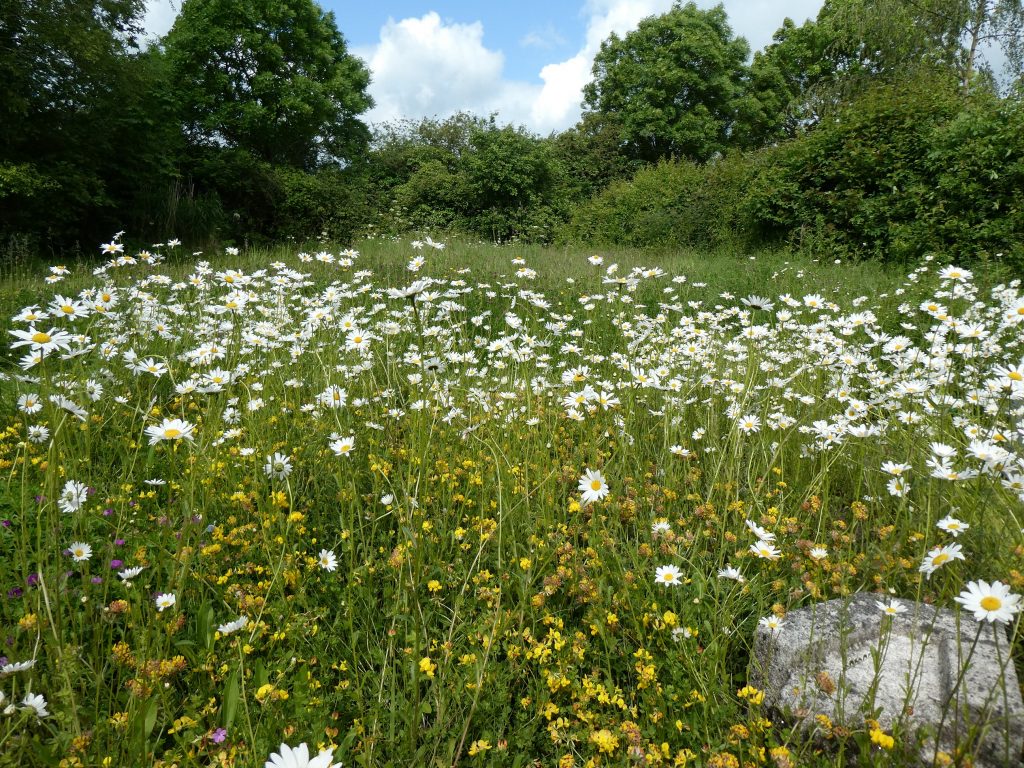
Spring Flowers, May: Hawthorn, Wild Crab Apple, Bush Vetch, Common Bird’s-foot-trefoil, Cuckoo Flower, Bloody Crane’s-bill, Common Catsear are very useful natives for butterflies.
Summer flowers, June: Ragged Robin, Bramble, Rough Hawkbit, Kidney Vetch, clovers, especially Red Clover and White Clover, will help early summer butterflies.
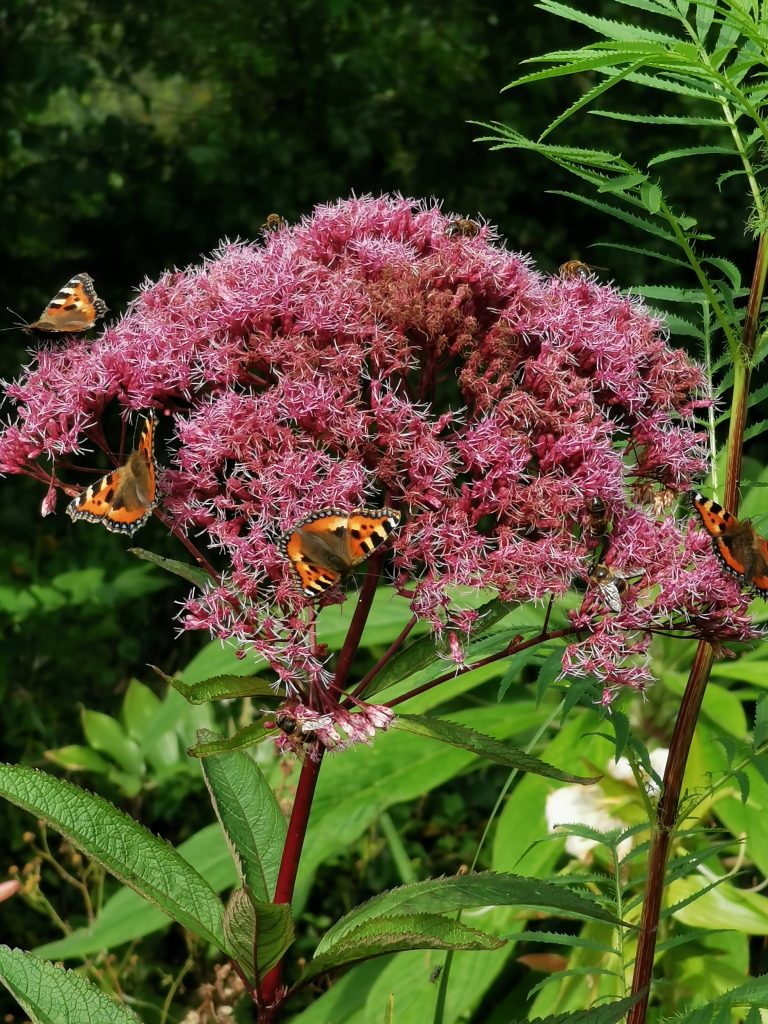
Summer flowers, July-August: Hemp Agrimony, Water Mint, Common Knapweed, Field Scabious, Common Marjoram, Creeping Thistle, Spear Thistle, Fragrant Orchid, Tufted Vetch, Purple Loosestrife (August) and Teasel are excellent for summer butterflies.
Autumn: Devil’s-bit Scabious, Common Ivy, Bramble (blackberries used by butterflies) are valuable native flowers for autumn butterflies; Argentinian Vervain Verbena bonariensis, a non-native, is outstanding.
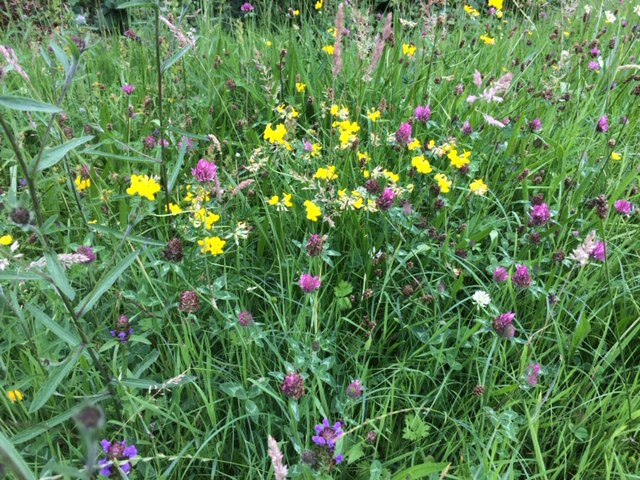
Note: many flowers in garden centres are unsuitable for butterflies. Nearly all are non-native, and even when natives are stocked, they are usually imported. Many garden centre flowers do not contain nectar. No matter how attractive they look, insects ignore resourceless flowers.
Grow your own native flowers. Some will be in your garden already. Others will be found nearby. Take ripe seed from common wildflowers and sow it fresh in seed trays and plant out when ready, or sow directly onto bare soil. More advice can be found here: https://butterflyconservation.ie/wp/butterflies/gardening-for-butterflies/
References
BBC (2025) Rare butterfly spotted for first time since 1850. Available at: https://www.bbc.com/news/articles/cly9zd9zr9do (Accessed 31 December 2025)
Dunford, B. & Parr, L. (2020) Farming for Conservation in the Burren. Pp. 56-103. In O’Rourke & Finn (2020) Farming for Nature The Role of Results-based Payments. National Parks and Wildlife Service Dublin.
Harding, J. (2021). The Irish Butterfly Book A Complete Guide to the Butterflies of Ireland. Privately published, Maynooth.
Harding, J. & Mapplebeck, P. (2025) Silver-washed Fritillary Argynnis paphia Pp 90-91. In Harding & Lysaght (2025), An Atlas of Butterflies in Ireland 2010-2021. The National Biodiversity Data Centre. Waterford.
NPWS (2025). The Status of EU Protected Habitats and Species in Ireland. Volume 1: Summary Overview. Unpublished NPWS report. Edited by: Domhnall Finch, Aoife Delaney, Fionnuala O’Neill and Deirdre Lynn