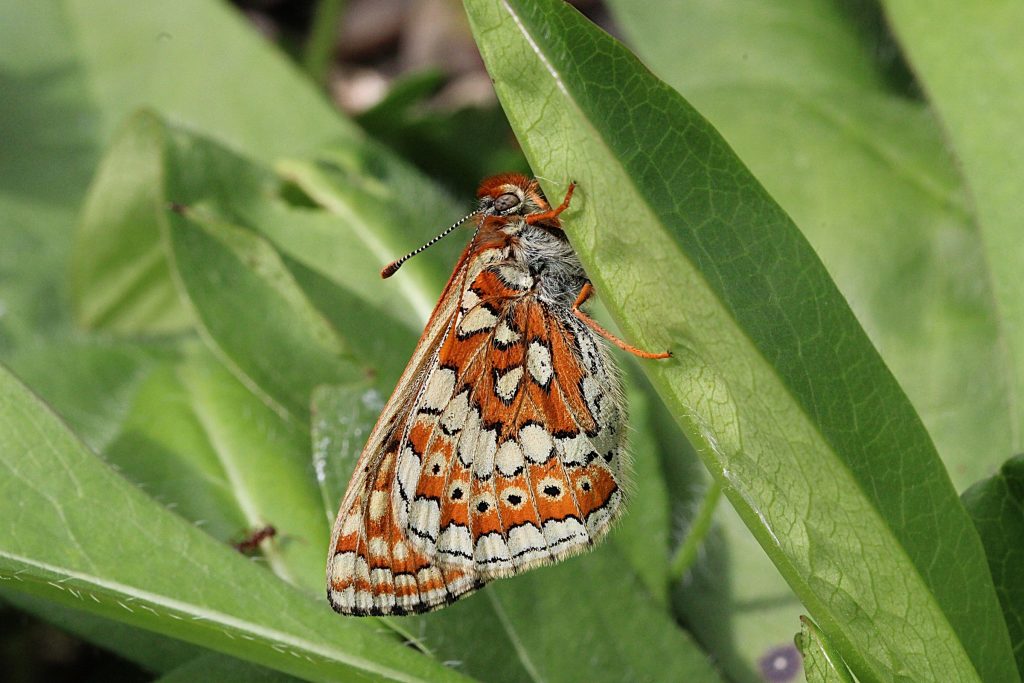
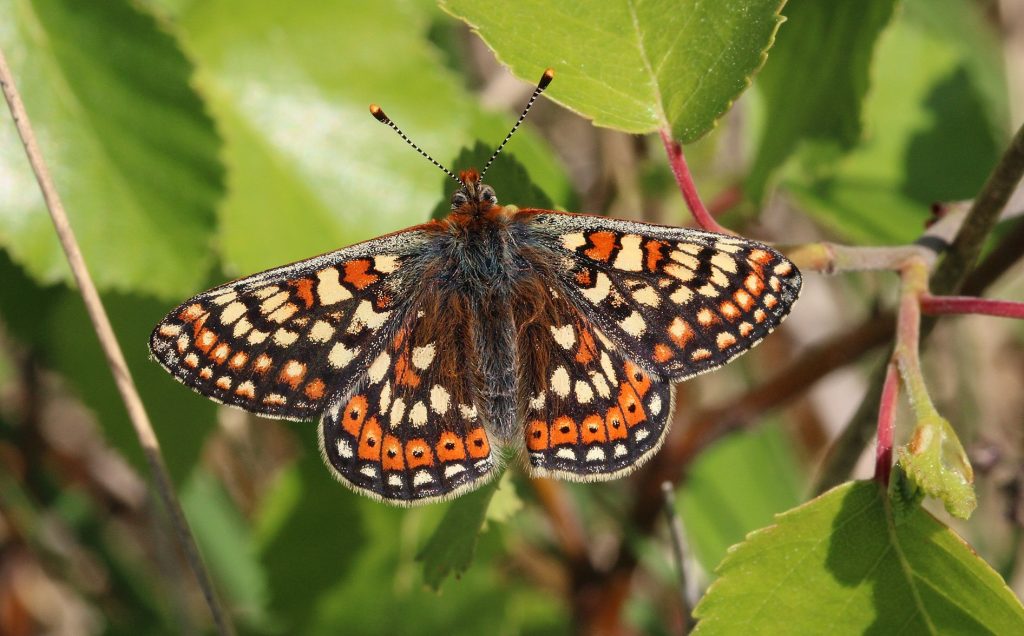
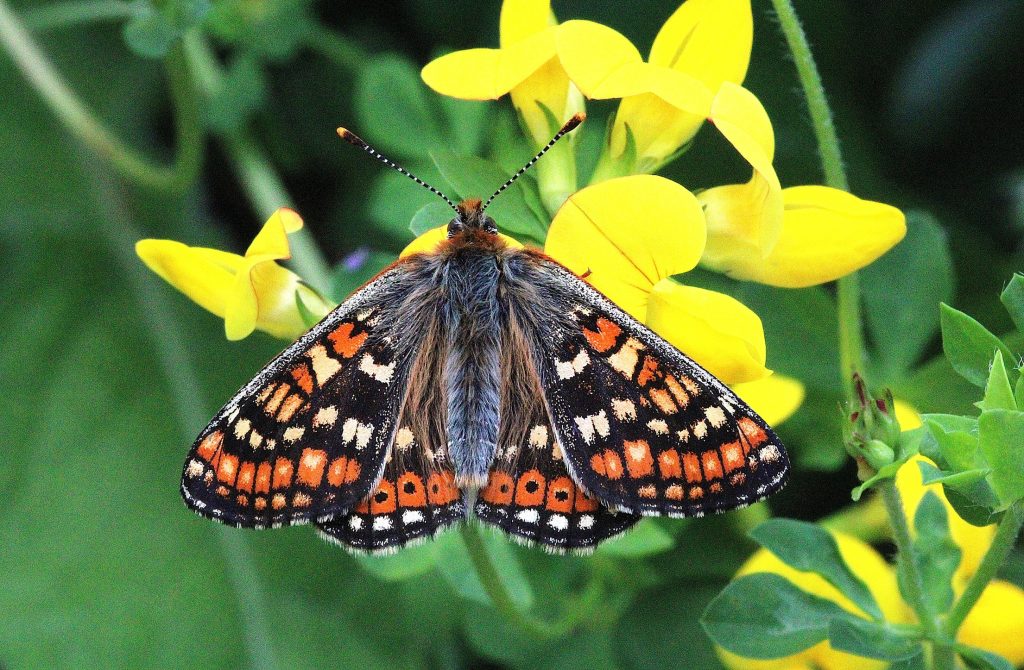
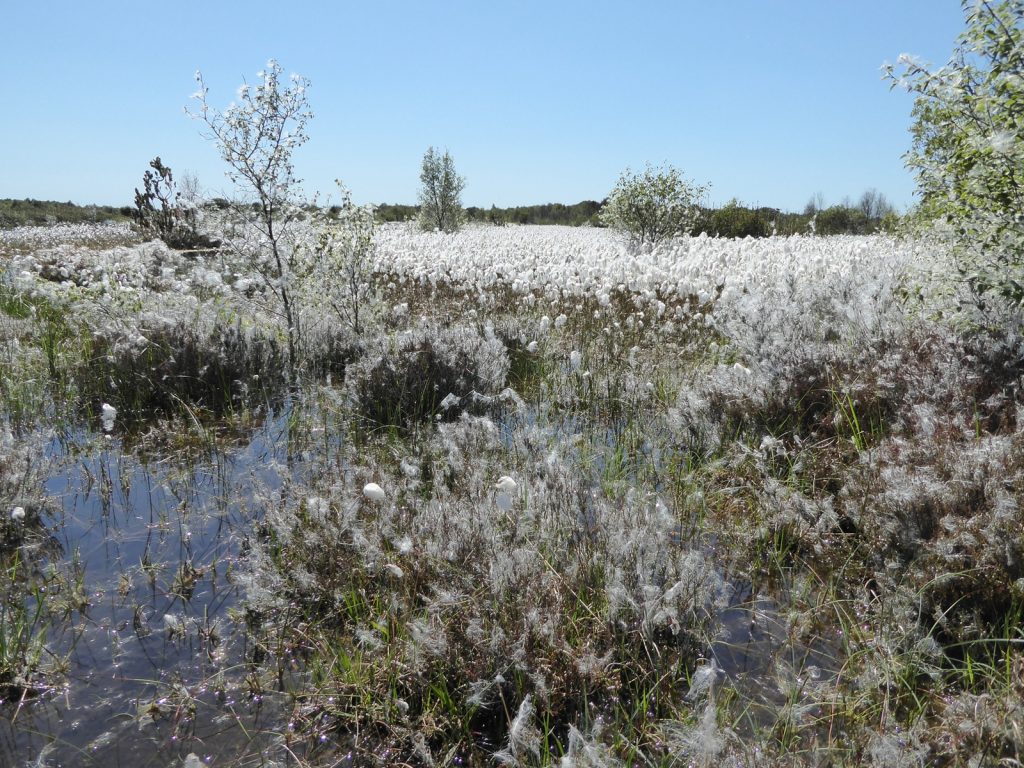
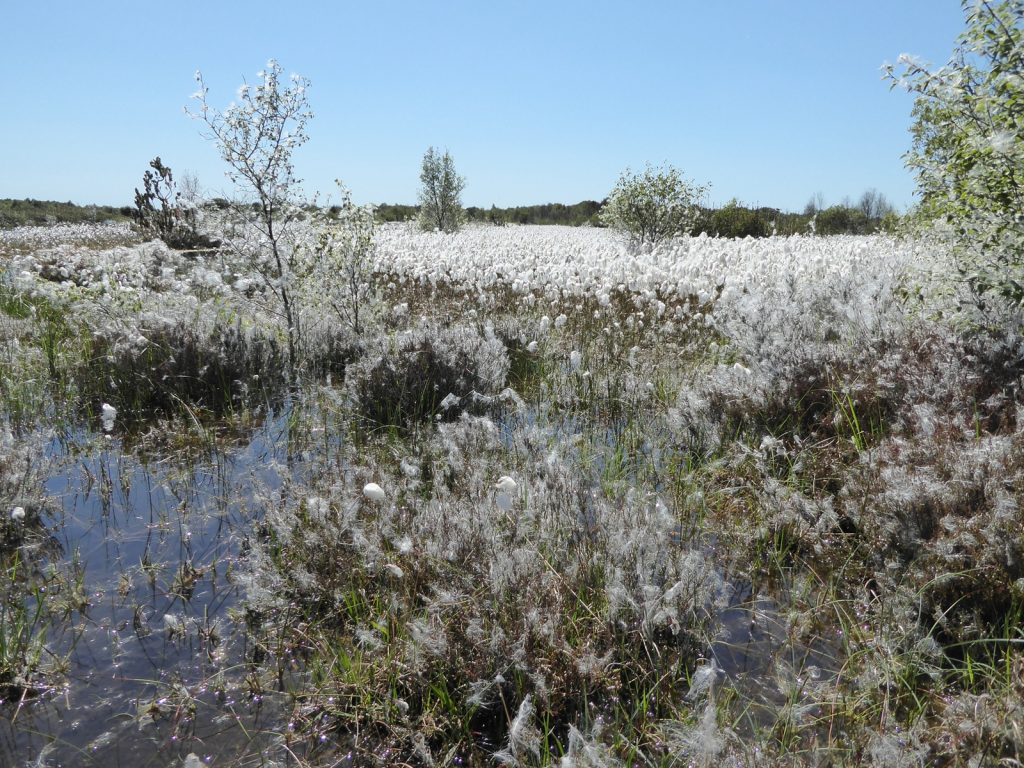
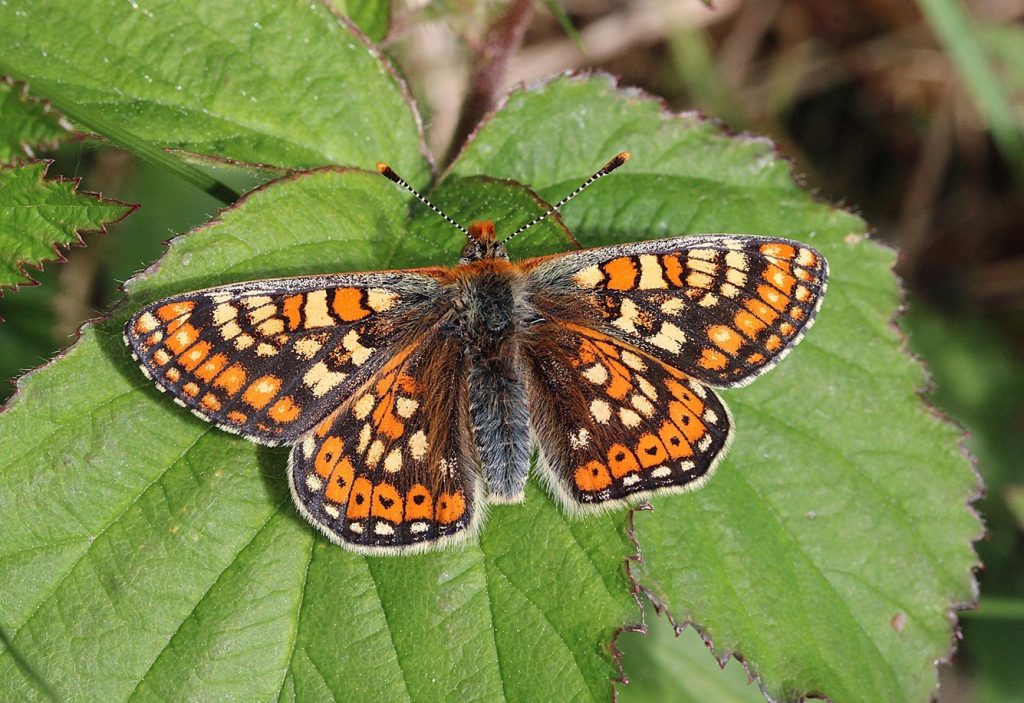
The rare Marsh Fritillary butterfly, Ireland’s only legally protected insect, ranked Vulnerable on Ireland’s Butterfly Red List, continues to thrive at Lullybeg Reserve. Butterfly Conservation Ireland members monitor butterfly populations on the reserve. One of our members, Pat Wyse, counted 24 adults along the transect route through part of the reserve, with more uncounted off the transect. Only butterflies along the fixed route are counted according to the methodology; butterflies 2.5 metres either side and five metres ahead and above the walker are recorded.
Lullybeg is managed for butterflies, with grazing, scrub control, and soil disturbance applied to selected areas to benefit all butterflies present in the reserve.
The sight of beautiful adult Marsh Fritillaries on the wing in May and June is a reward for the hard work of our supporters and members, and an incentive to continue our stewardship.
The Marsh Fritillary continues to thrive in Lullybeg, but for how much longer? Listen to the interview with RTE’s Philip Boucher Hayes conducted on Lullybeg Reserve on 26th of May (from 38 minutes to the close): https://www.rte.ie/radio/radio1/countrywide/episodes/11799226/
Thanks to everyone involved in the reserve’s management. Enjoy the photographs.
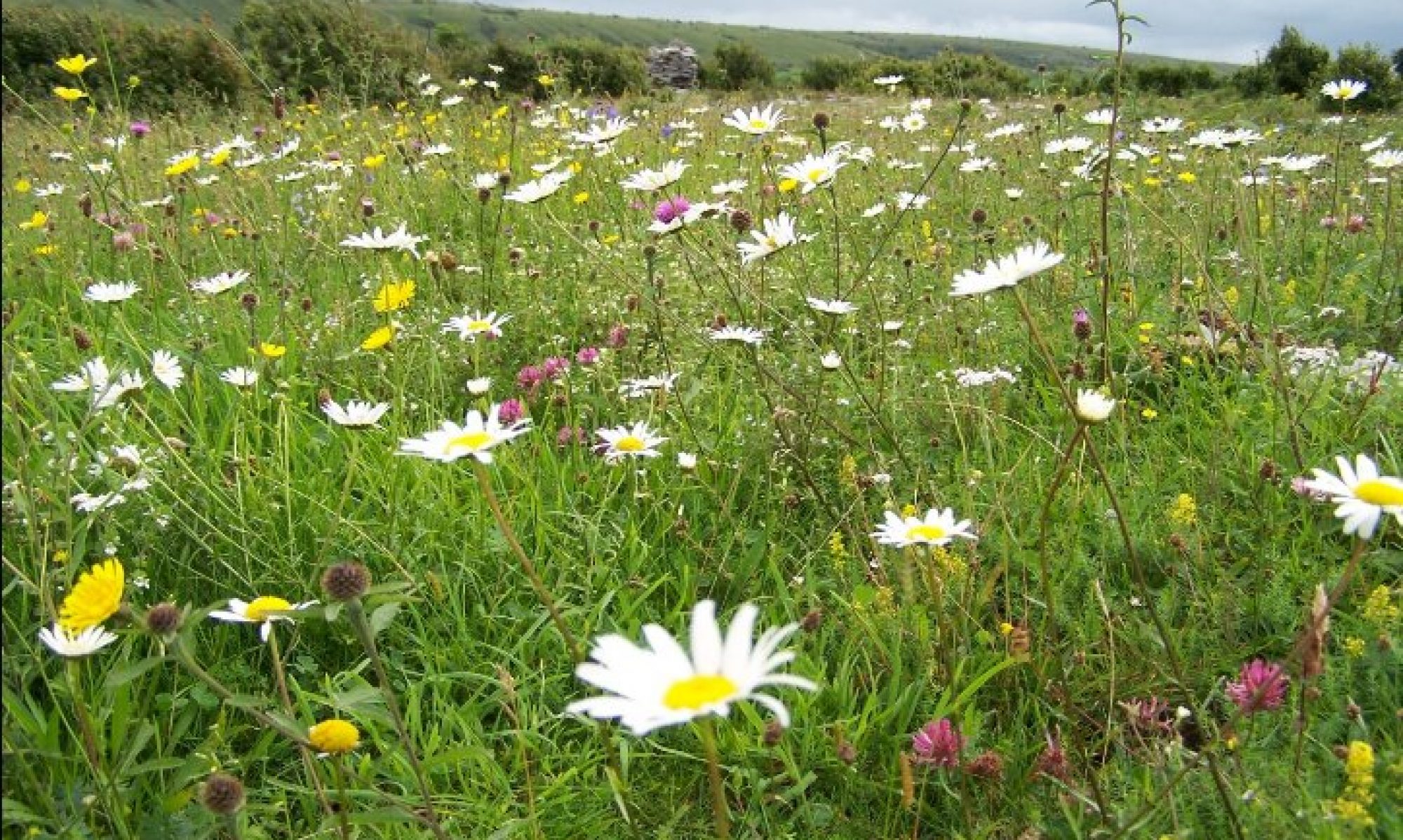
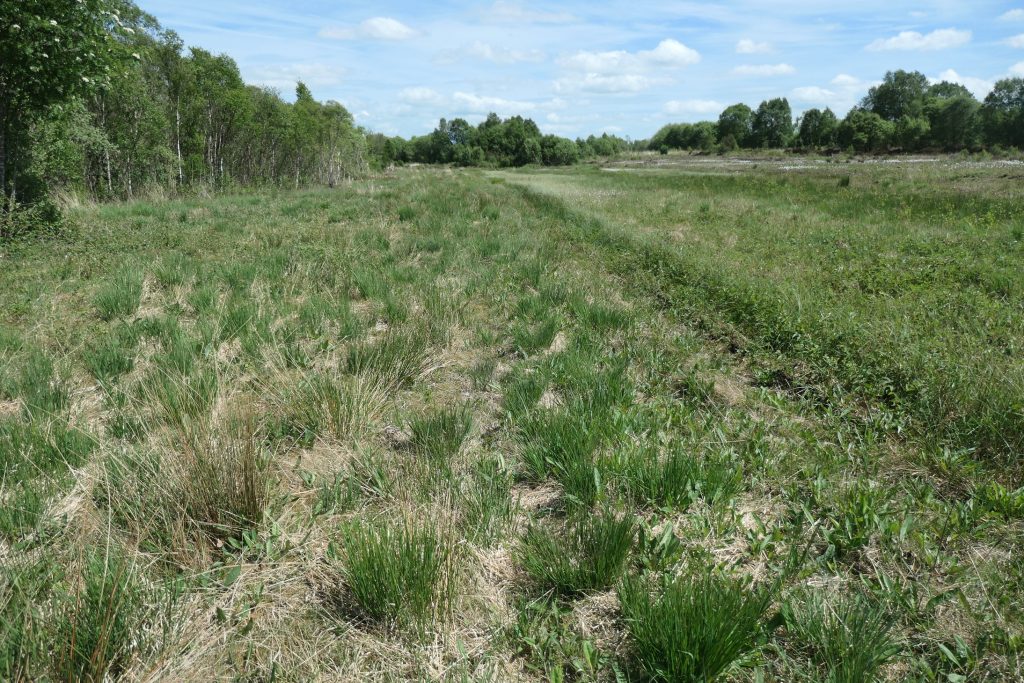
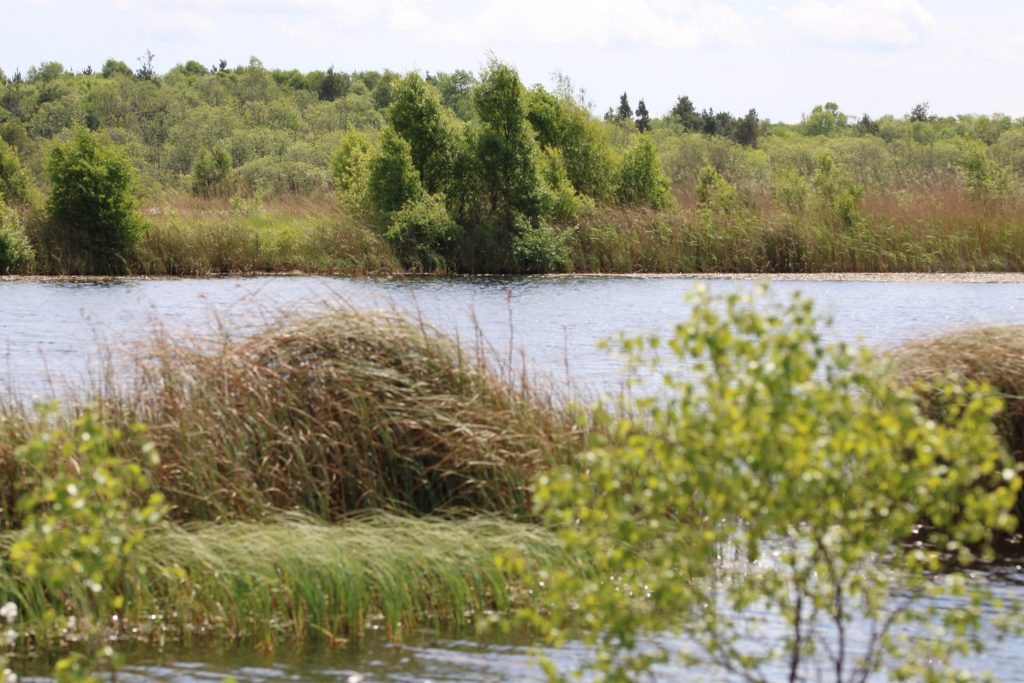
Some butterflies have dull, muted underside colouring, but not the Marsh Fritillary!A male Marsh Fritillary stands guard atop a birch, overlooking the breeding area. Any butterfly is pursued in the hope of revealing a receptive female.No two are alike; compare this male Marsh Fritillary with the one above.Marsh Fritillary habitat on the reserve. Note the open, unshaded grassland, the temperature-raising straw-coloured leaf litter and the patchy structure of the sward, which provides warmth and shelter for feeding caterpillars.Lullybeg Lake in mid-June. This lake is a winter roost for Whopper Swans.
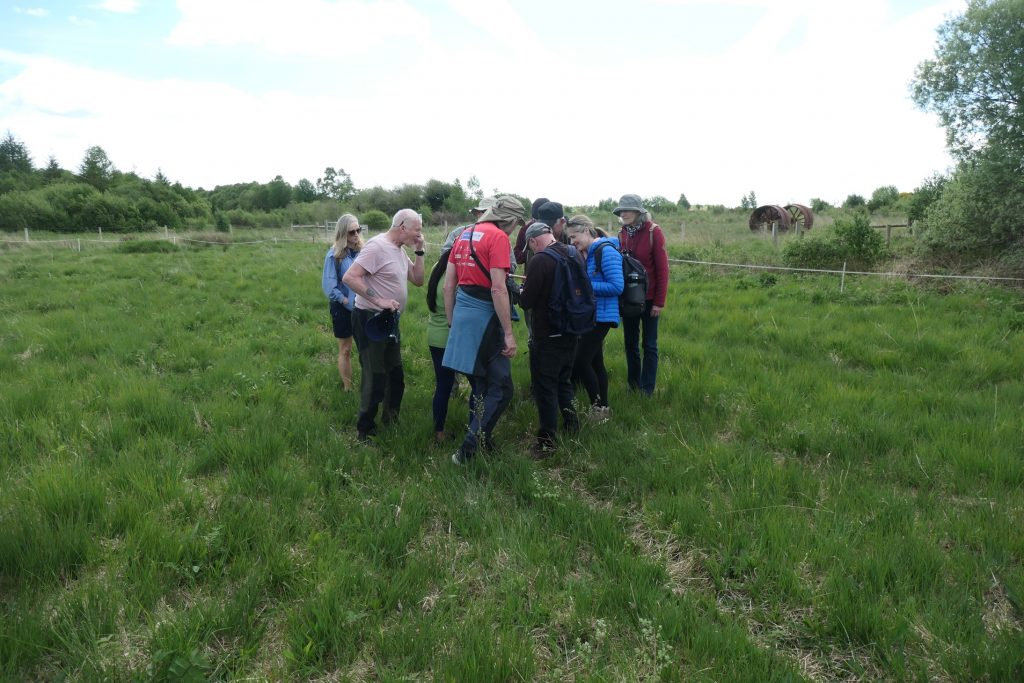
Irish weather is the proverbial box of chocolates, but we got the choicest confectionery for our well-attended event today. Not too hot, dry, sunny, gentle breeze…perfection.
Lullybeg Lake today.What Lullybeg Lake looks like in mid-June.
The next question is, what will we see? Will the poor weather in previous weeks limit the variety on offer?
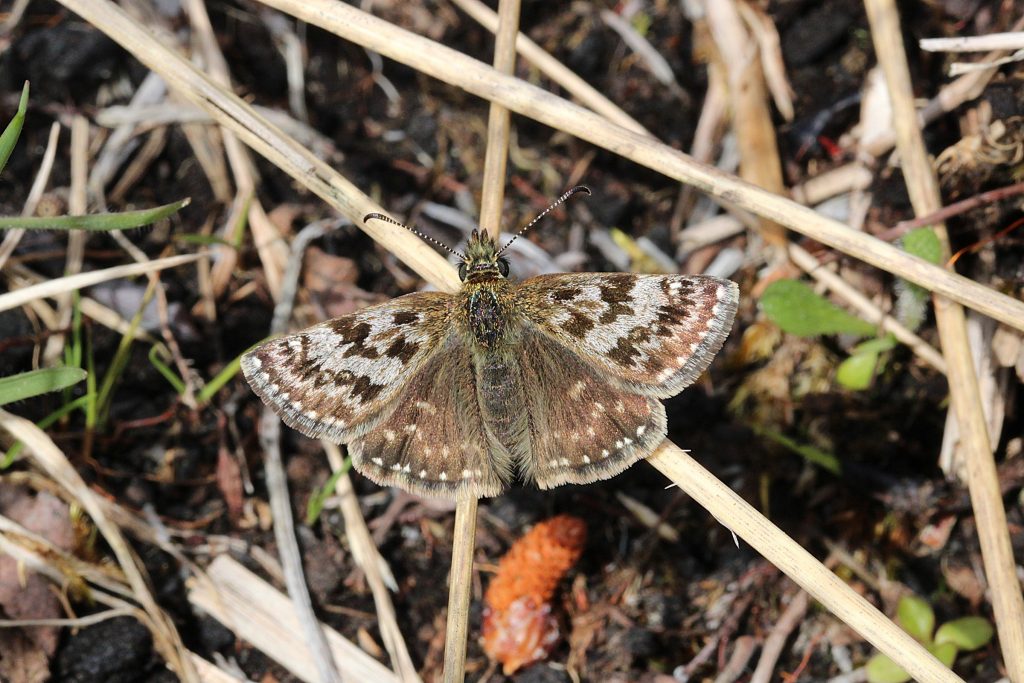
Dingy Skipper, female, Lullybeg Reserve.
It limited the number of butterflies we could expect in good weather in late May, but not the diversity. Dingy Skipper, Cryptic Wood White, Green-veined White, Orange-tip (adults and caterpillars), and a large Brimstone population, including females giving a close view of laying on Alder Buckthorn, Common Blue, Holly Blue, Red Admiral, Painted Lady and around 30 Marsh Fritillaries, very active, chasing one another, chasing Four-spotted Chaser dragonflies (reckless, misguided and potentially fatal behaviour!).
Brimstone caterpillar on Alder Buckthorn. Females were very busy laying eggs today.
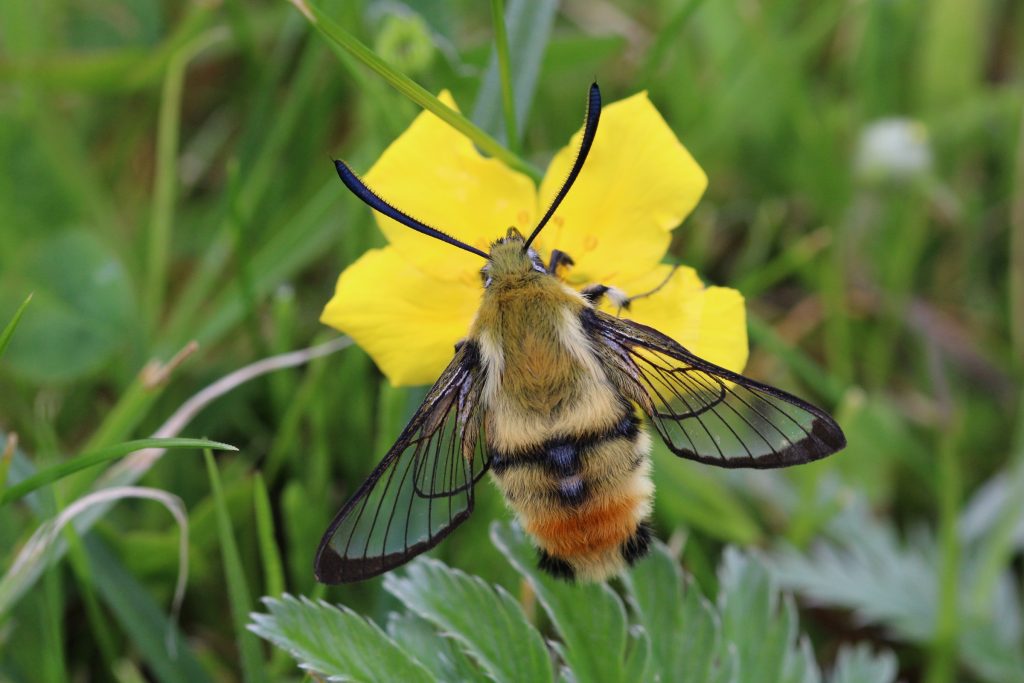
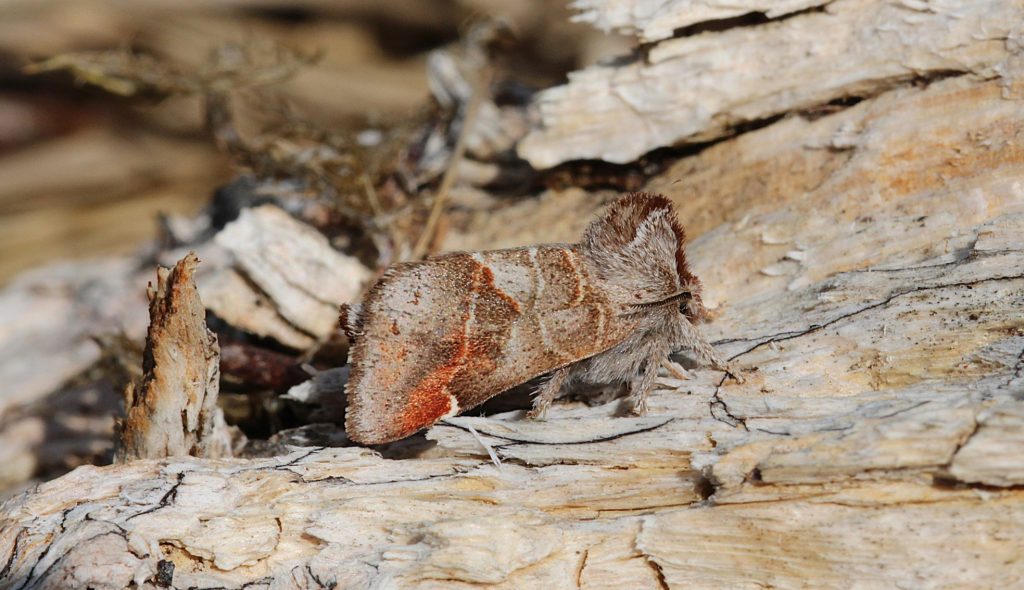
Moths abounded, with Burnet Companion, Common Heath, Mother Shipton, Narrow-bordered Bee Hawkmoth, Pyrausta despicata and a nice rarity, Small Chocolate-tip.
Marsh Fritillary, male, on Meadowsweet.
Dragonflies were everywhere, especially Four-spotted Chaser, Hairy Dragonfly, Large Red Damselfly, Variable Damselfly and Blue-tailed Damselfly.
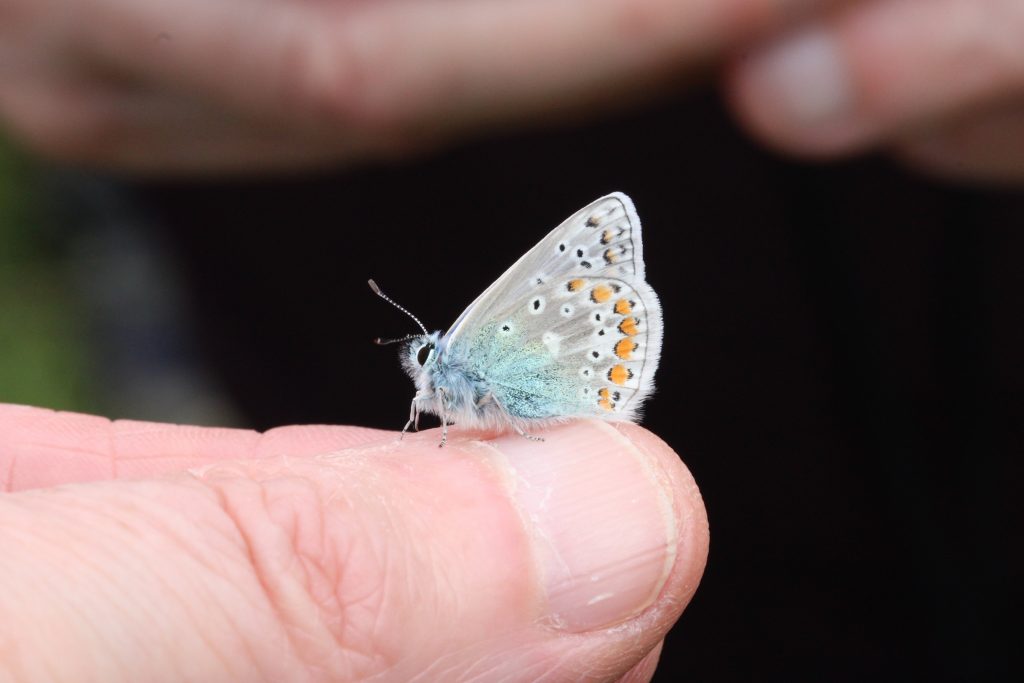
This Common Blue had just finished expanding his wings after hatching from his pupa, hence his docility.
The habitats were in good condition after our grazing, scrub-cutting, and calibrated soil disturbance, creating a diversity of sward heights and ground conditions. All we need for the reserve’s butterflies and moths to take advantage of these conditions is the right weather.
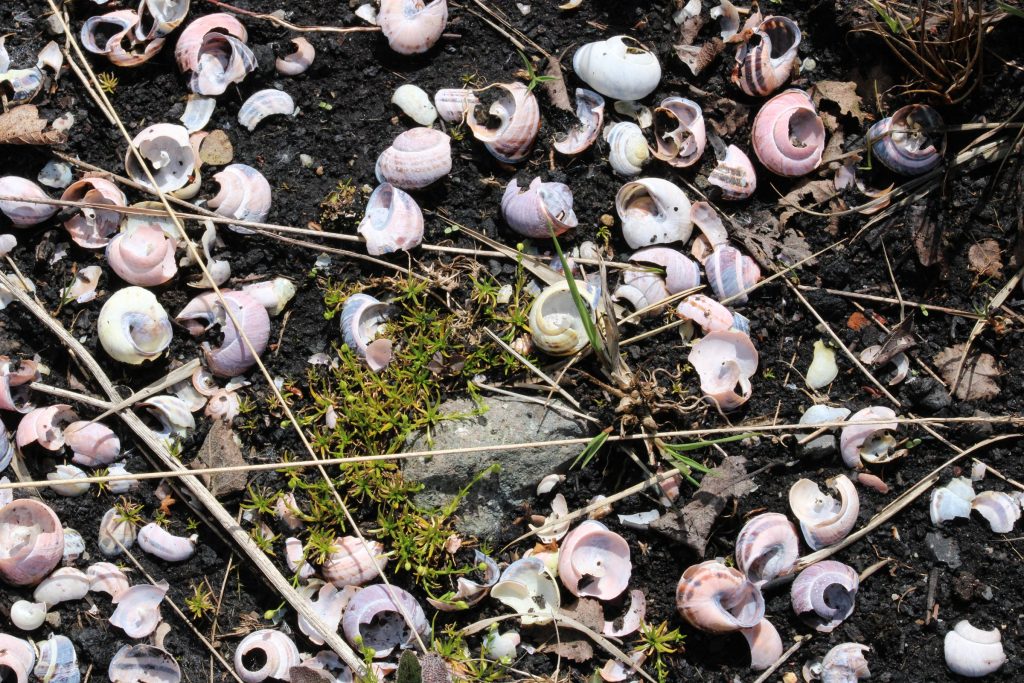
A Song Thrush’s anvil. This is his workshop, where he cracks shells open.
It was reassuring to see several frogs of a range of ages, so our wetlands are likely to be in a good state.
It is wonderful to see so much nature in beautiful, unspoilt, quiet habitats. All wild things need a good home, and they have it in Lullybeg…for the moment.
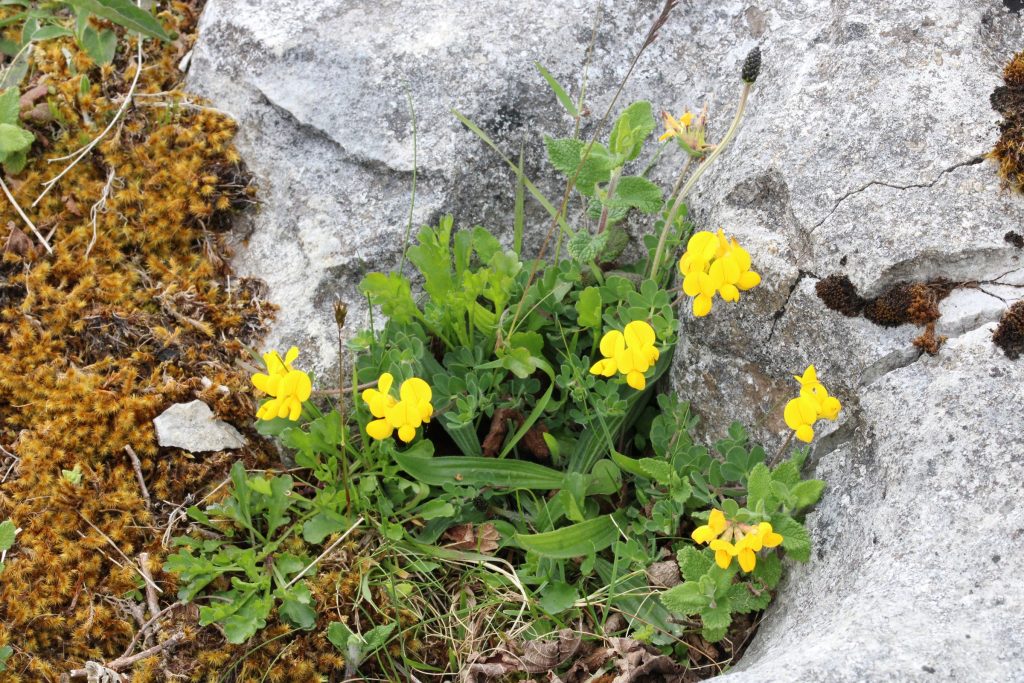
Most Narrow-bordered Bee Hawkmoths darted in and out of view, but a couple allowed close approach when feeding on Common Bird’s-foot-trefoil. This one is on Silverweed.
The other really satisfying part of the day was enjoying this beauty with lovely people who appreciated the experience of our special nature and special places. Everyone took great interest in the activities taking place, and hopefully took lovely photographs. A couple of butterflies sat on human arms and hands, a lovely intimacy with the airborne gems of our boggy places.
Small Chocolate-tip, a scarce moth in Ireland. It has been recorded in just 28 of Ireland’s 10km squares during 2000-2012 (2.7% of Ireland’s 10km squares). Lullybeg is one of just two midland locations known to hold it (Allen et al., 2016).
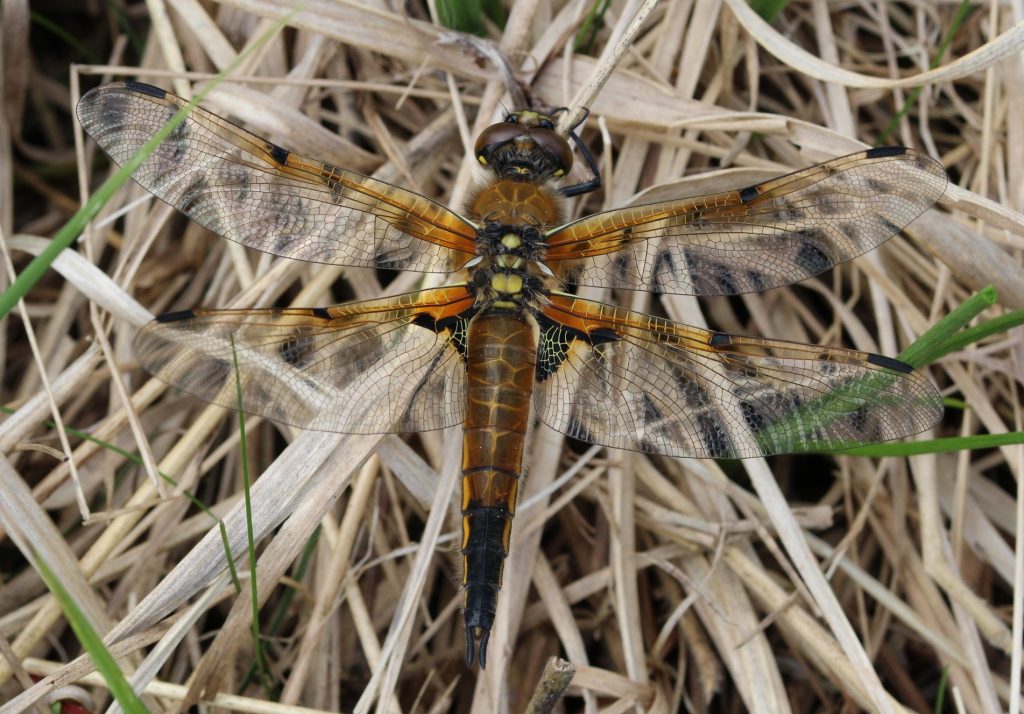
One Four-spotted Chaser dragonfly, netted to give everyone a nice view, sat on an arm when released, re-orientating itself after its brief captivity. Its beauty was amplified when the gothic tracery of its wings was cast as a shadow on bright skin. Close observation and gentleness reward us with beautiful memories.
Four-spotted Chaser, Lullybeg.What’s in the net?
Nature and our enjoyment and experience of it confer so many advantages: spiritual, aesthetic, physical, and a sense of community. Long live Lullybeg.
We had a leisurely walk, for only by close observation will nature be appreciated.
Thanks are due to everyone who joined our event today. Enjoyment is more profound when shared.
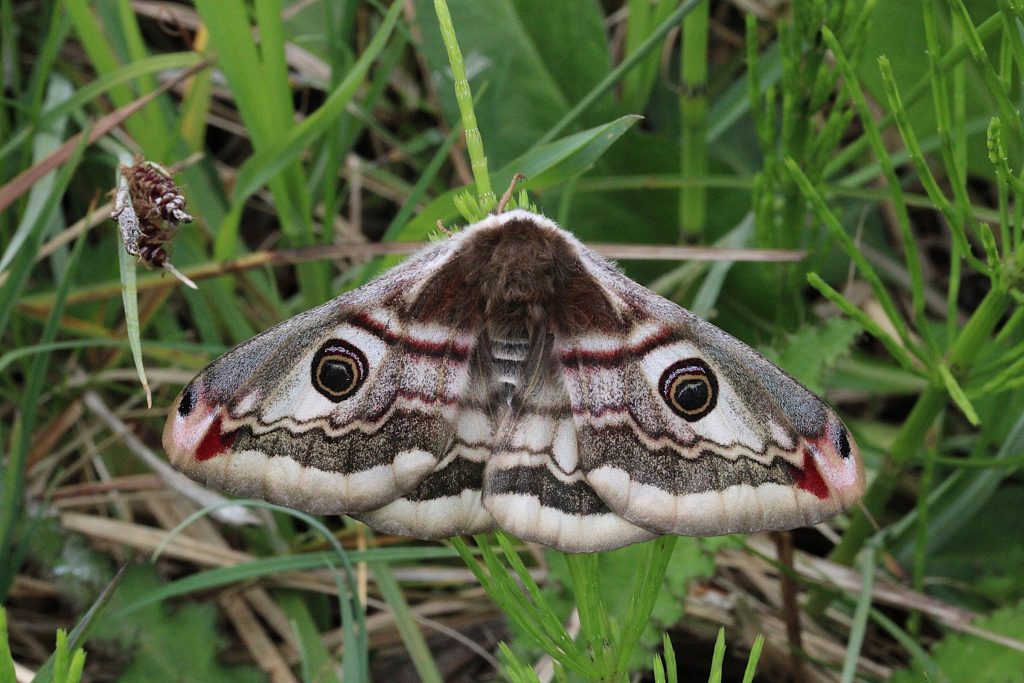
Emperor, female. Lullybeg.
Reference
Allen, D., O’Donnell, M., Nelson, B., Tyner, A., Bond, K.G.M., Bryant, T., Crory, A., Mellon, C., O’Boyle, J., O’Donnell, E., Rolston, T., Sheppard, R., Strickland, P., Fitzpatrick, U., & Regan, E. (2016) Ireland Red List No. 9: Macro-moths (Lepidoptera). National Parks and Wildlife Service, Department of Arts, Heritage and the Gaeltacht, Dublin, Ireland.
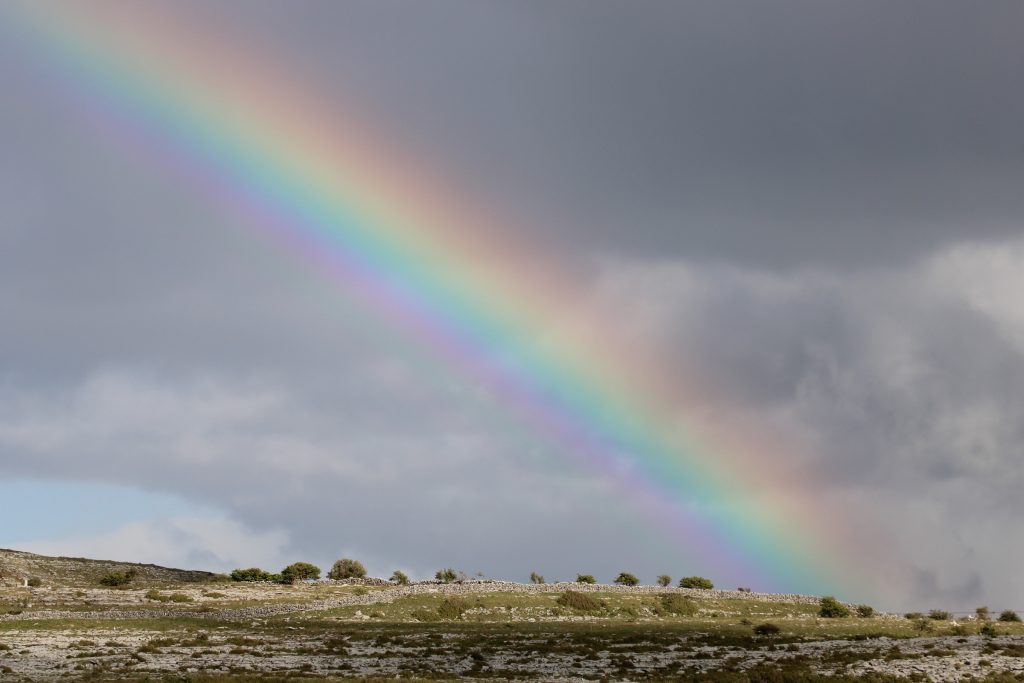
A sign of promise? Rainbow at Fahee North, County Clare.
The Irish weather seems to enjoy turning nasty on weekends. Ask anyone working all week indoors when the sun is shining.
The forecast for Saturday promised nothing useful to our butterfly expedition to two Burren localities: Fahee North in the morning, and Burren National Park after lunch.
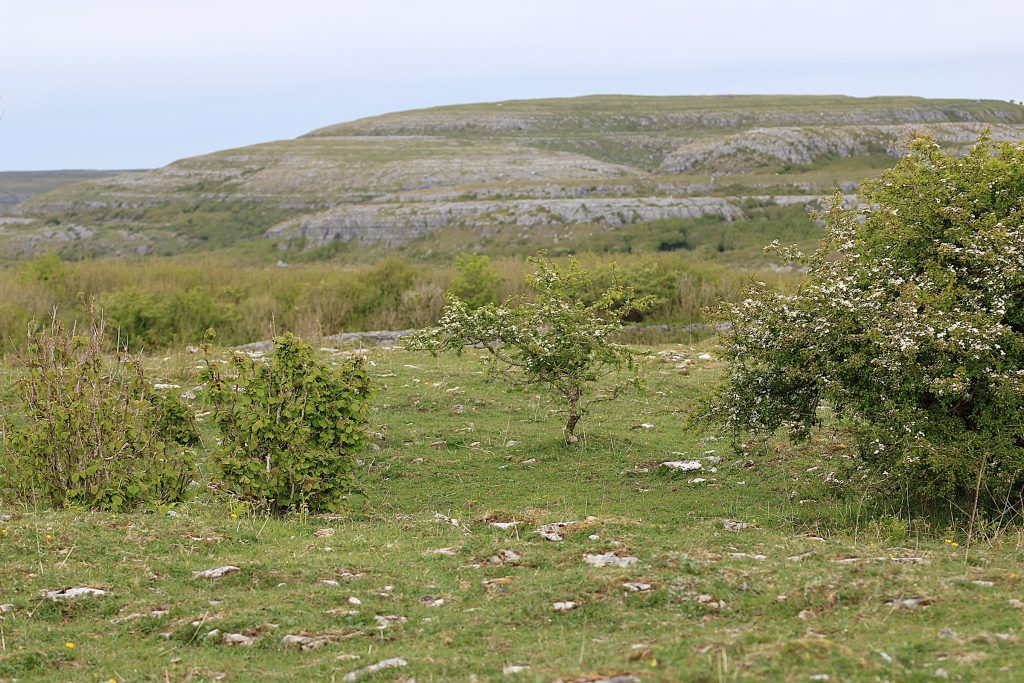
Fahee North, County Clare.
Cool, grey and windy spelt no butterfly action, but our lovely group were determined to enjoy the rich habitats on show. We did see the key larval foodplants for rarities like the Marsh Fritillary, impressive ant-hills sporting Wild Thyme holding fat, well-nourished Transparent moth larvae. It should be a good June for the striking adult moths. The grassland on the site we walked is managed by organic farmer Hugh Robson, who kindly allowed us access. Carefully grazed and scrub-controlled, this site is superb for butterflies, holding all four fritillaries, two blues, Brown Hairstreak, Small Copper, all the Burren’s brown butterflies, all the Burren’s whites, and the expected Small Tortoiseshell, Peacock, Red Admiral and Painted Lady.
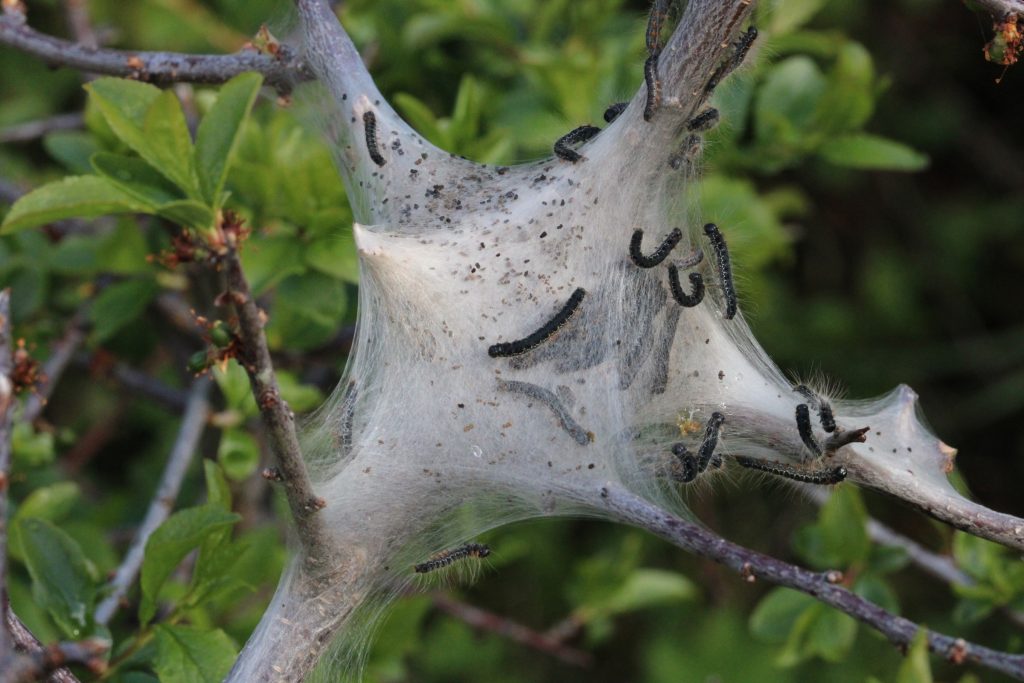
Transparent Burnet on Wild Thyme, Fahee North.Small Eggar moth larvae on Blackthorn. This species is rare in Ireland, with most of its distribution concentrated in the Burren.
Adjoining is a very different habitat: open scrub on shattered limestone pavement grazed heavily by horses, creating ideal conditions for the Pearl-bordered Fritillary and Dingy Skipper. Just as we were leaving, the sun entered, as did the Pearl-bordered Fritillary and Wood White. I missed the latter, but photos were taken and produced in evidence!
A drive, a bite of lunch and part II began with a visit to the Burren National Park. We walked the Orange Route, which takes you through Limestone grassland, scrub, Knockaunroe Turlough, Ash/Hazel Woodland and finally to a lovely area of warm, dry grassland dominated by ant hills. The sun shone most of the time and made for a very rewarding experience. A couple of over-the-hill Brimstones hoved into view and into my net when we held our collective breaths in admiration of a butterfly already 8-9 months old and still feisty.
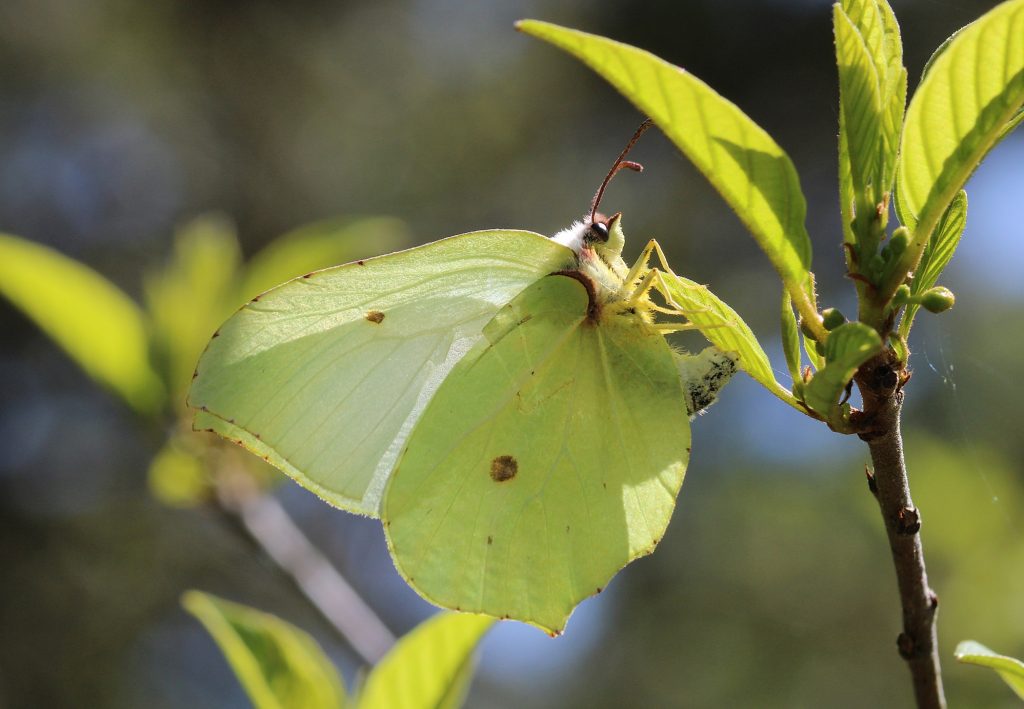
Brimstone.
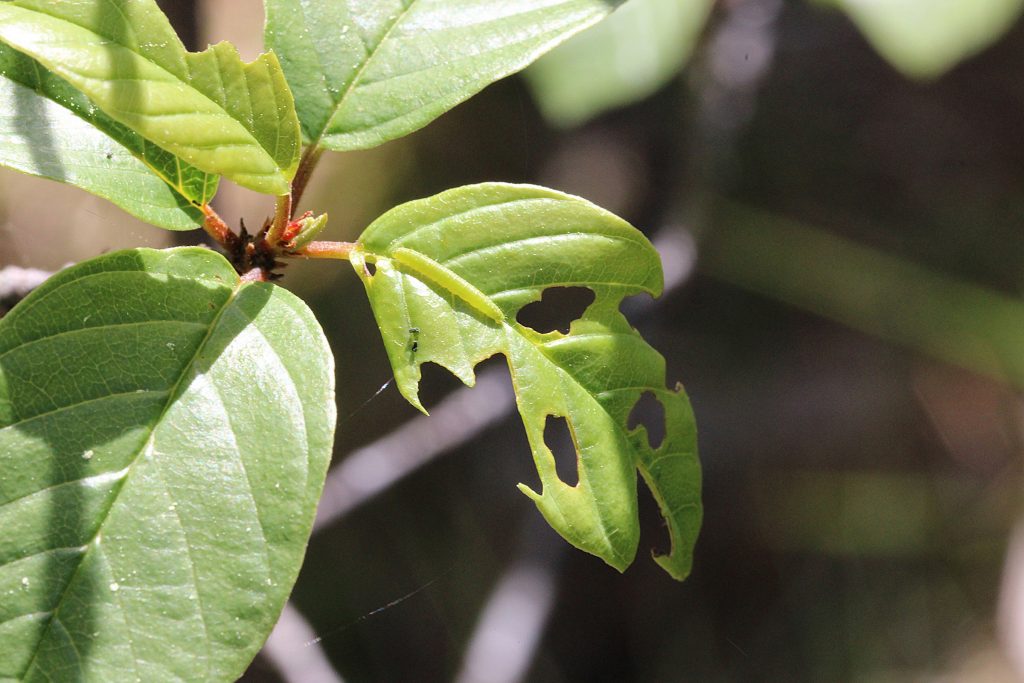
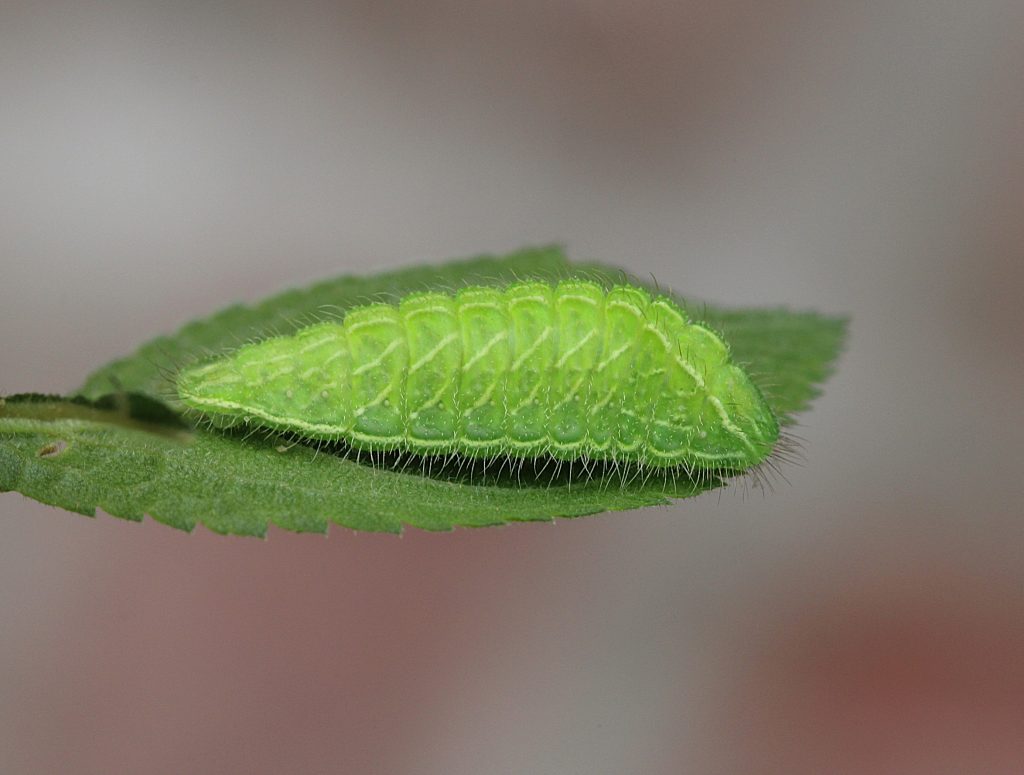
One of her children was found on a Purging Buckthorn near the turlough. This little green caterpillar was lined up along the leaf midrib, blending greenly with the fresh, gleaming emerald of the foliage.
The scrub at this point is unusually rich, with abundant buckthorns, Hazel, Ash, Guelder-rose, Hawthorn, Blackthorn and Shrubby Cinquefoil. For the record, the turlough was dry. The area is warm and sheltered and heavily favoured by Wood Whites.
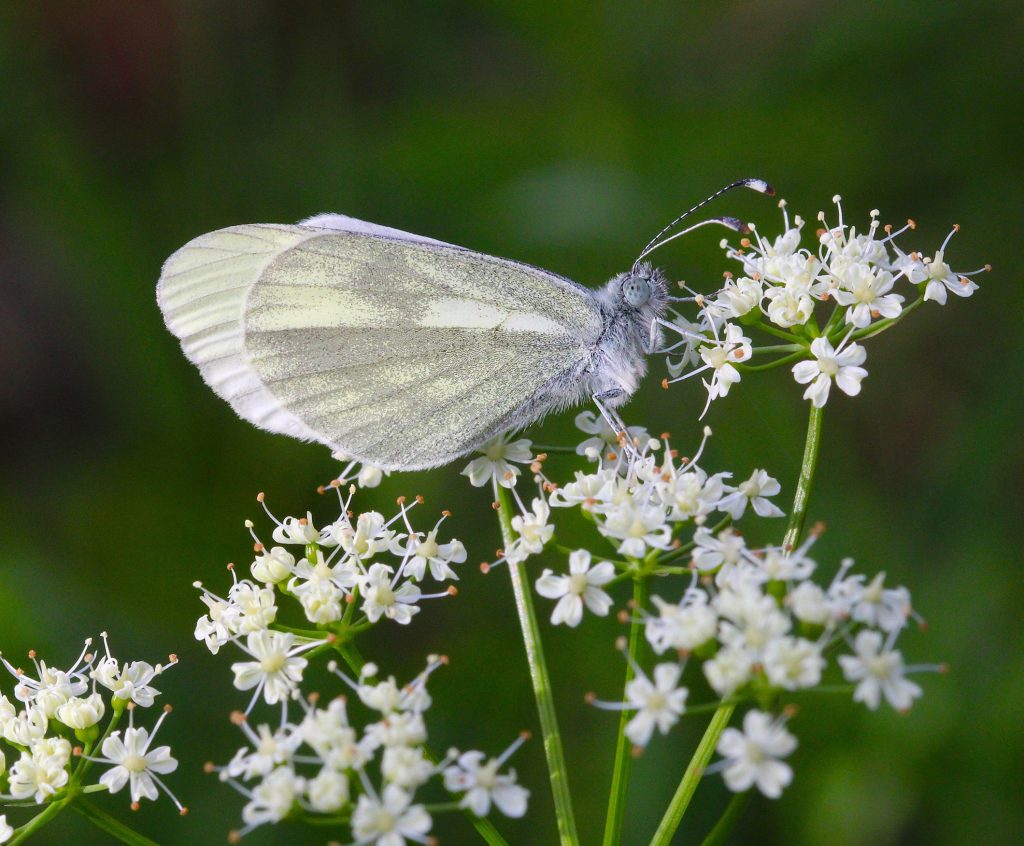
Wood White on Pignut, Fahee North.
This delicate creature occurs only on exposed Carboniferous limestone in Ireland, making it one of our rarest butterflies. It is currently known from just 24 10km squares, 2.35% of Ireland’s 10km squares.
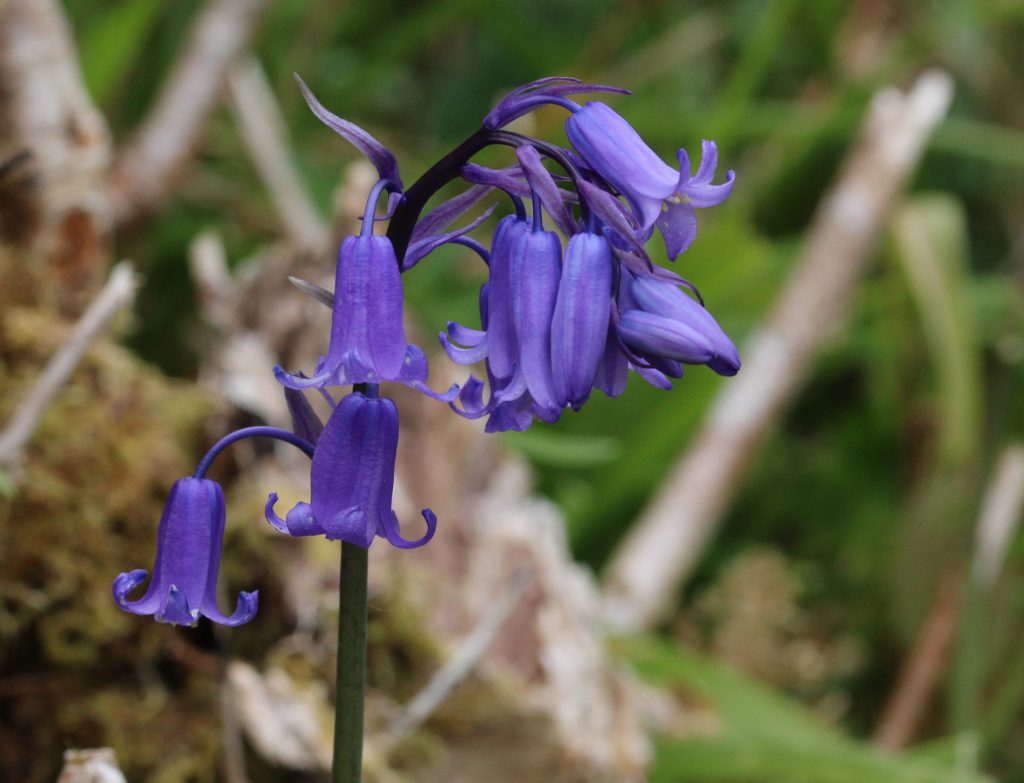
Bluebell, Clooncoose Valley.
Dingy Skipper and Burnet Companion waited for us in the ant hill grassland. They darted in the sunshine, in a warm, quiet place that invites you to linger. Looking at this area, it is notable for the small-scale diversity now so often absent from our landscapes. Ant hills, short, medium-height and tall vegetation, low bushes, tall scrub, and woodland in the vicinity provide niches for a great range of plants and invertebrates, including some cheeky grasshopper nymphs.
The Brown Hairstreak caterpillar is currently feeding on Blackthorn bushes in the Burren.
Just as our time was drawing to a close, a White-spotted Sable sparkled in the May sunshine. Perhaps summer will be good to us.
Clooncoose Valley.
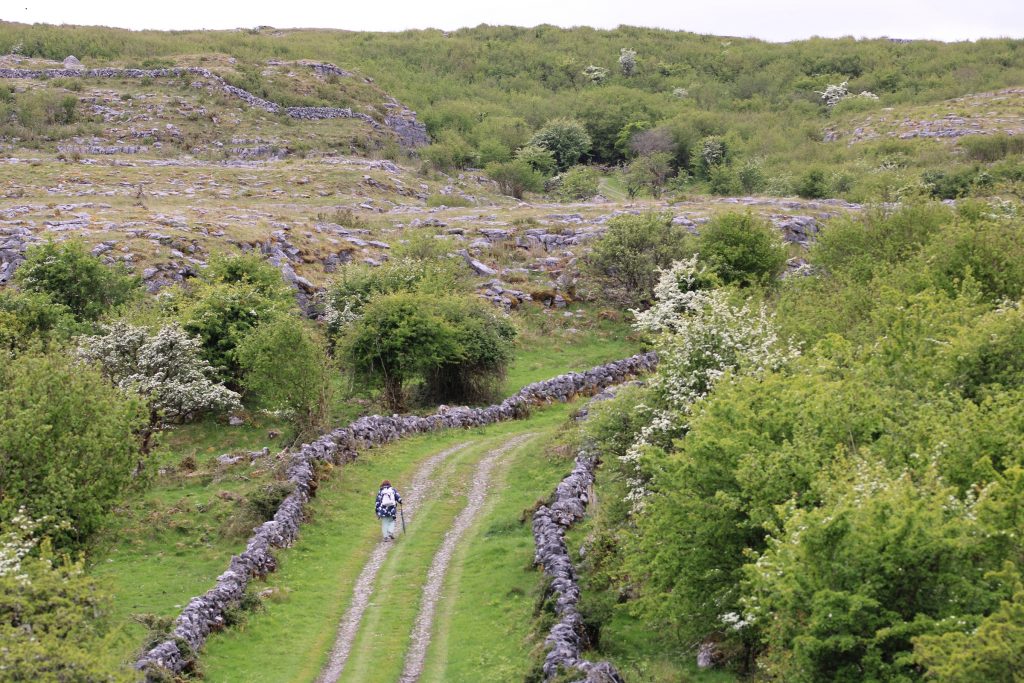
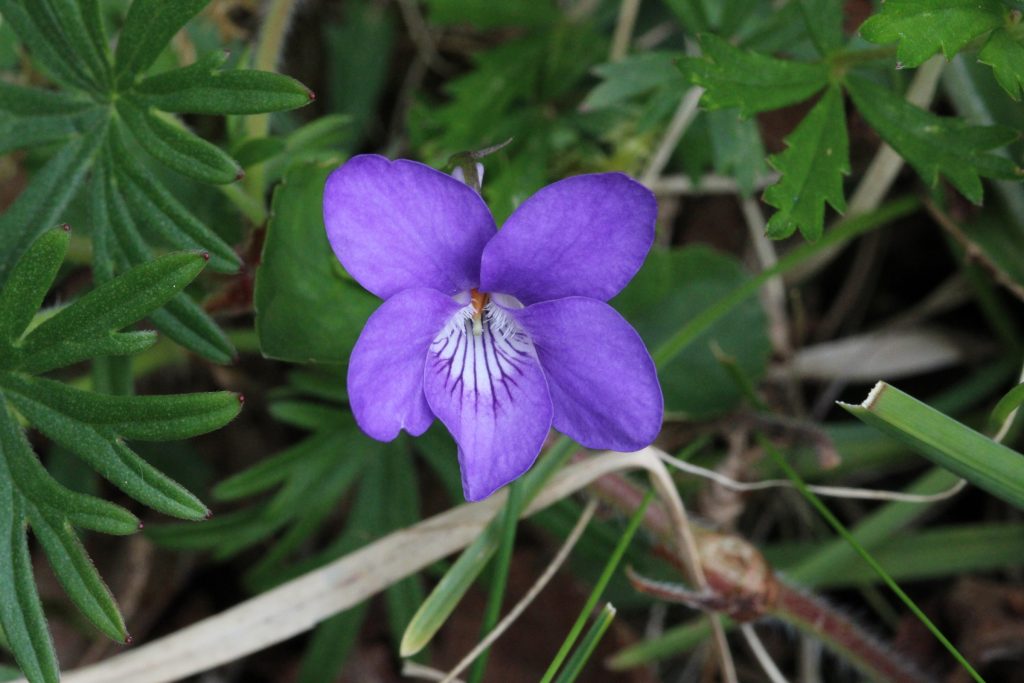
Sunday dawned wet, brooding and chilly. Our walk was planned for Clooncoose Valley, and we started the walk in cold rain more typical of February than May. Luckily, the valley is sheltered, and the track heats even in weak sunshine. We saw a solitary Speckled Yellow moth, surely one of our prettiest day-flying moths. We discussed butterfly ancestry, genetics and the history of butterfly recording during a dry period. We looked at important breeding plants, including Common Dog-violet, until very heavy rain precipitated a retreat to prepared positions.
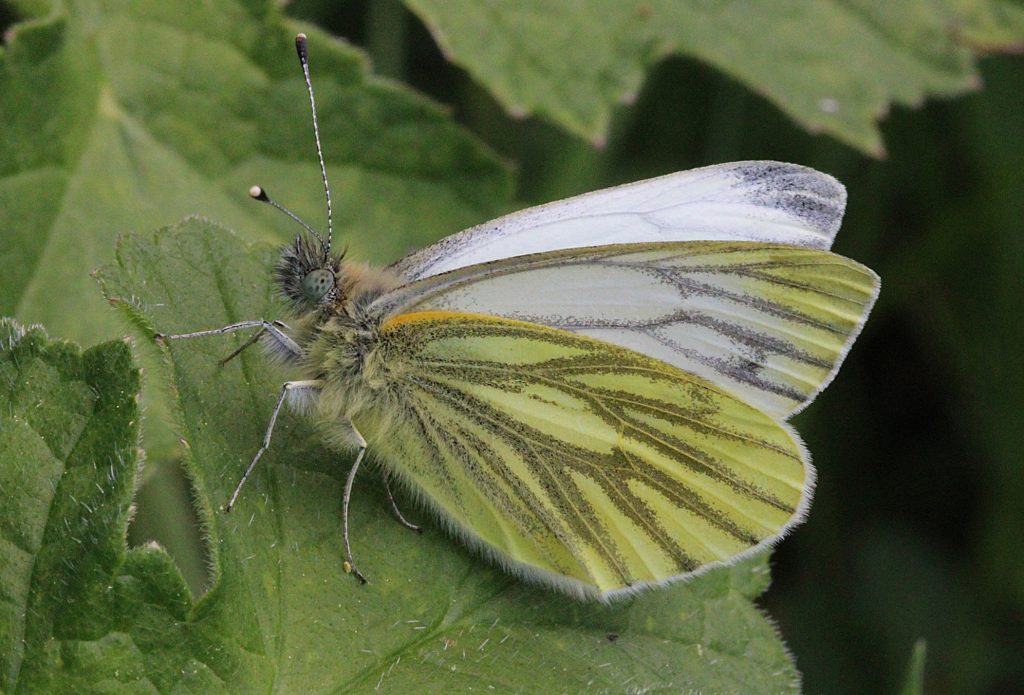
Common Dog-violet is abundant along the Green Road through Clooncoose Valley.A single Green-veined White was seen in Clooncoose during a pre-walk check.
Warm cars awaited, thankfully! However, despite the deluge, we had a lovely time and hopefully learned lots. Thanks to Brian Nally and the team at Burrenbeo Trust, and to everyone who travelled to these well-attended events. I certainly enjoyed the company and sharing time with people who appreciate nature and the Burren.
Our next event is a walk in Lullymore and Lullybeg on Saturday, 23rd May.
One of the benefits of having a grown-up family is that, occasionally, a marriage is celebrated in a foreign clime, allowing one to seek unfamiliar butterflies or see how familiar butterflies behave elsewhere.
Rome is an oft-visited city, with 22.9 million visitors from January to December 2025, of whom 12 million were from outside Italy (Turismo Roma, 2026). Rome also holds over 2.7 million residents (City Population Data, 2026)
The city’s architectural, archaeological and historical importance draws vast crowds, and the city is extremely busy, noisy and frenetic, certainly not a location associated with nature or relaxation.
The public parks in central Rome are bland, with tall pines, probably Black Pine Pinus nigra, plane trees Platanus spp., Judas Tree Cercis siliquastrum, ornamental flowers and short grass, although in some areas where left uncut, native wildflowers are present, especially vetches and mallows Malva spp.
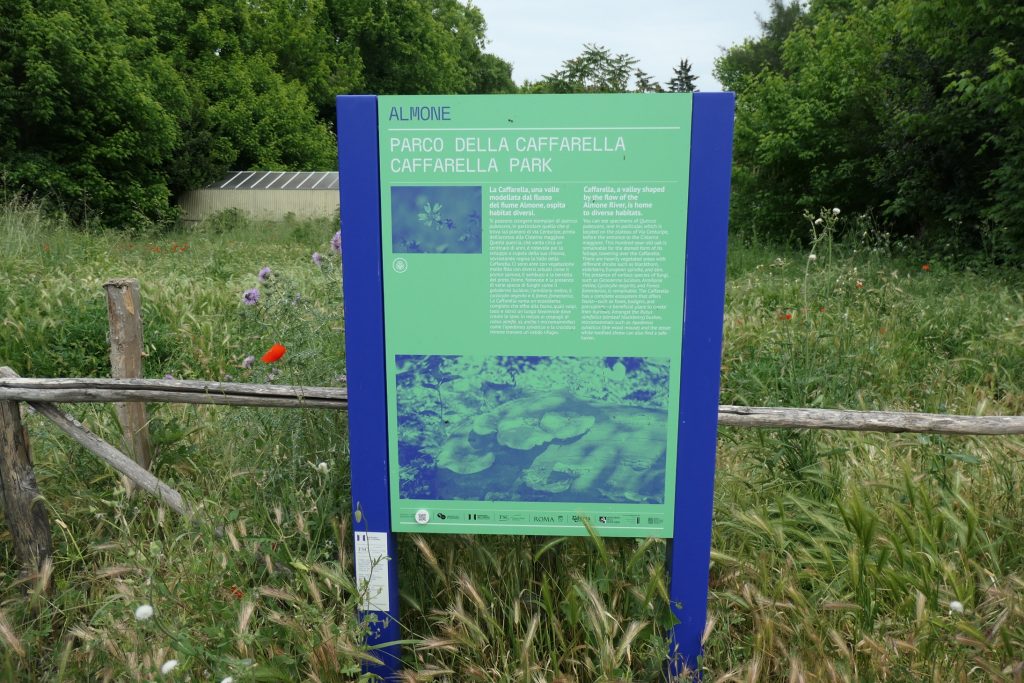
A far better option for anyone looking for nature is Parco della Caffarella, a large green area adjoining Rome (latitude 41.862697, longitude 12.520535).
The park lies about three miles from the Colosseum, about 15 minutes by car. It is walkable from the Colosseum, being on flat ground.
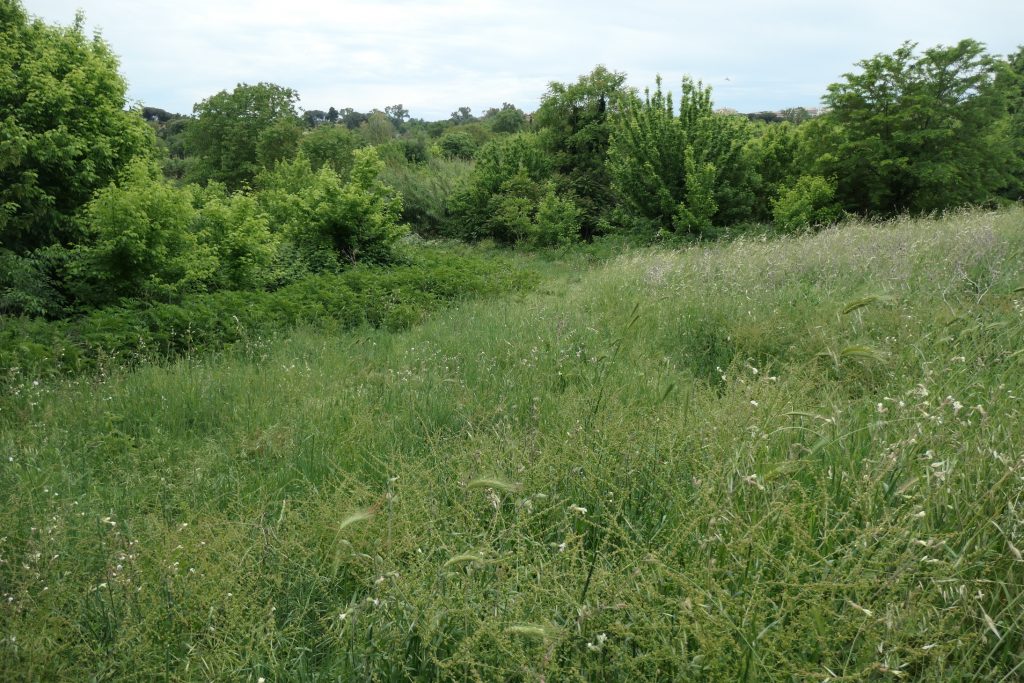
The park has open grassland, scrub, woodland and a small river, the Almone River. Some areas contain an intimate mixture of woodland, scrub and flower-rich grassland, and the warm, sheltered open areas were the best areas for butterflies, moths, bees and grasshoppers.
Grassland and scrub, Parco della Caffarella.
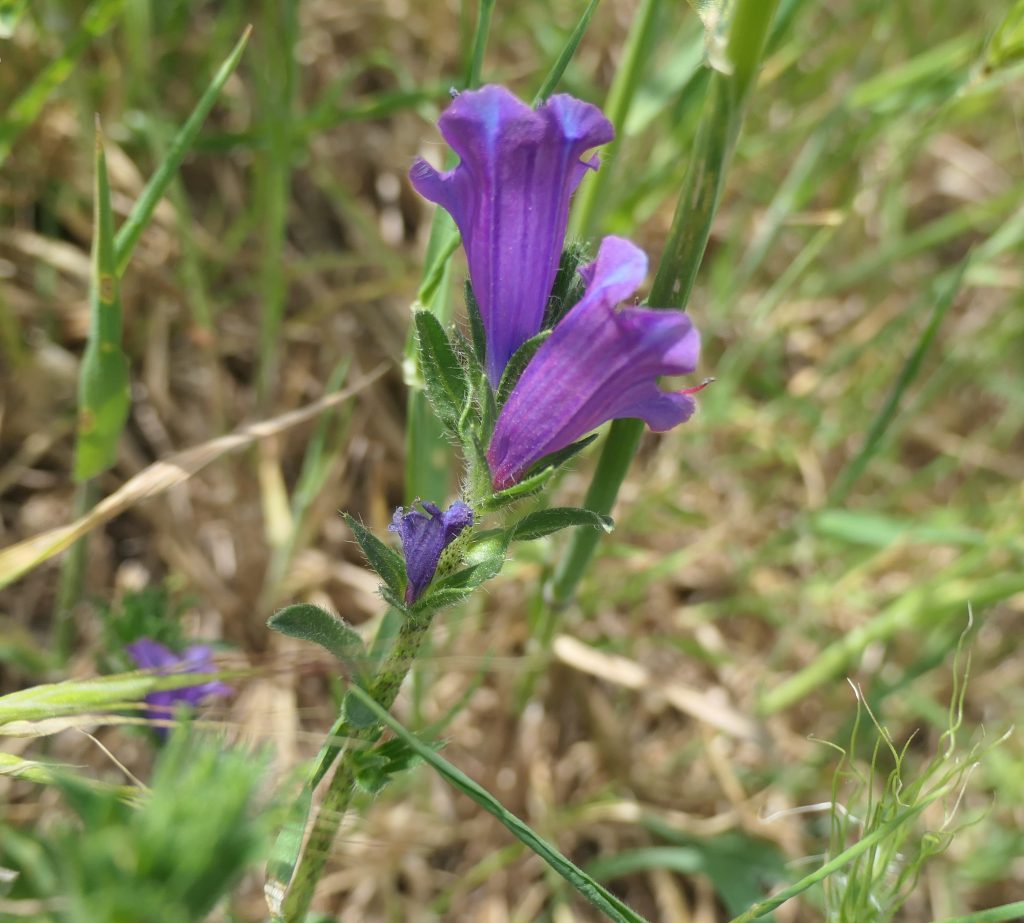
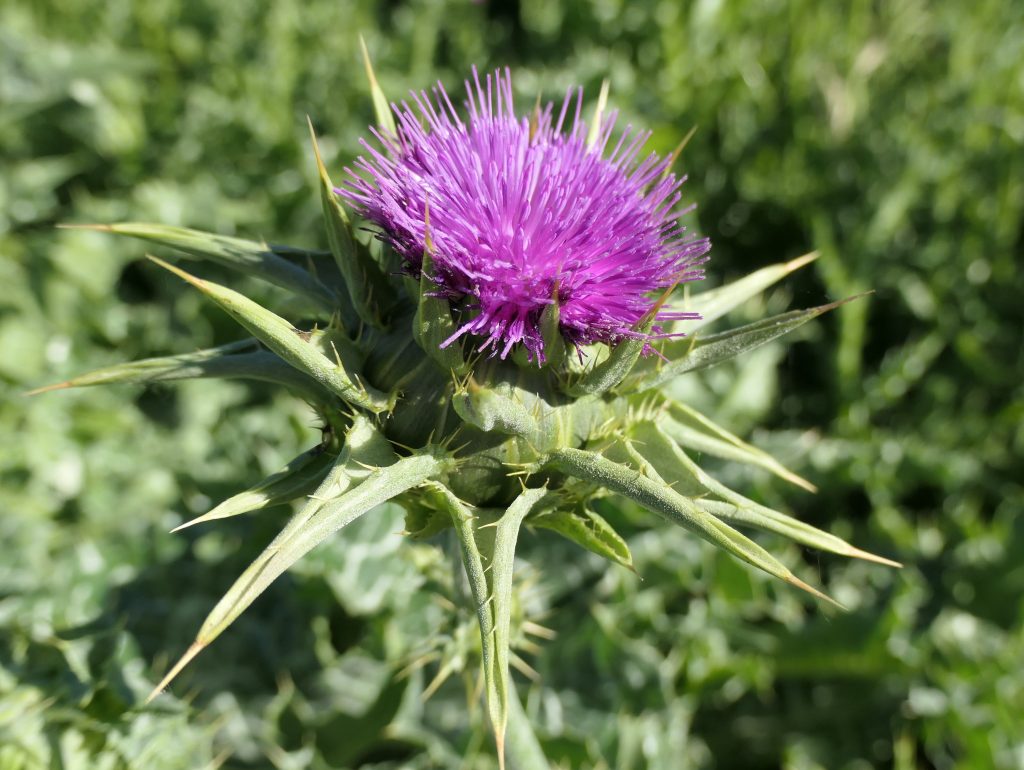
During my visit in early May, the most prominent flowers were Purple Viper’s Bugloss, Goat’s-beard Tragopogon pratensis, White Campion Silene latifolia, Milk Thistle Silybum marianum, and various clovers and wild brassicas. The plants seen being most used by butterflies were Purple Viper’s Bugloss and clovers.
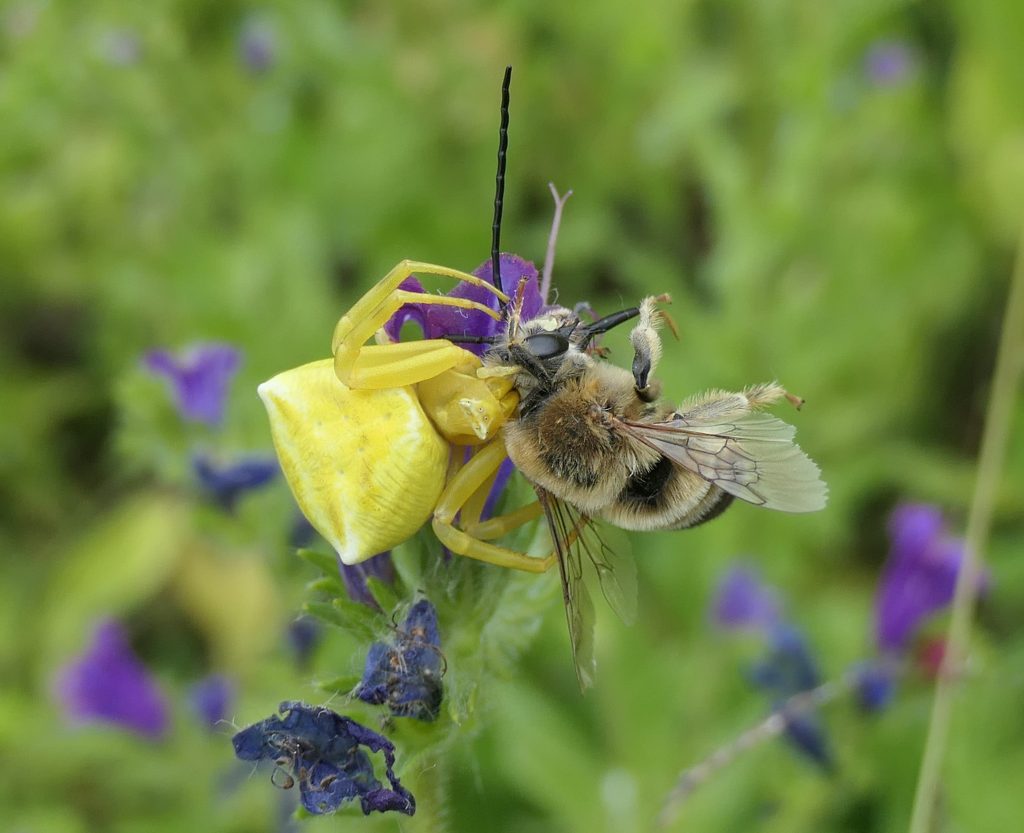
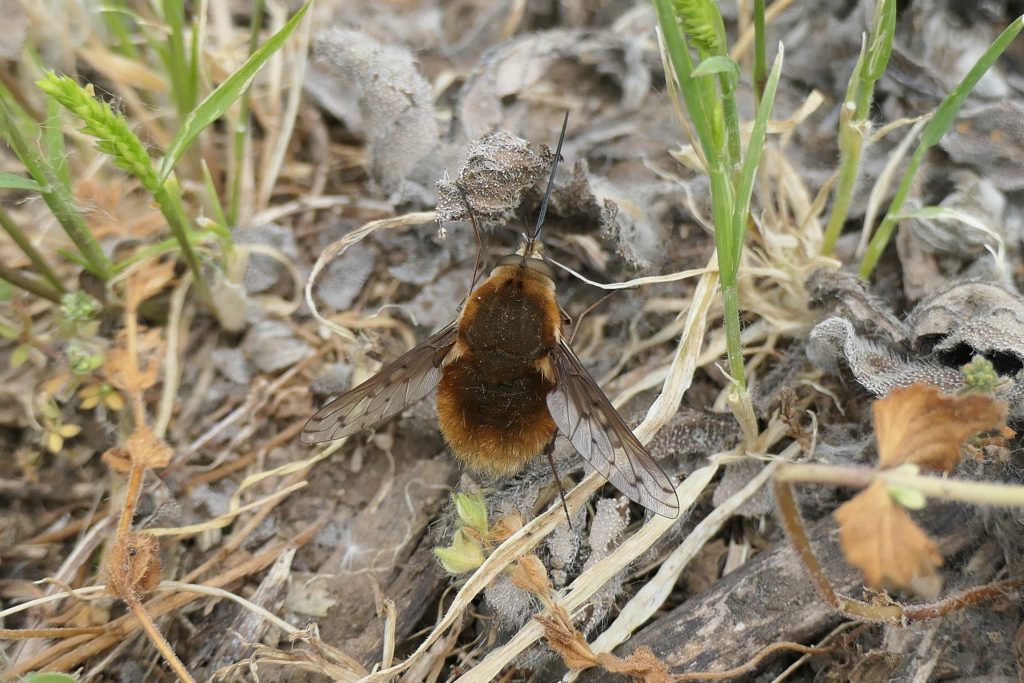
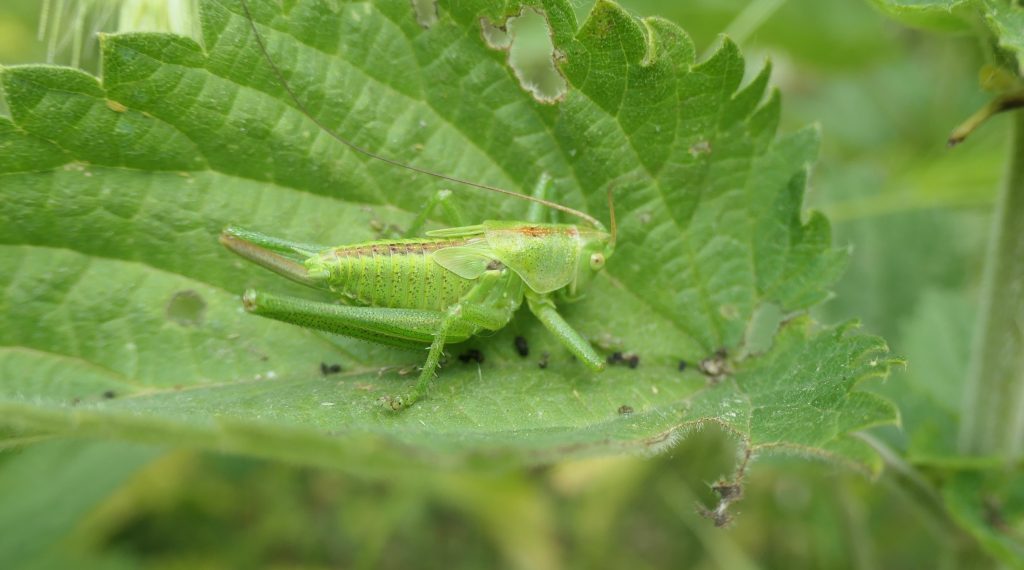
Purple Viper’s Bugloss Echium plantagineum, Parco della Caffarella, Rome. This plant was abundant and received visits from bees and butterflies.A crab spider assassinates a bee on Purple Viper’s Bugloss.Dark-edged bee-fly Bombylius major, a bee parasitoid.Great Green Bush-crickets Tettigonia viridissima were found in good numbers on nettles.
I saw 21 species of butterfly in early May, including the Nettle-tree butterfly, a species that occurs mainly in southern Europe, breeding on the Nettle Tree Celtis australis, a common tree in Rome’s parks. Green Hairstreak, Common Blue, Holly Blue, and Brown Argus were seen, along with the introduced species Geranium Bronze. Red Admirals and Painted Ladies were busy breeding, with the latter breeding on mallows and thistles. Wall Browns were found in areas with bare soils and along the unvegetated tracks. A few faded Brimstones were still on the wing. Eastern Bath Whites (or Bath Whites) were also flying, and drawn mostly to wild brassicas for nectar. The Small White was very common, and the Large White was also seen, but in lower numbers.
One notable behavioural feature was the near-complete absence of butterflies before 11 am, despite the warm, calm, sunny mornings. Some species did not appear until midday, and this includes species found in Ireland. It is interesting to consider why most butterflies emerged later than they do in similar weather in Ireland. Have the butterflies resident in southern Europe acclimatised to require much warmer conditions to become active than those they accept in northern Europe?
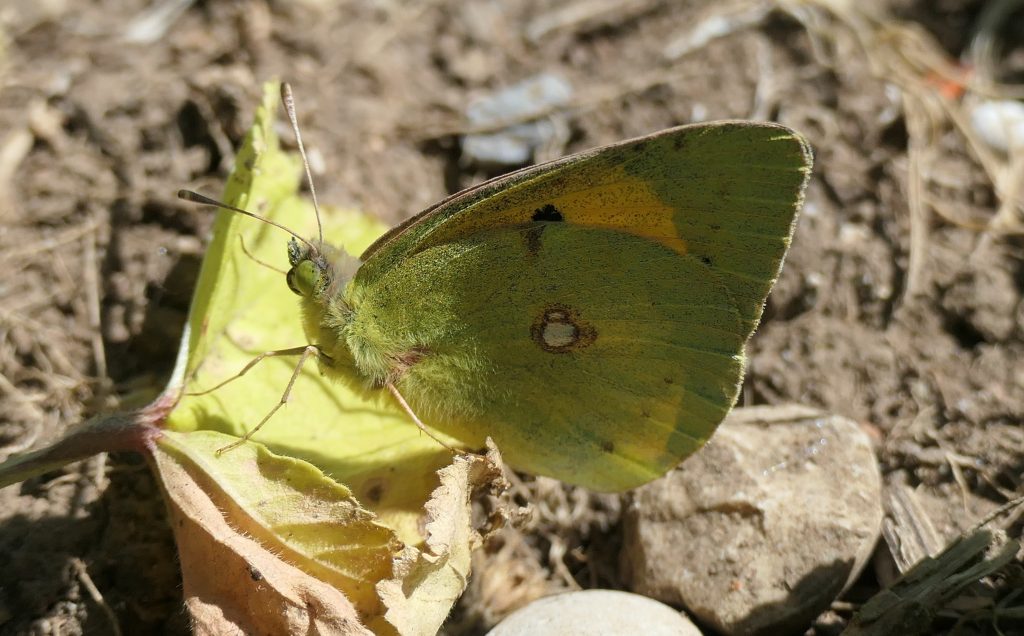
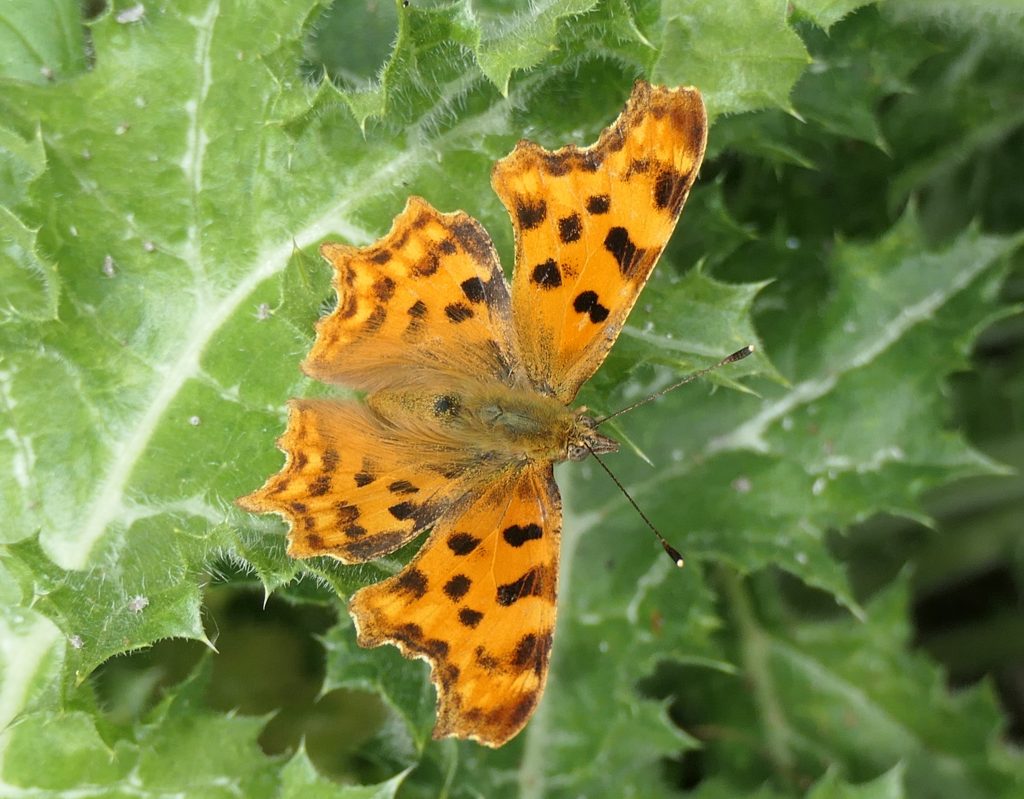
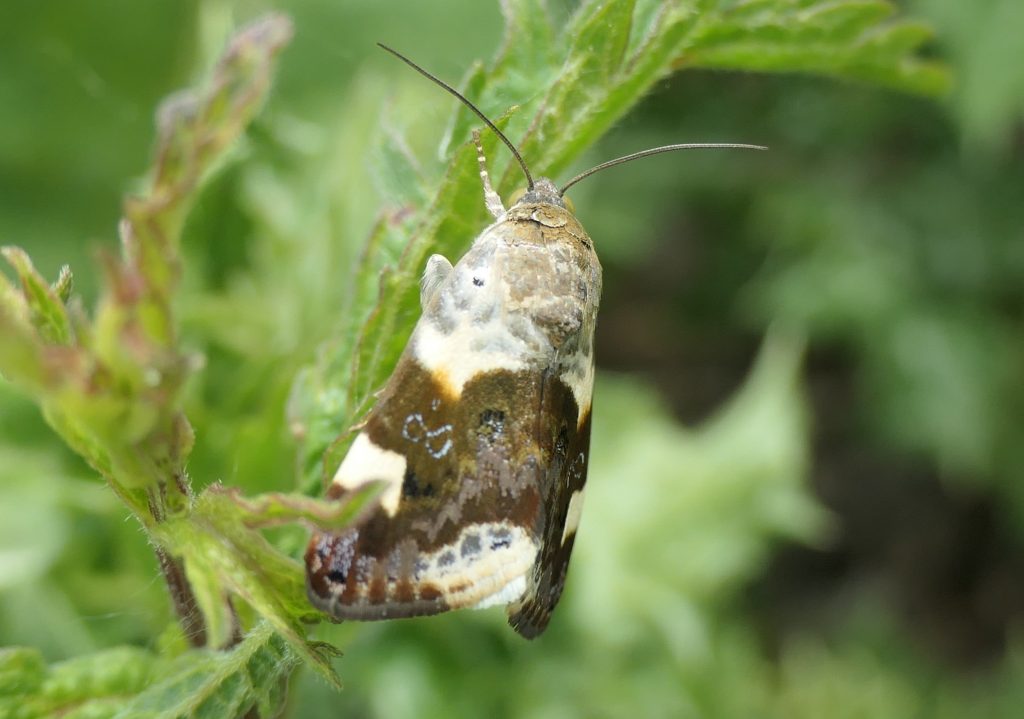
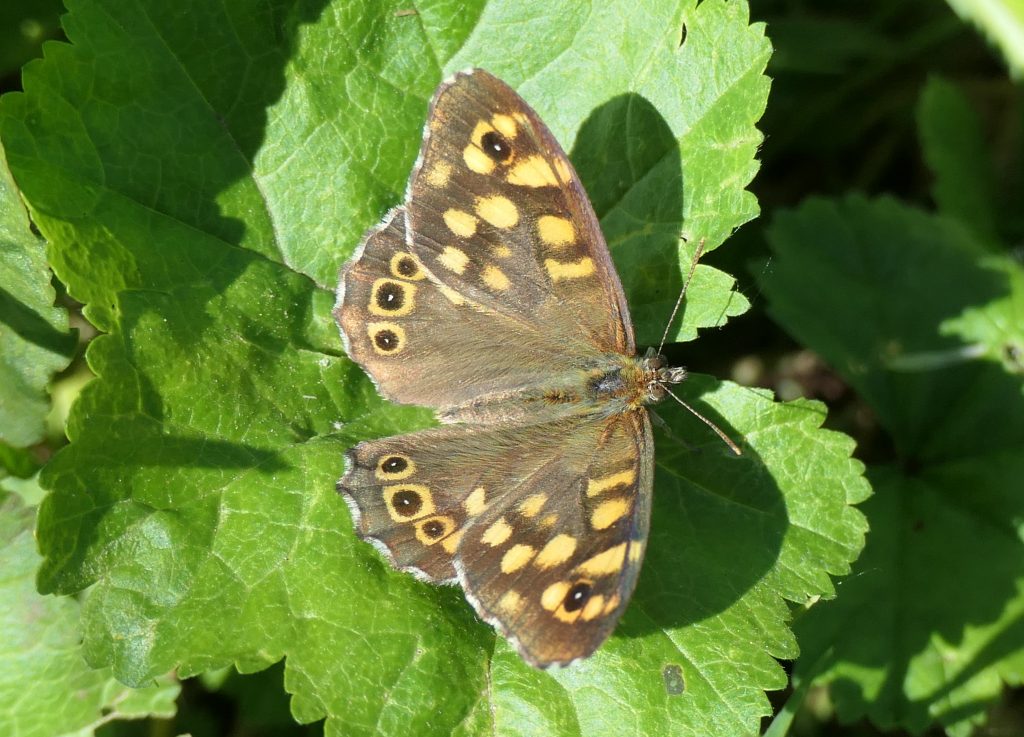
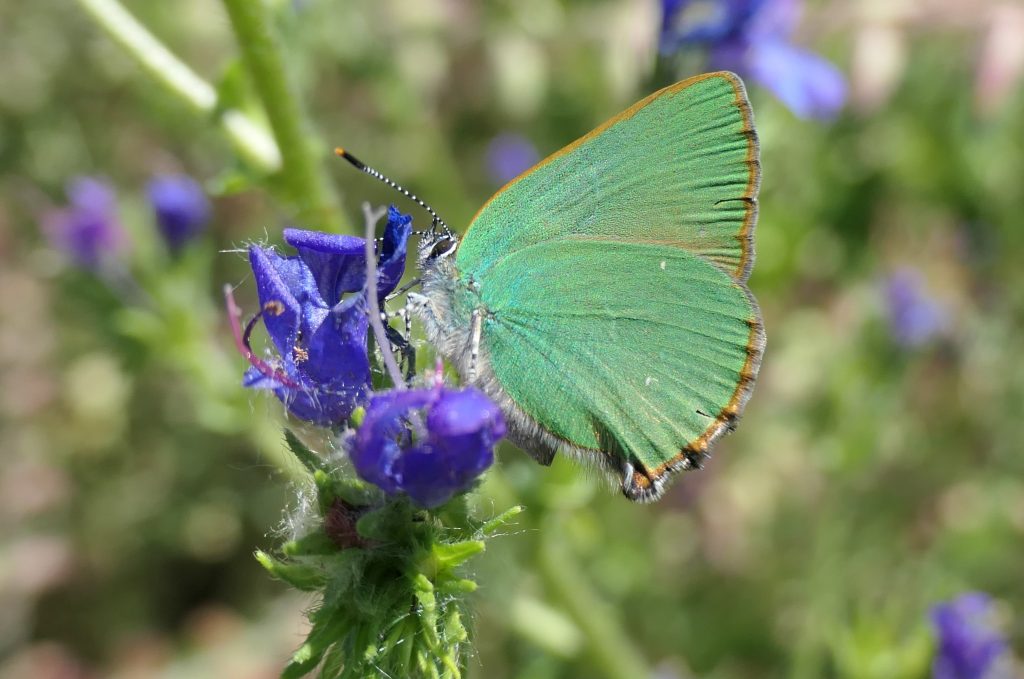
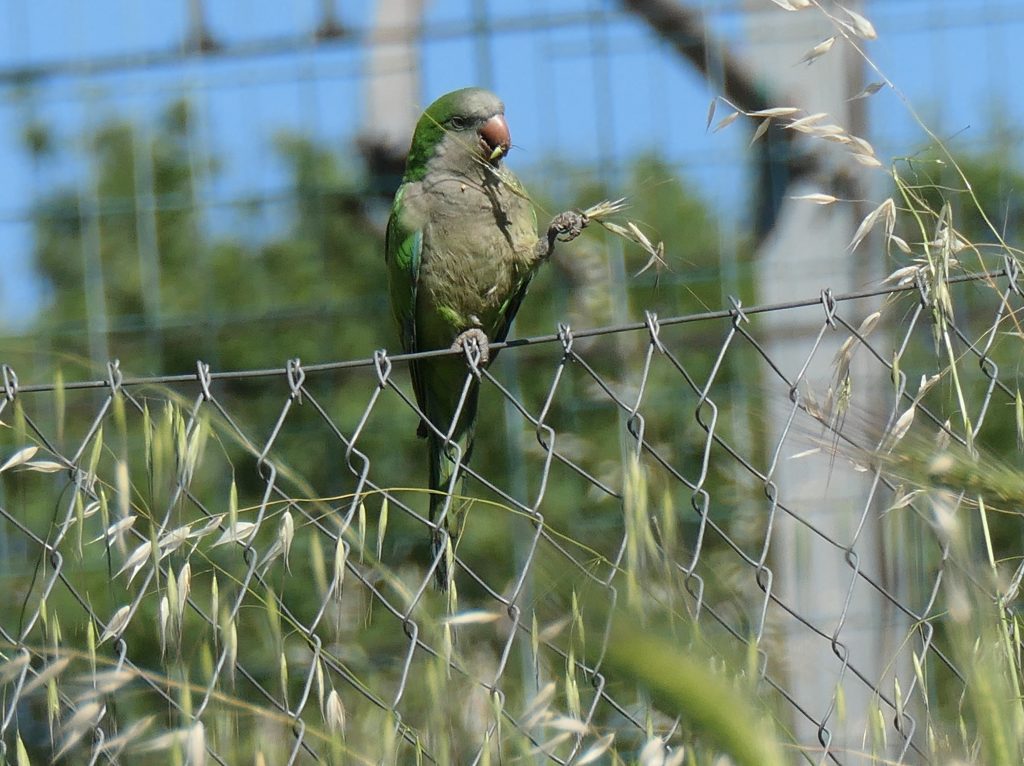
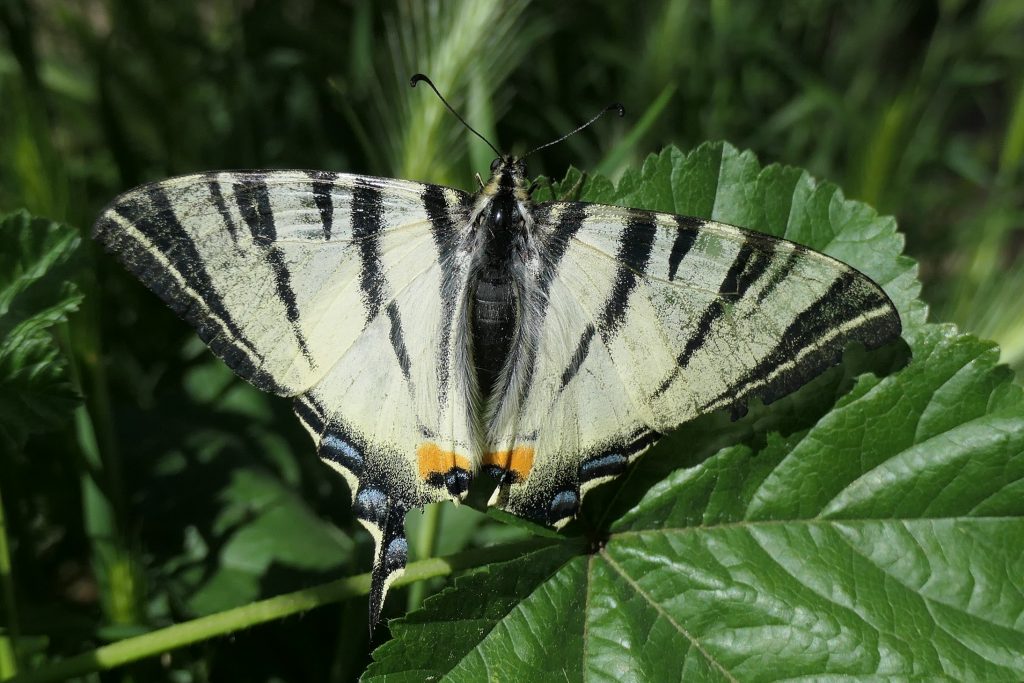
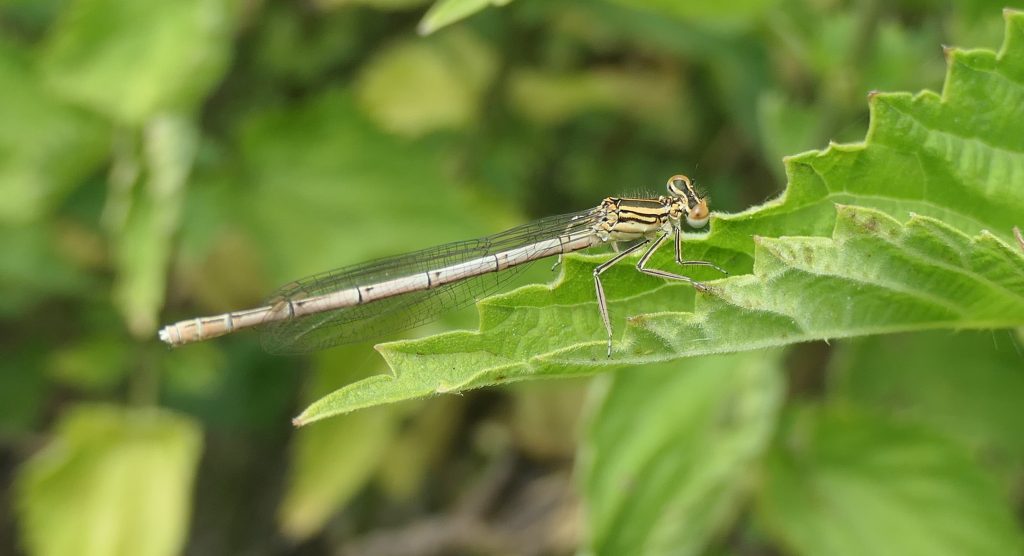
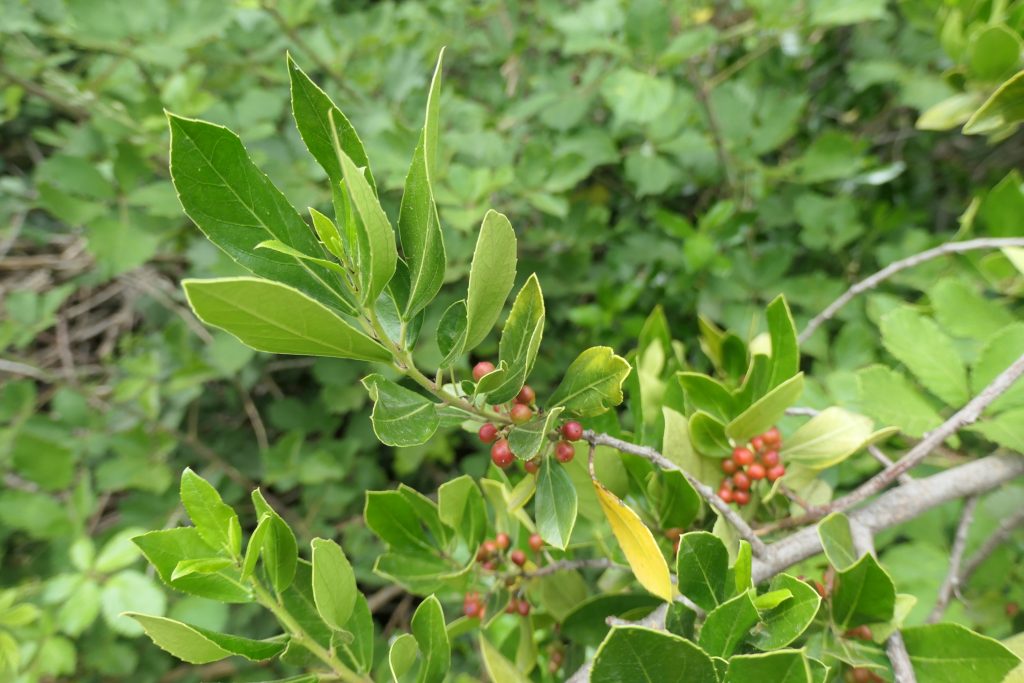
Clouded Yellows were common, including in central Rome, in the Circus Maximus, ancient Rome’s chariot racing arena.This first-generation Comma, which emerged in Parco della Caffarella early in May, is the pale form of the butterfly, and breeds soon after hatching. In Ireland, this form of the Comma does not usually appear until July.Milk Thistle was in full bloom in early May, but was not observed being visited by any butterflies.Pale Shoulder moth Acontia lucida was common in the uncut grassland.Speckled Wood, southern form.This Green Hairstreak was found on dry grassland. In Ireland, this butterfly is found on wet habitats, such as raised bogs, blanket bogs, wet heath and wet coastal grassland.Ring-necked Parakeets are very common in Rome’s parks and city streets with trees. It is an introduced species, now thriving in many European cities.The Scarce Swallowtail enjoys nectar from fruit trees and herbaceous plants. Its larval foodplant, Common Blackthorn, is common in the park. This faded specimen is a female.White-legged Damselfly, Parco della Caffarella.Mediterranean Buckthorn Rhamnus alaternus is a foodplant for the Brimstone and Cleopatra butterflies.
The park impresses with its Nightingale populations, with beautiful singing from dense cover in various places. Blackcaps, Blackbirds, Jays, Wood Pigeons, and especially Hooded Crows, were common.
The park is large and topographically variable, with low hills and flat ground, featuring well established walkways taking you through the range of habitats present. It is a relaxing and interesting retreat from the crowds, noise and pace of Rome’s streets. Enjoy.