August Butterflies

It is 29 July as I write, and the summer is flying sunnily by. Despite the glorious weather, populations reported from across the country are low in most cases. Where high numbers are observed, these are usually of two migrants, the Red Admiral and Painted Lady. In short, hot, sunny weather is great for Ireland’s butterflies, but it’s just one ingredient needed for the meal. More resources are required to provide a happy home for butterflies. One explanation for low numbers is the scarcity of resources needed to grow and sustain populations. Populations reflect the carrying capacity of habitats as well as weather and predator populations. With 90% of EU-protected habitats in unfavourable condition, the reason for low abundance is clear.

Despite the ‘great thinning’ of the fabric of the natural world, our butterflies will still fly in August, despite diminished figures.

Here are the species we can hope and expect to encounter.

Green-veined White is a butterfly we expect to see, but its population has declined by 86% during 2008-2024. This gentle wetland butterfly can reach high numbers in August, and the rainfall in the first half of June will have helped its caterpillars. Look out for the lovely yellow form of the female.
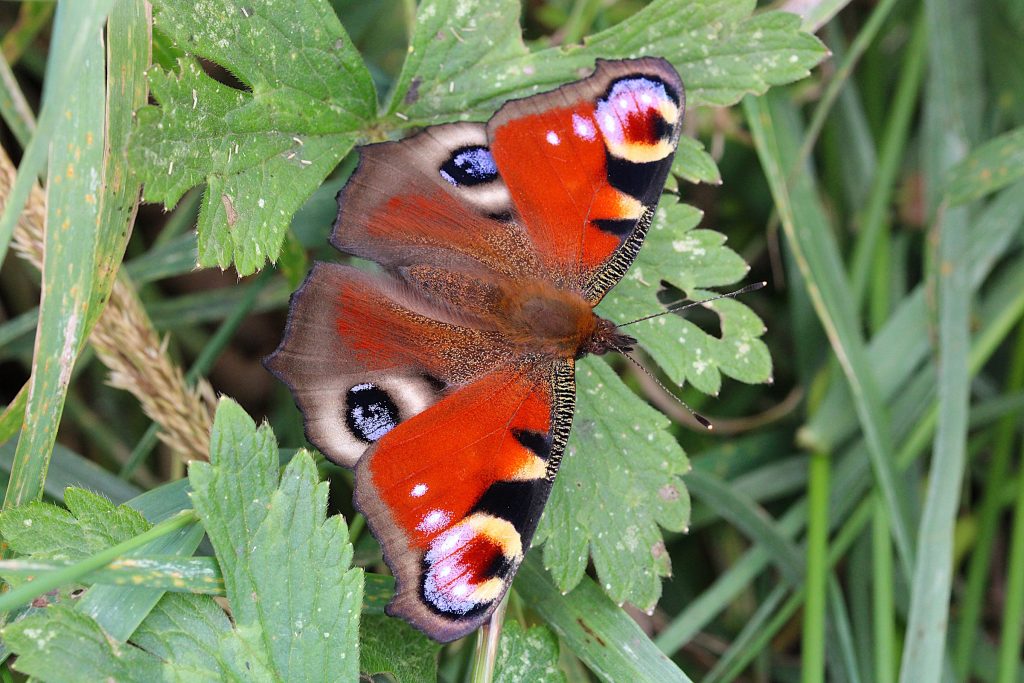
The Peacock is another expected butterfly. A nettle breeder, it flies in abundance in flower-rich rides in and near woods, where it overwinters. While its populations fluctuate from year to year, it has remained mainly stable since systematic recording began in 2008. The 10 years between 2015 and 2024 showed a decline in population size of -42%.
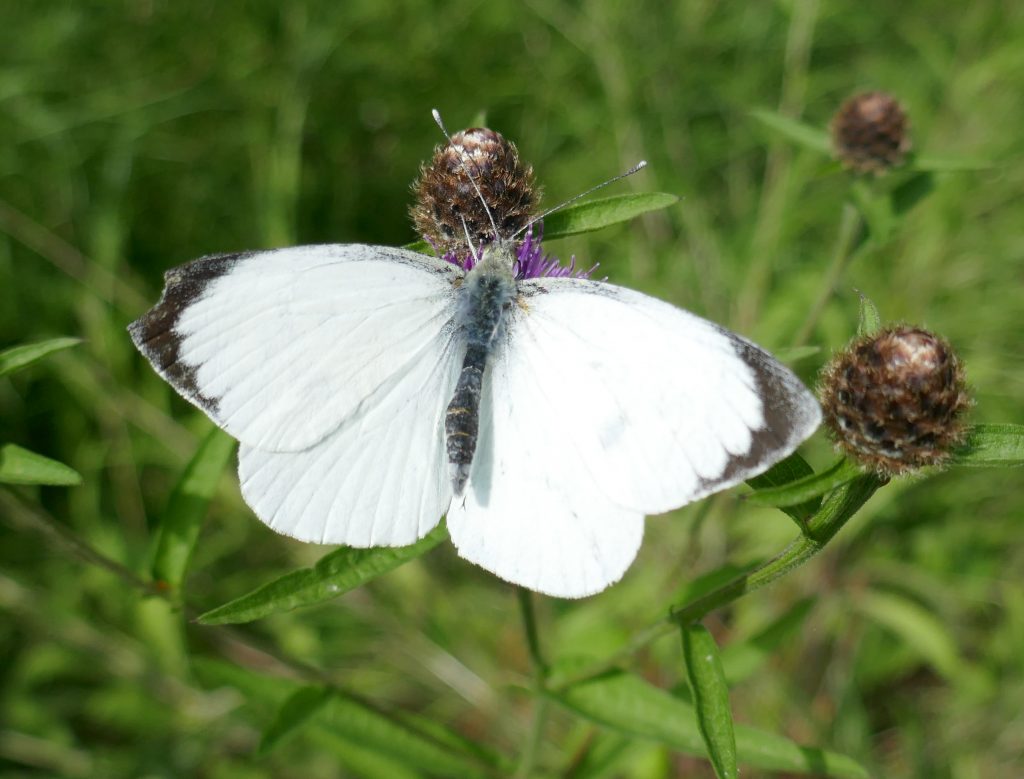
The male Large White has no forewing spot on its upper sides, but it does have a forewing spot on the underside. Its upper sides are clear white with a forewing tip that is more extensive than in its smaller white relatives. Formerly much disliked for stripping brassicas when more commonly grown, this large, snowy butterfly is in far lower numbers than in the past. The trend during 2008-2024 is -74%.
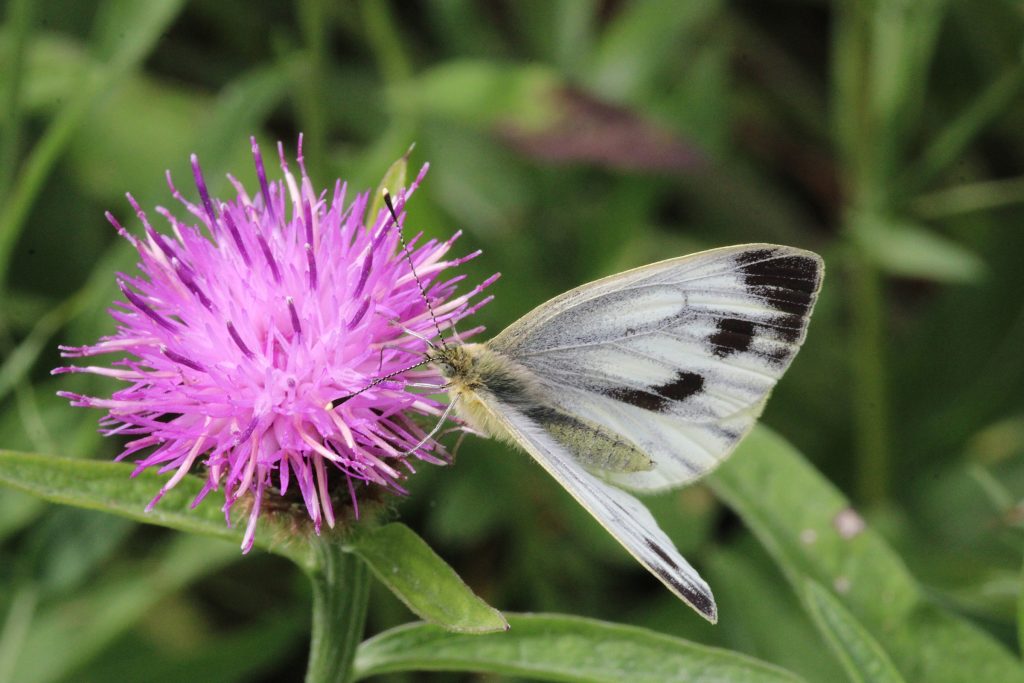
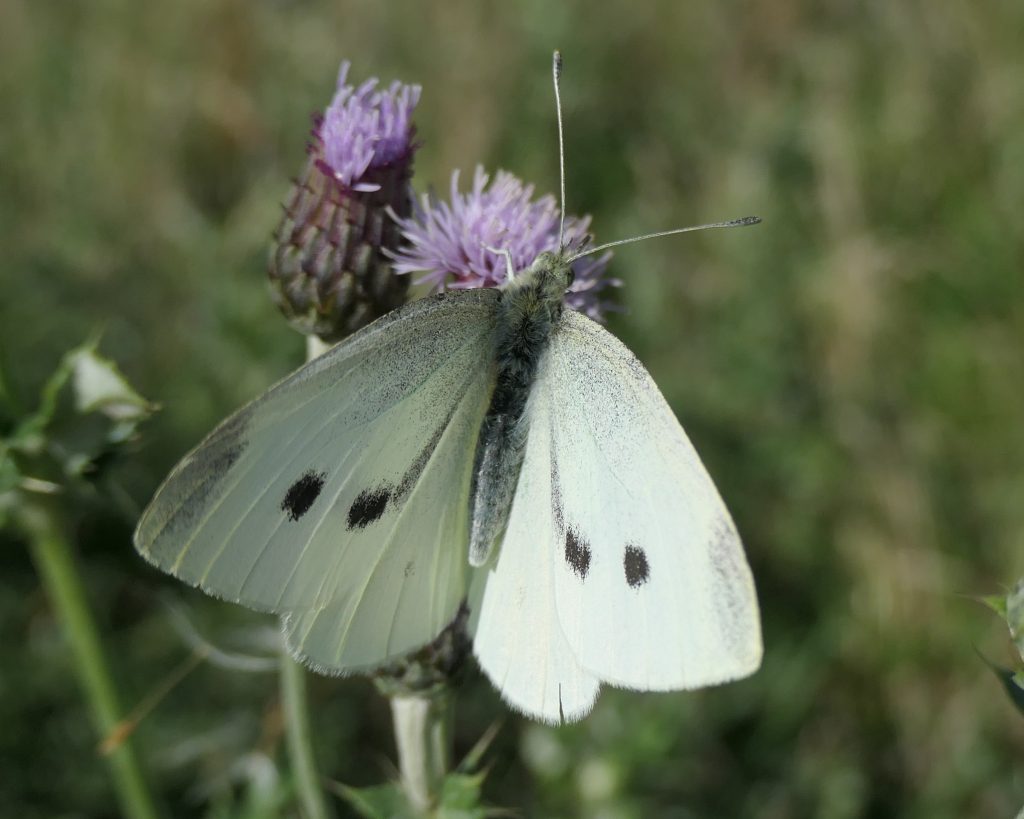
Small White female on a Creeping Thistle flower. This butterfly suffered a 78% decline from 2008-2024. You can expect to see it, but you should expect to see 12, whereas in 2008 you could expect to see one hundred.
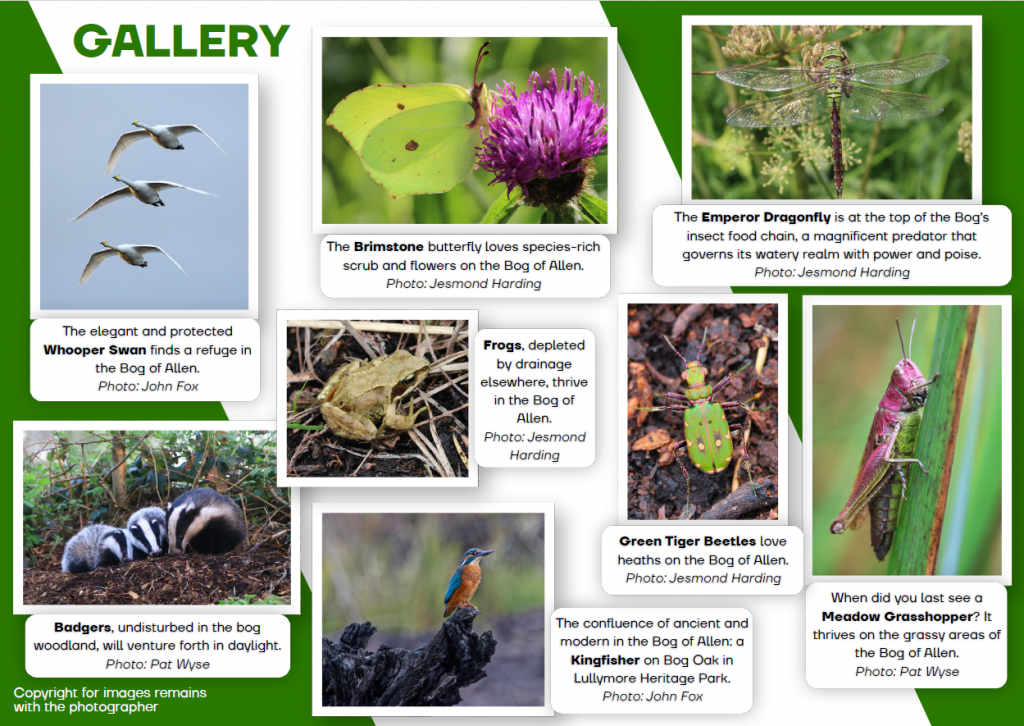
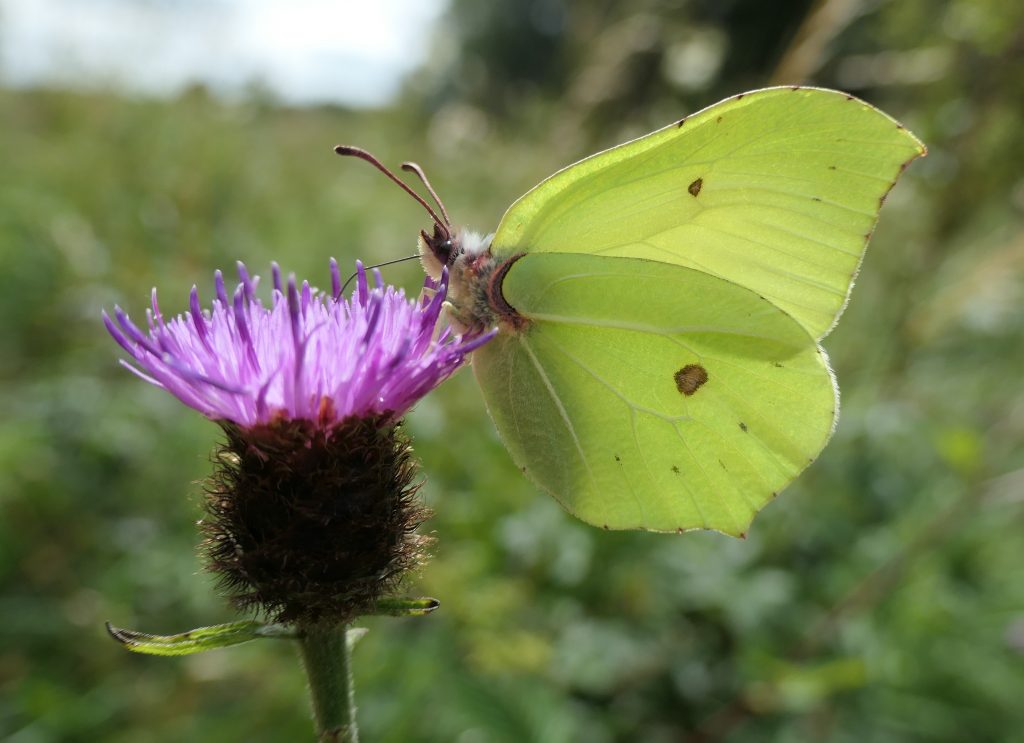
A beautiful male Brimstone feeding on Common Knapweed. Wills cigarettes featured the Brimstone on its cigarette cards in 1927, rather ironic in the context of the product promoted. The Brimstone vanished from Northern Ireland in the 1980s but has been stable in the rest of the areas it inhabits in Ireland since 2008. The butterfly can be expected in its habitats during August, the peak flight month for the overwintering adult butterfly.
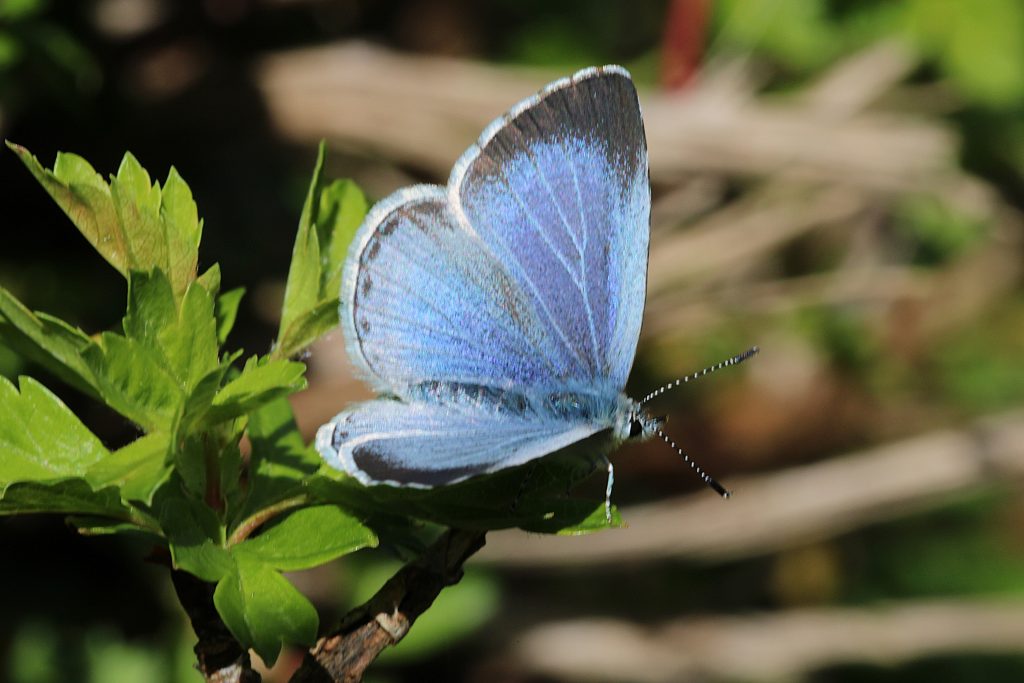
The Holly Blue is the greatest fan of our gardens. It loves gardens even more than wild habitats! A sunny, sheltered garden with shrubs is ideal for this gorgeous, lilac marvel. The spring females lay eggs on a range of garden shrubs, including dogwood and firethorn, but its big favourite is Holly. It lays happily on Alder Buckthorn, if you have this much rarer plant. Second-generation Holly Blues lay their eggs on flowering Ivy, so don’t cut it back until late winter. This is a butterfly we expect to see, and happily has not seen an abundance crash.
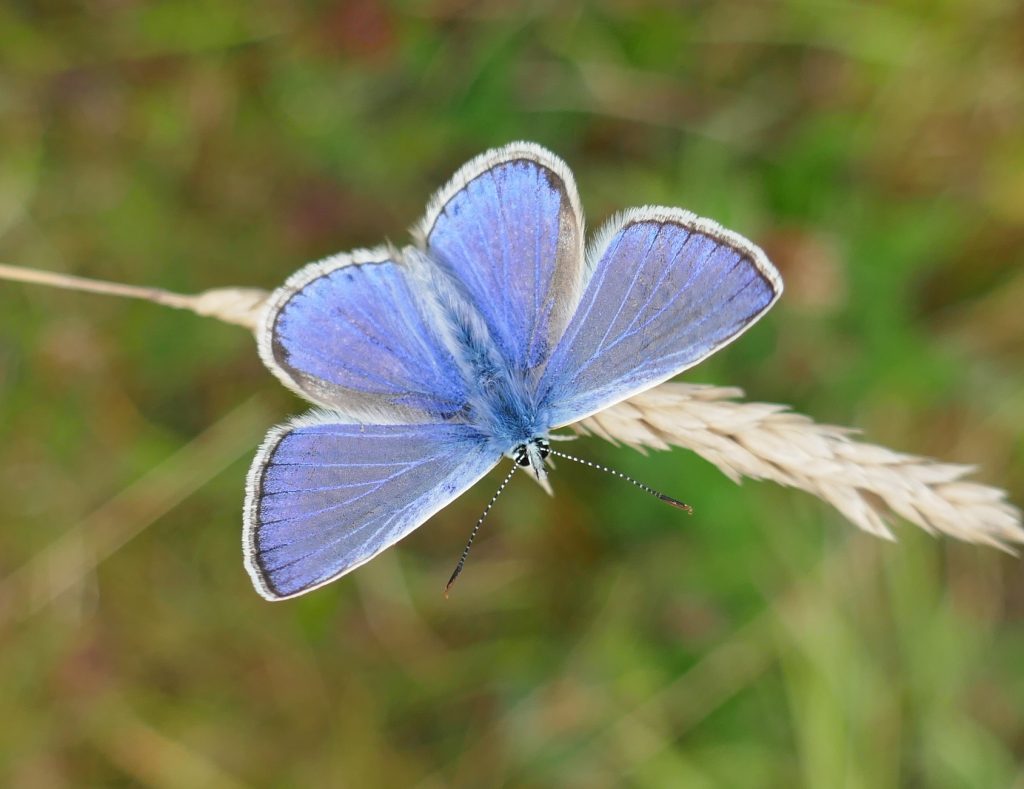
The Common Blue (male pictured) remains widespread in wilder grassland in Ireland, using vetches and clovers as larval foodplants. Black Medic and Common Bird’s-foot-trefoil are commonly used where these grow in suitable conditions. The species flies in at least two generations annually, and responds to summer drought by producing very small individuals in late summer. In some years it flies into early October. This butterfly still belongs to the ‘expected’ category, but a decline of -68% between 2008 and 2024 threatens to relocate it to the ‘hope to see’ category.
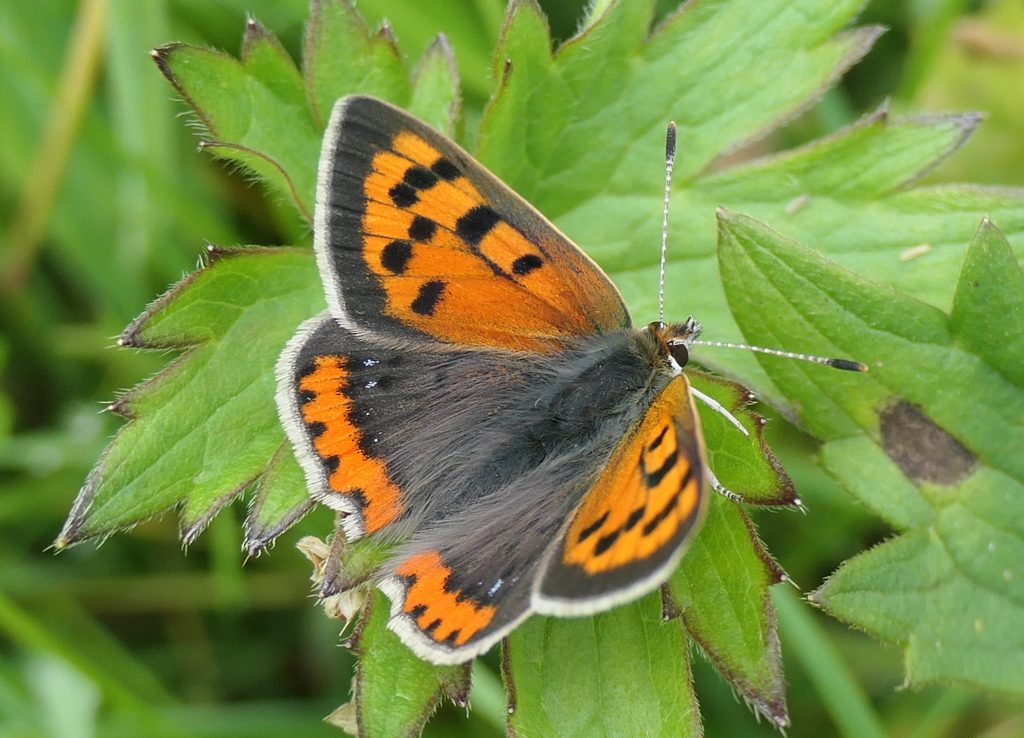
A lovely male Small Copper butterfly, second generation. This species had fallen by 68% in 2024 compared with the 2008 baseline. Its Irish distribution closely matches the Common Blue, but the Small Copper is naturally less numerous. This lovely butterfly hovers between the ‘expected’ and ‘hoped to see’ brackets.
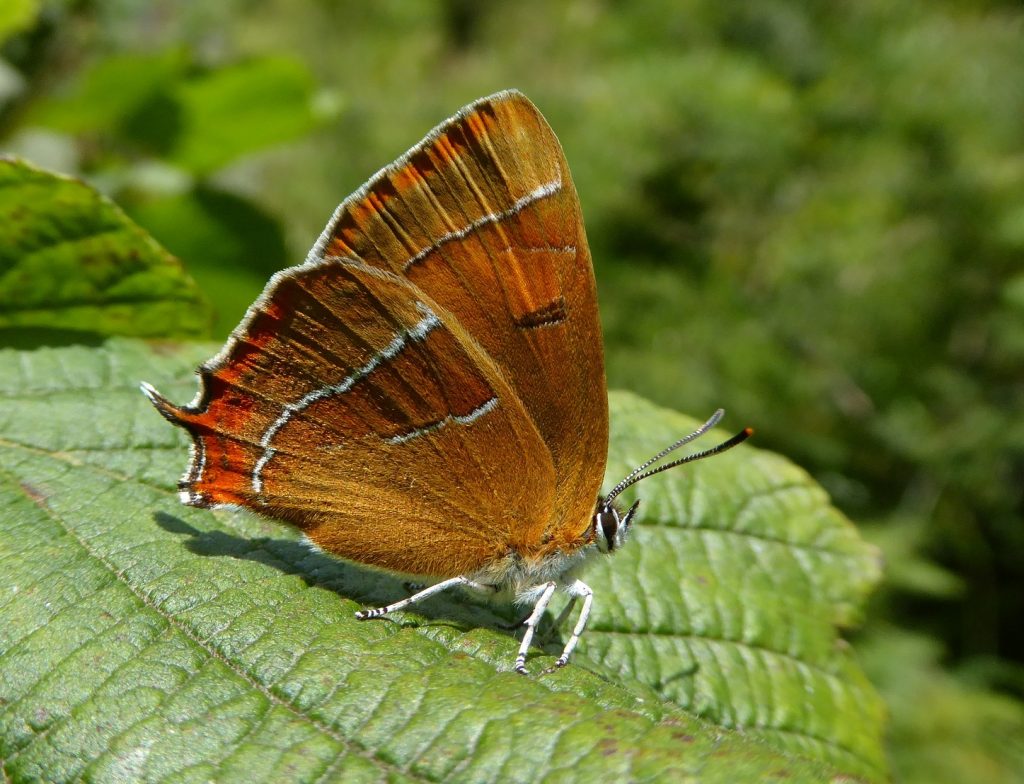
The Brown Hairstreak belongs firmly in the ‘hope-to-see’ basket. It is naturally rare, occurring in just 1.8% of Ireland’s 10km squares (18 out of 1019 10km squares). It depends on uncut Blackthorn, usually in scrub, adjoining unfertilised species-rich grassland in warm places. August is the key month for this autumn-leaf coloured butterfly.
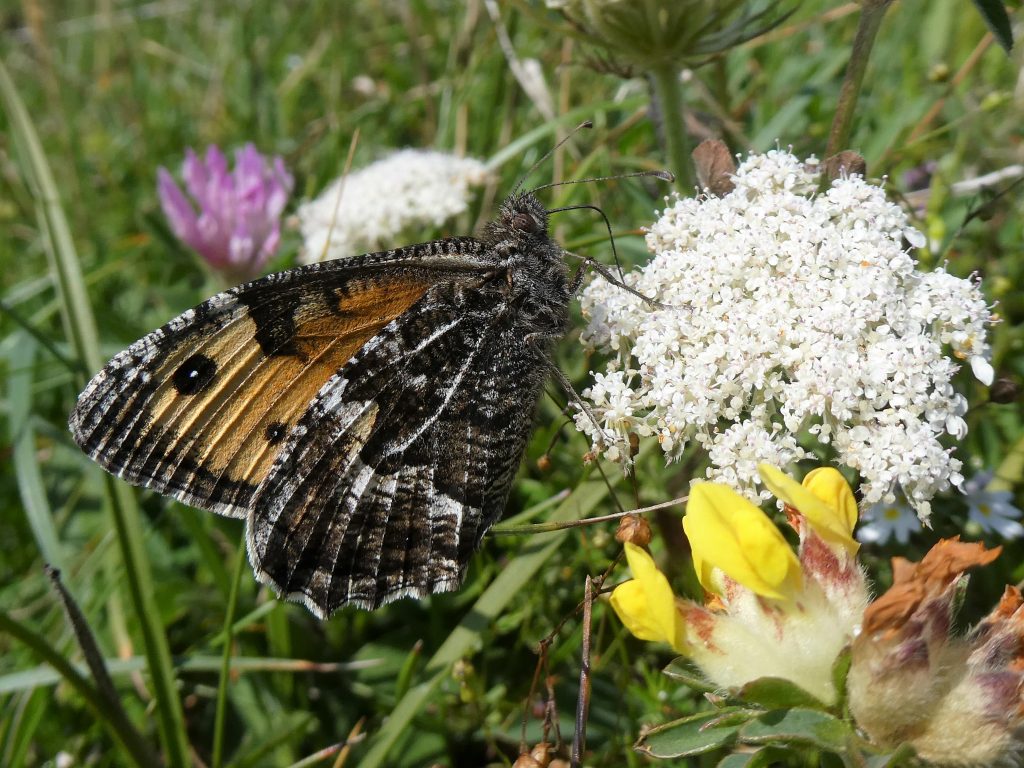
Grayling (female), Sheskinmore, County Donegal. Look for this large butterfly on tall dunes and on rocky outcrops, including outcrops in wet bogs. The Grayling’s peak month is August but usually flies from July to early September. It is disappearing from some apparently suitable places and is one of a group of brown butterflies that is declining in distribution and probably in abundance. It is a butterfly one hopes to see when exploring suitable habitat along the east coast, but one expects to see it in the right habitats along the western seaboard.
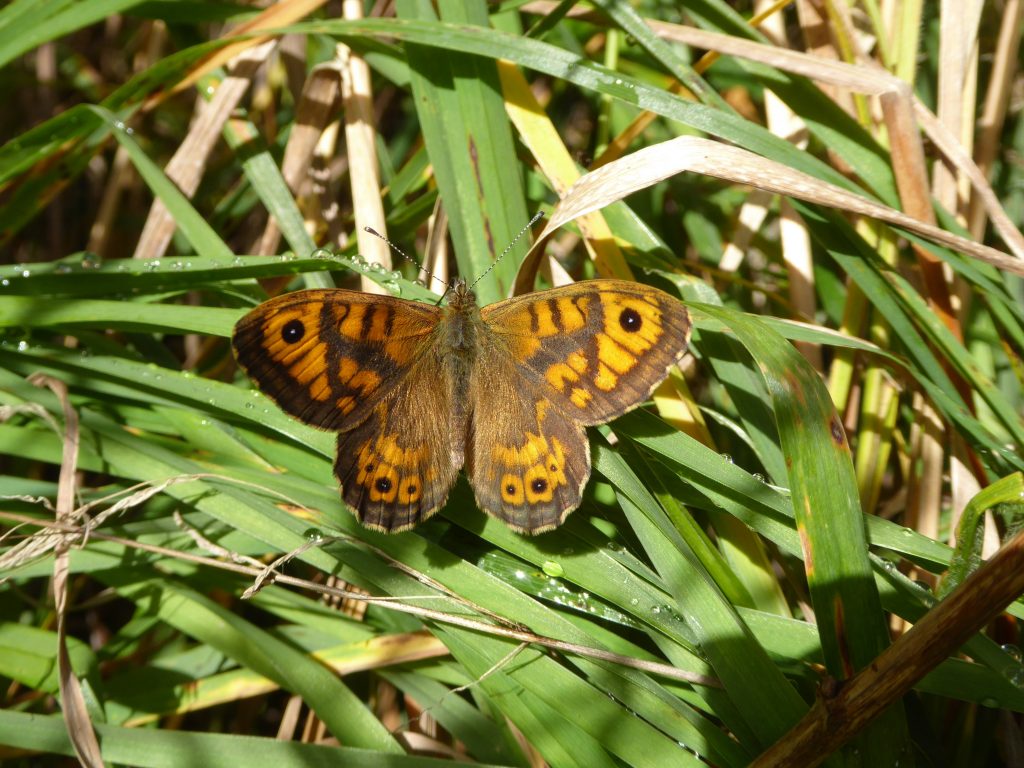
The Wall Brown has declined in abundance and distribution. This once-common species is now rare or absent in most of Ireland. The species is endangered. August is the key month in its flight period.
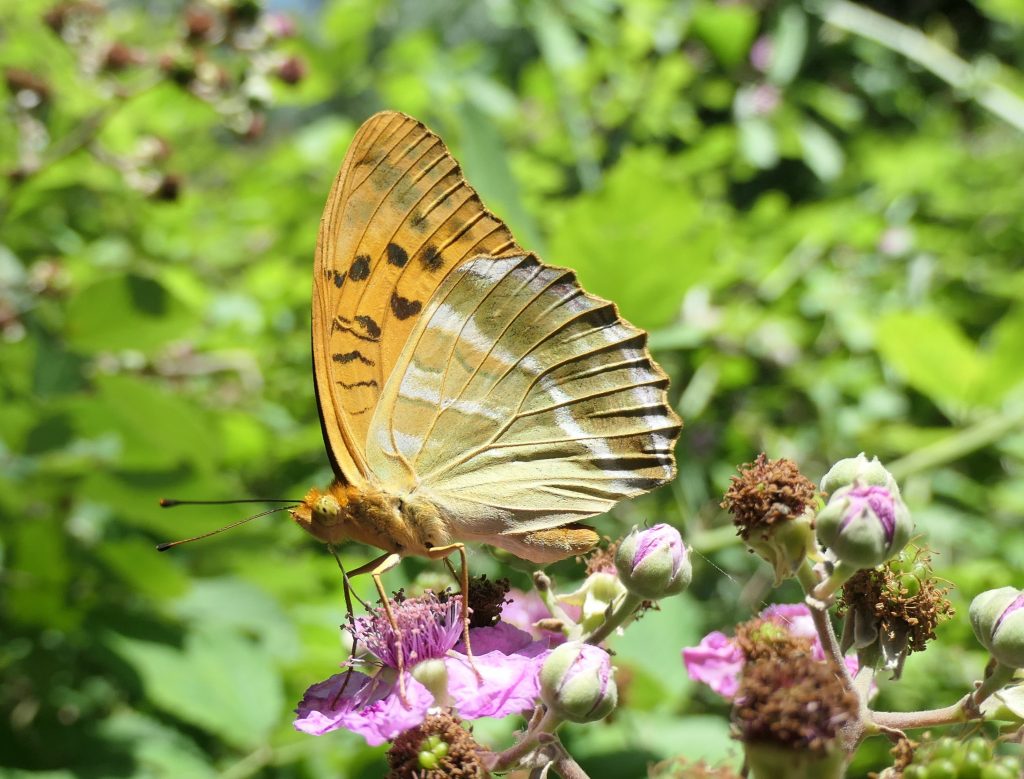
This Silver-washed Fritillary continues to fly in August, and one should expect to encounter it in clearings and rides in semi-natural deciduous and mixed woodland but not in dark plantation forests.
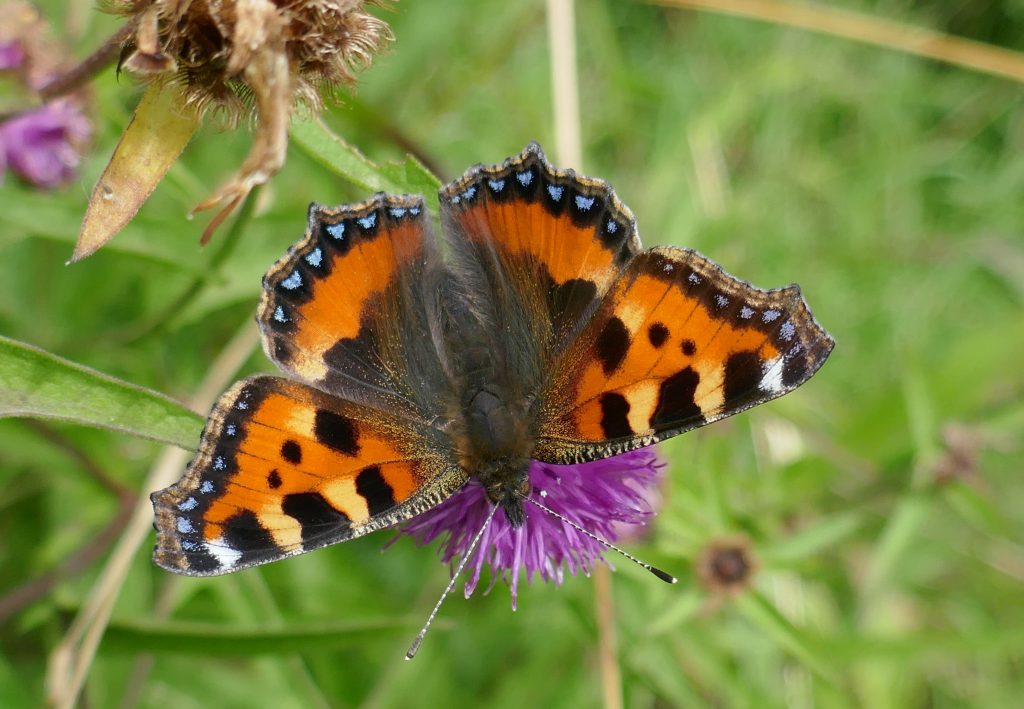
The Small Tortoiseshell flies in numbers towards the latter part of August. It can appear anywhere, but it has fallen by -63% between 2008 and 2024.
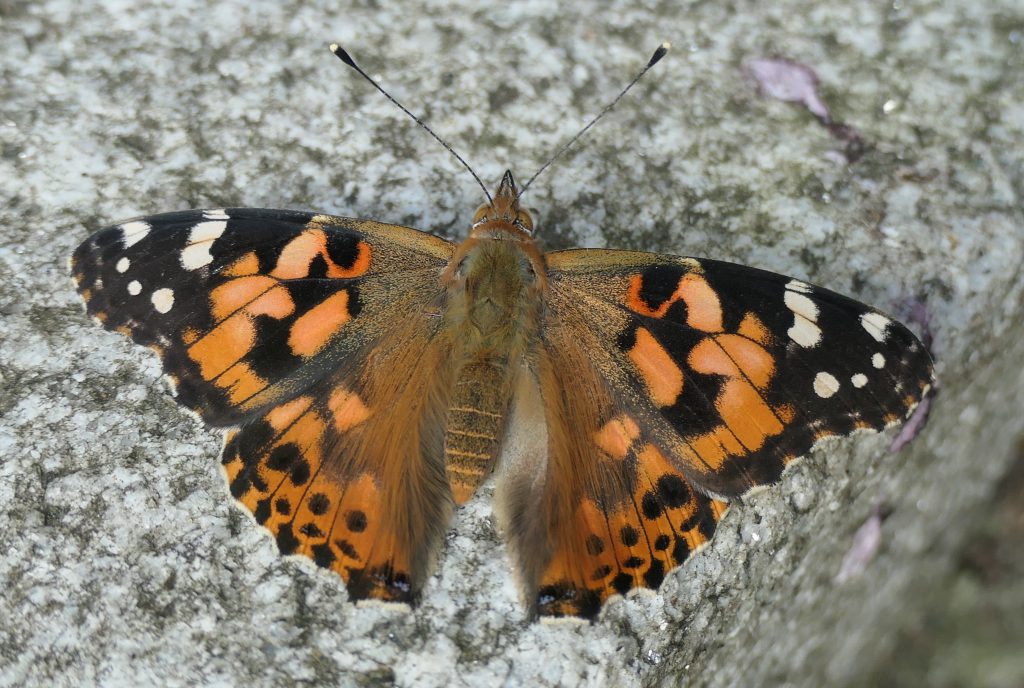
A Painted Lady basking in August 2025. We are having a glorious Painted Lady summer in 2026. It might reach high abundance this August.
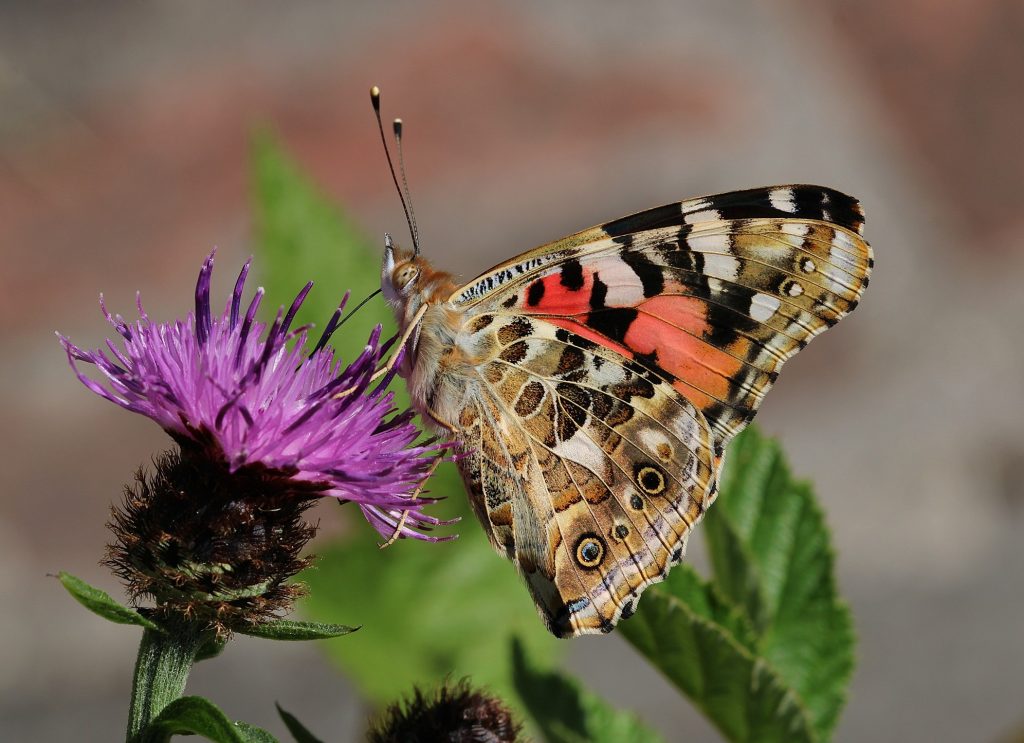
Painted Lady 29 July 2026 showing the underside.
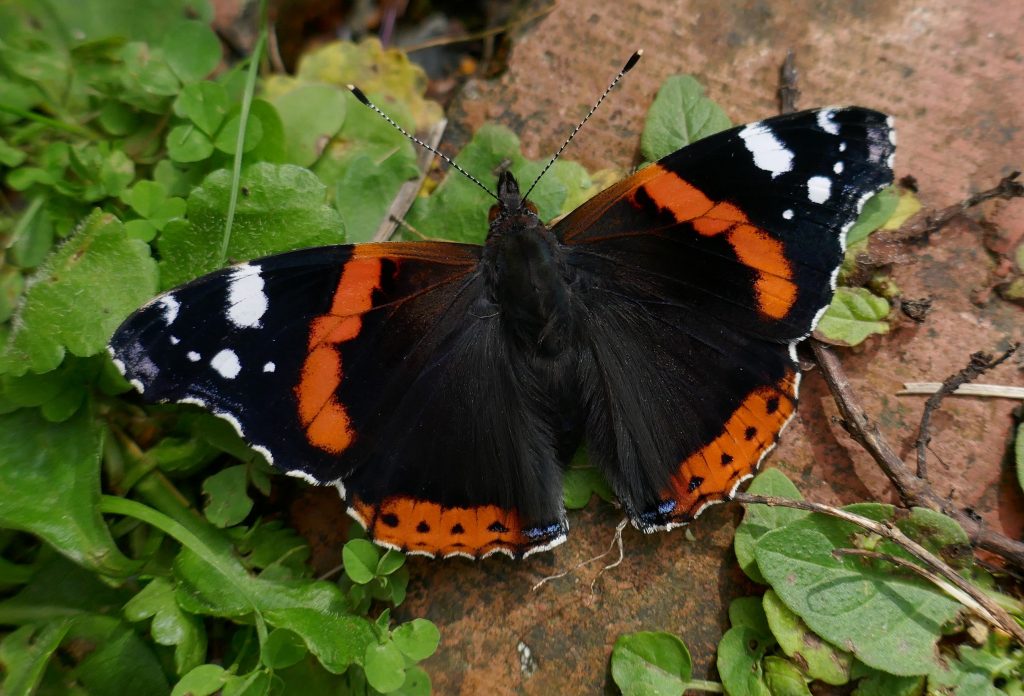
The Red Admiral is our other common migrant, and like the Painted Lady, it is thriving this year. August is a great month to see it.
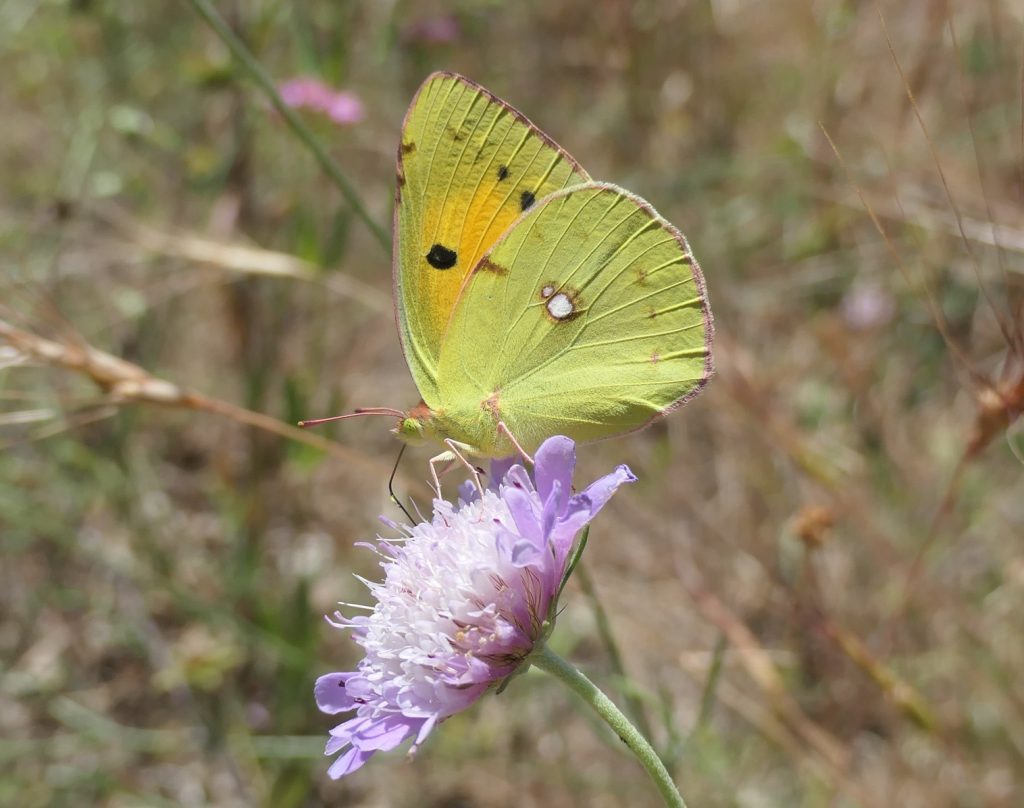
Clouded Yellow, Agios Georgios, Corfu. This beautiful migrant is making its presence felt in the southern coastal counties, and it might appear in numbers further north. Like Painted Lady and Red Admiral, it is having a bumper year.

All photos © J. Harding

Key Reference

Judge, M and Lysaght, L. (2025). The Irish Butterfly Monitoring Scheme Newsletter, Issue 17. National Biodiversity Data Centre.


National Peatlands Park Campaign Update

Part of Butterfly Conservation Ireland’s strategy to save our butterflies is to advocate for the protection of high-nature value land, especially land in public ownership.

The Bog of Allen in North-West Kildare and East Offaly is such an area. The quality of the habitats is clear in spring and summer, when the abundance of invertebrate and bird life cannot fail to impress.  The bird life over the winter months is impressive, with Whooper Swans, Golden Plover and Lapwing in good numbers. There are five areas in the region set aside for nature at present, but all are small.  One is Butterfly Conservation Ireland’s reserve in Lullybeg. The overall area of the bog is estimated at 5,581 hectares.

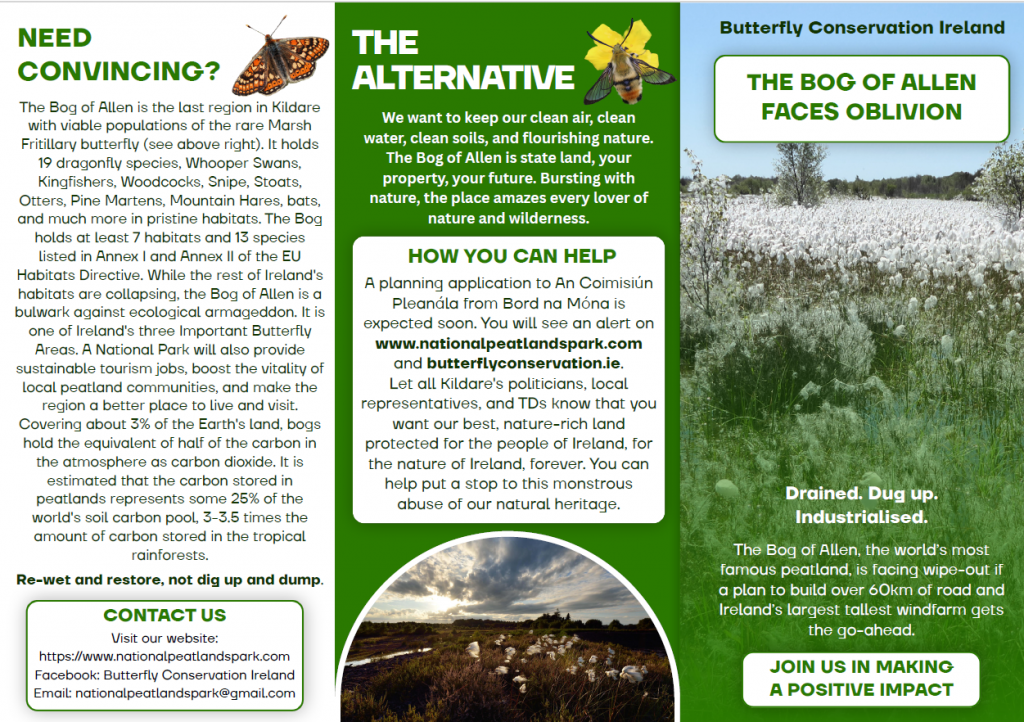
A proposal to create Ireland’s largest, tallest wind farm, complete with over 60km of industrial road, would deliver a devastating blow to the region’s nature and nature restoration. This flies in the face of the need to restore habitats in 20% of Ireland’s land (and sea) area by 2030 under the EU Nature Restoration Regulation. We have produced a campaign leaflet to highlight this important issue. We propose that a National Park be established in the region. Ireland has no national park in the midlands and no national park on deep peat.

The leaflet, a collaboration by various conservation organisations, contains advice on what we need you to do.

All Kildare politicians need to understand your feelings on this vital issue for nature.

All of Kildare’s councillors’ contact details are here: https://kildarecoco.ie/YourCouncil/YourElectedCouncil/CouncillorsDetails/

All the Kildare Oireachtas members are here: https://www.oireachtas.ie/en/members/

For the Oireachtas members, enter their name in the Find A Member field.

Kildare’s TDs are: Réada Cronin, Aidan Farrelly, James Lawless, Joe Neville, Naoise Ó Cearúil (Kildare North) and Martin Heydon, Shónagh Ní Raghallaigh, Seán Ó Fearghaíl and Mark Wall (Kildare South).

Offaly’s TDs are: Carol Nolan, John Clendennen and Tony McCormack.

The TDs’ contact details can also be found at: https://www.oireachtas.ie/en/members/constituencies/

Enter the constituency name for their contact details.

You can use details from the leaflet to support your contact.
 

Event Report: Saturday 18th July 2026 Moth Morning in Prosperous, County Kildare, at the home of Dara Wyer

What do warm nights, a great location, friendly people and the right time of year make? A great moth morning. And what a great cache of moth treasure we accumulated in four Robinson traps in Dara and Maire’s garden in Prosperous, Kildare. The garden holds ponds, mostly native trees, scrub, hedges, grassland with native wildflowers and some well-chosen garden flowers such as Fennel. The garden adjoins bogland and Scots pine woodland with resident Barn Owls.

Sounds perfect? That’s what it is!

The moths clearly find it so, all 100-plus species registered so far. Despite a cooler night than recently (it fell to about 11 degrees), there was much to see. The traps were full, and Philip Strickland’s moth-identification skills proved very useful as some unusual species appeared. Key among these is the Suspected, a species declared extinct by the state in the 2016 Macro-moth Red List. The moth is thriving in this lovely area, if the dozen or so in the various traps offer evidence. Since 2010, there have been records for just 11 10km squares, 1% of Ireland’s 10km squares.

Other local species found were Bordered Sallow, Scarce Silver Y and Barred Rivulet. We found Broad-bordered Yellow Underwing, relatively well distributed in the east, but very scarce west of a line from Sligo Town to Wexford Town.

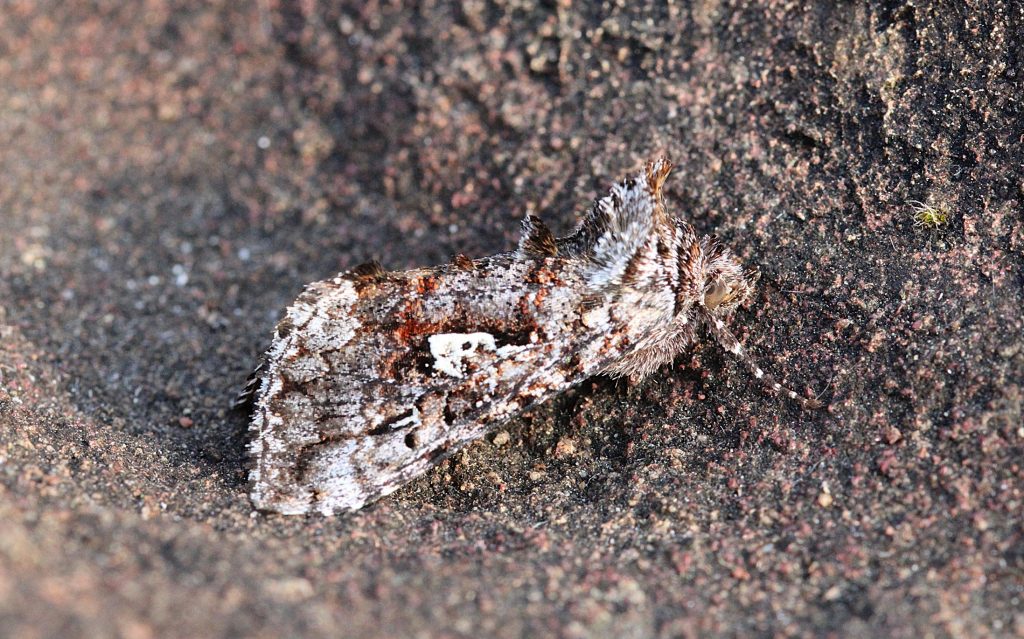
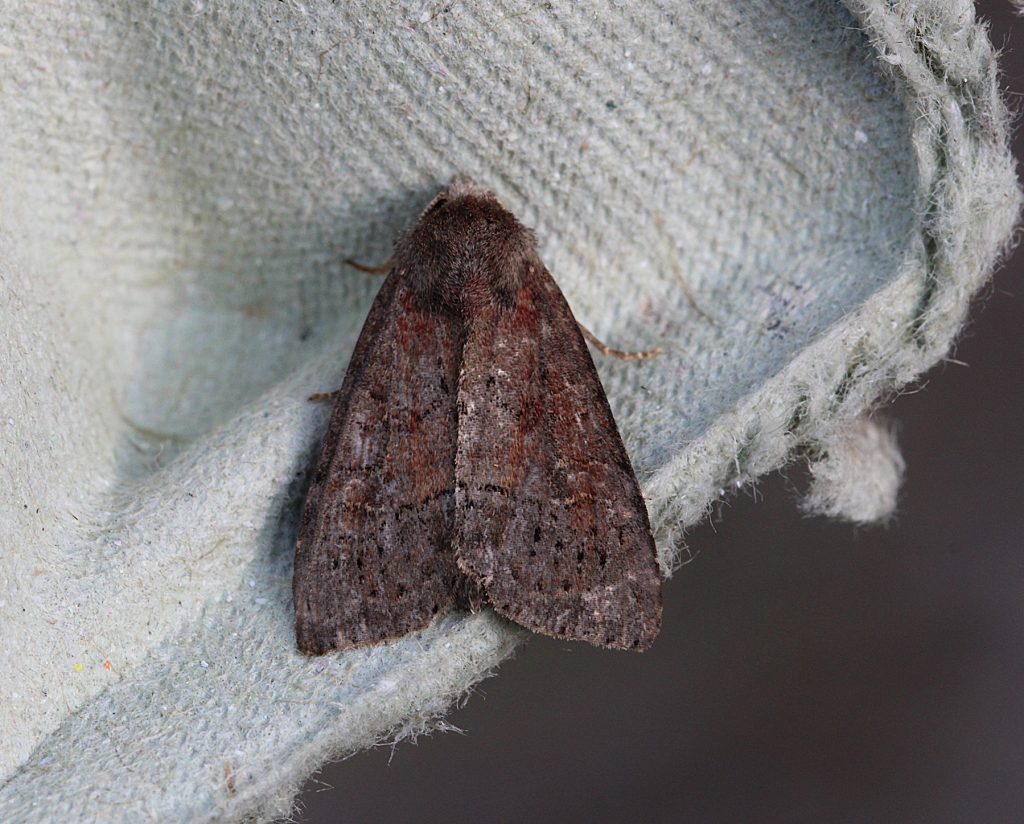
Bordered Sallow. This is quite a scarce species, with a recorded presence in just 45 10km squares since 2010.
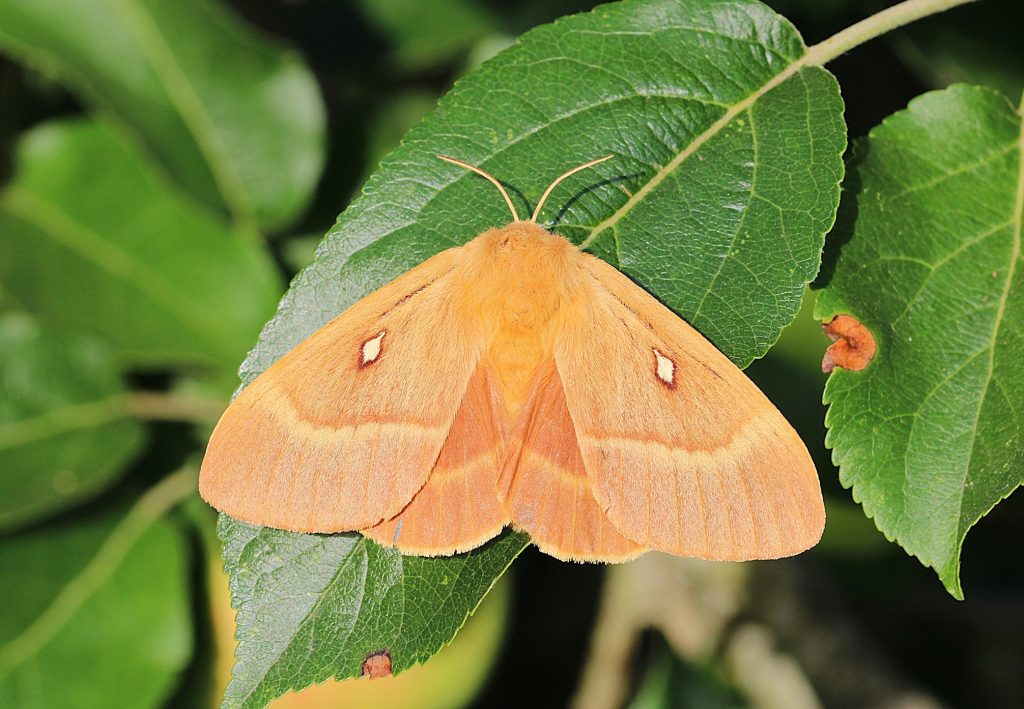
Northern/Oak Eggar. Males are day-flying.
Scarce Silver Y, a bog moth. Its caterpillar feeds on Heather and Bilberry. It also flies in daylight.
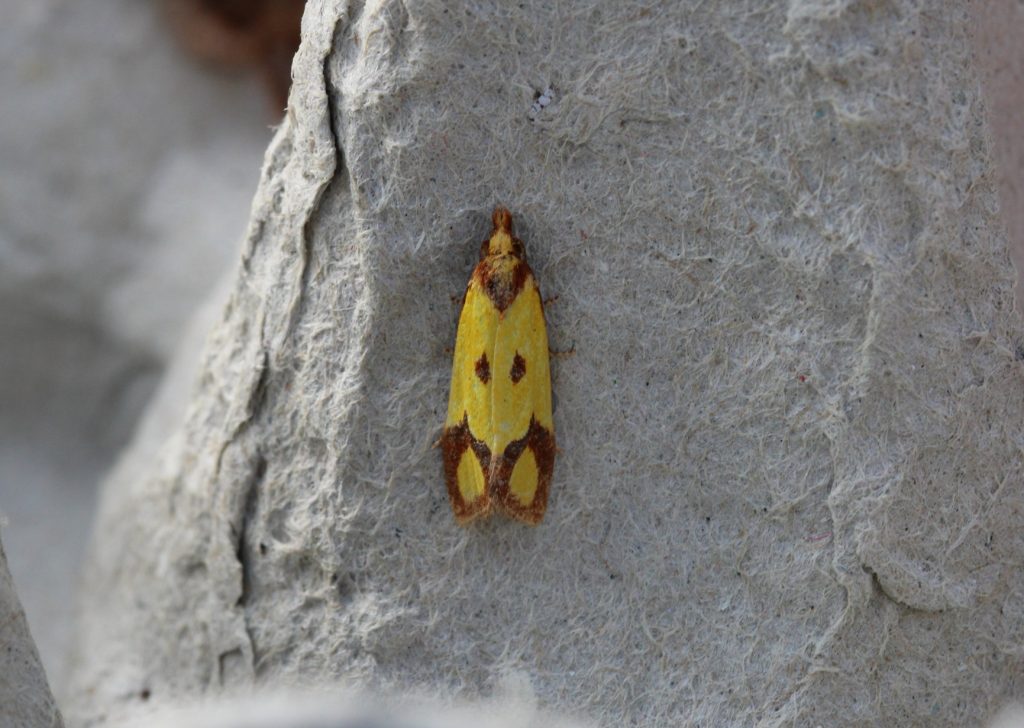
Agapeta zoegana Sulphur Knapweed moth, Prosperous.
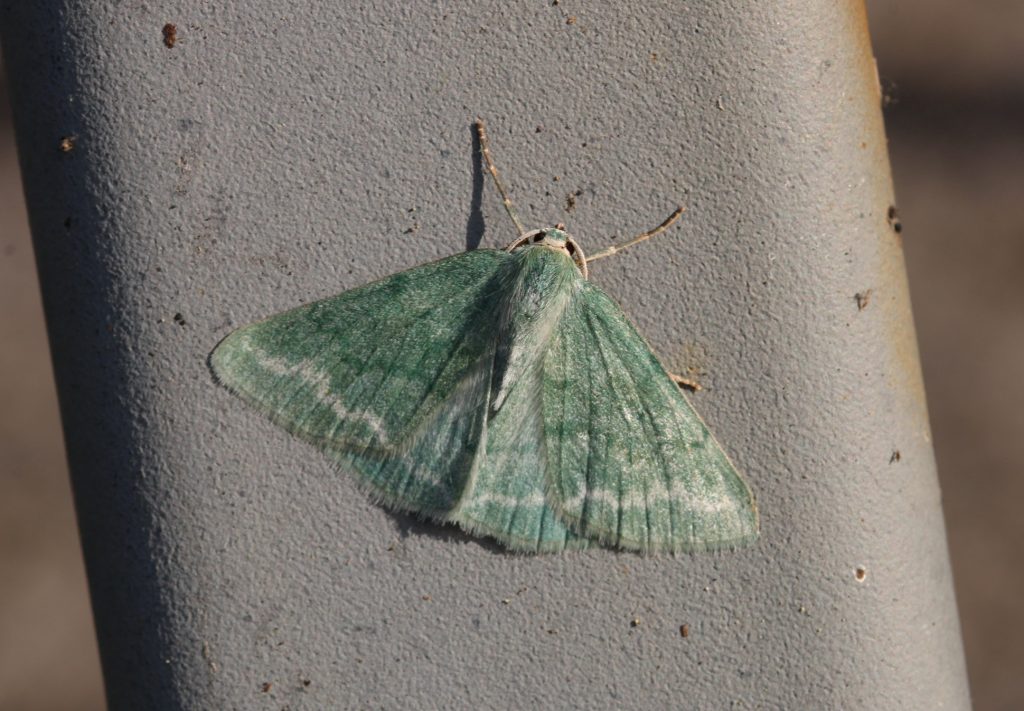
Grass Emerald, Prosperous. Gorse and Broom are the larval foodplants.
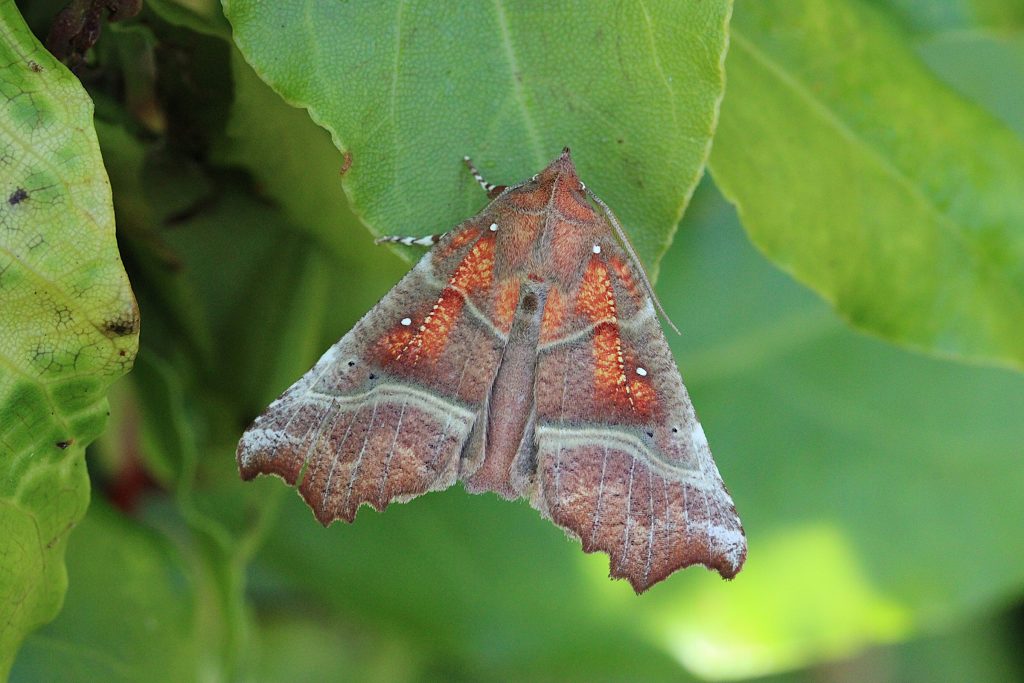
Herald, Prosperous. This moth is mainly single-brooded. It overwinters in the adult state, often in attics, and sometimes in large numbers.
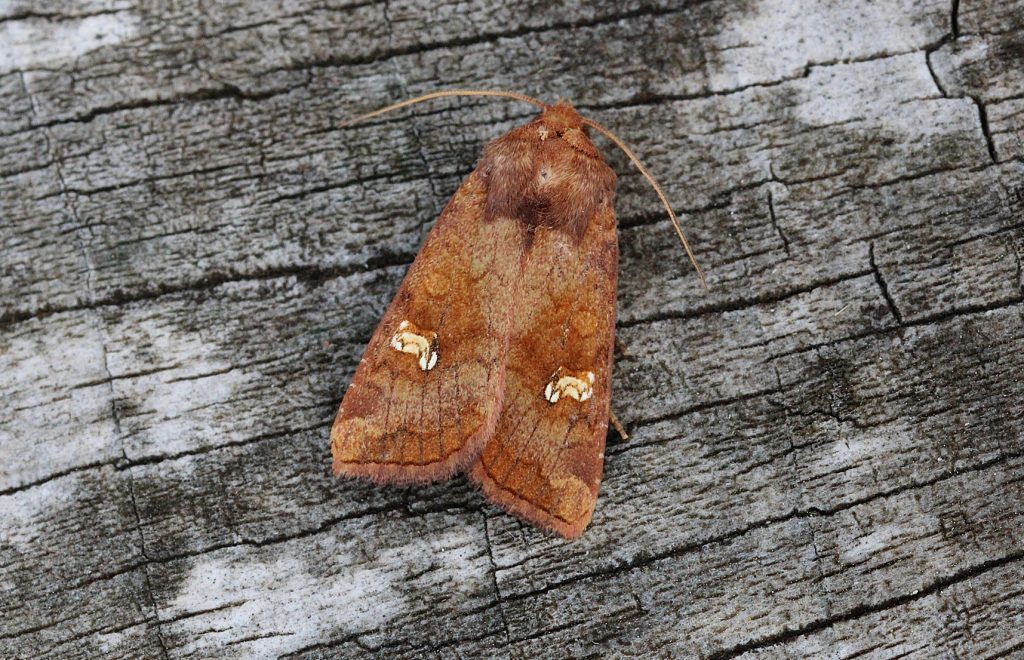
Suspected, declared extinct by the state in 2016, is thriving in its scrub habitat in North Kildare. Several were trapped on 18 July.
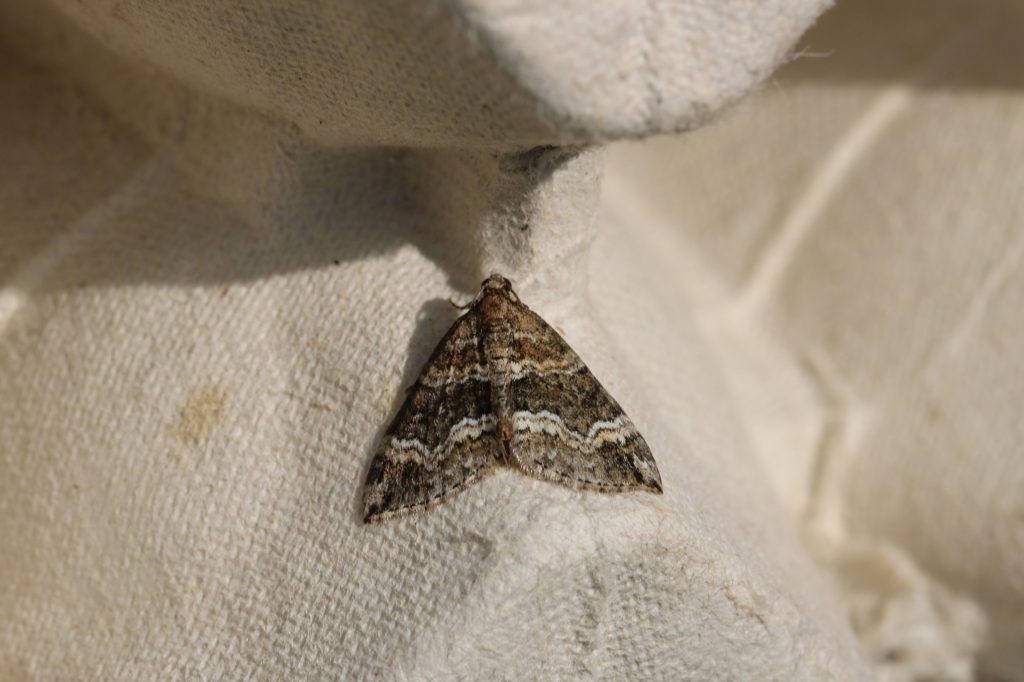
Barred Rivulet, Prosperous. Kildare. The seeds of Red Bartsia nourish its larvae.
Ear Moth, Prosperous, County Kildare.  There are four ear moths in Ireland, Ear Moth, Crinan Ear, Large Ear and Saltern Ear, so Ear Moth aggregate is the term used in the absence of definitive identification data.
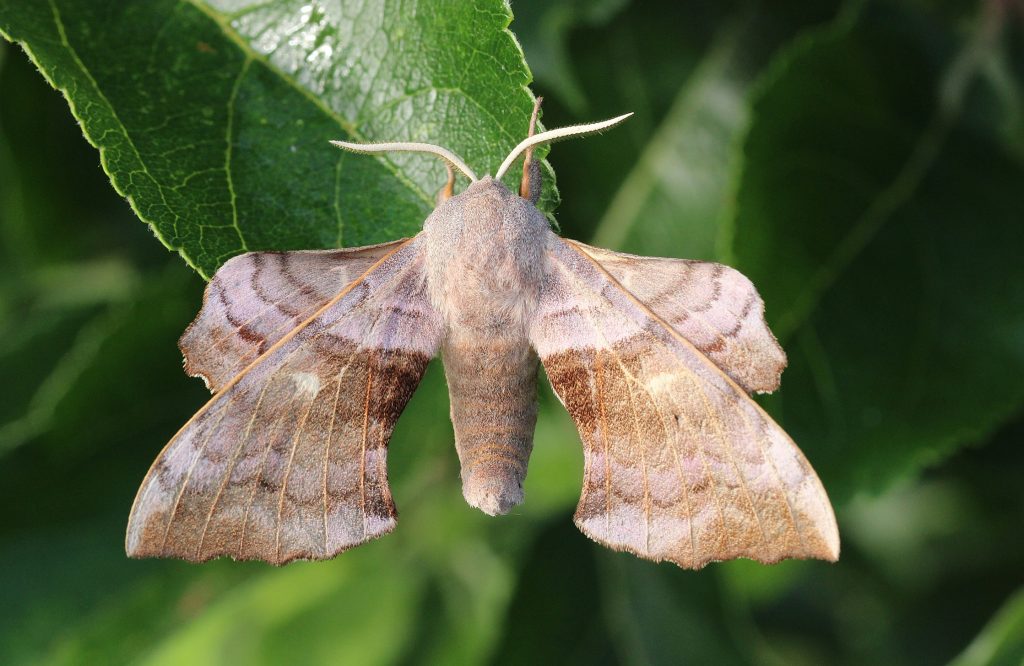
Poplar Hawkmoth, Prosperous, County Kildare. The moth was quite abundant, with one trap holding ten individuals.
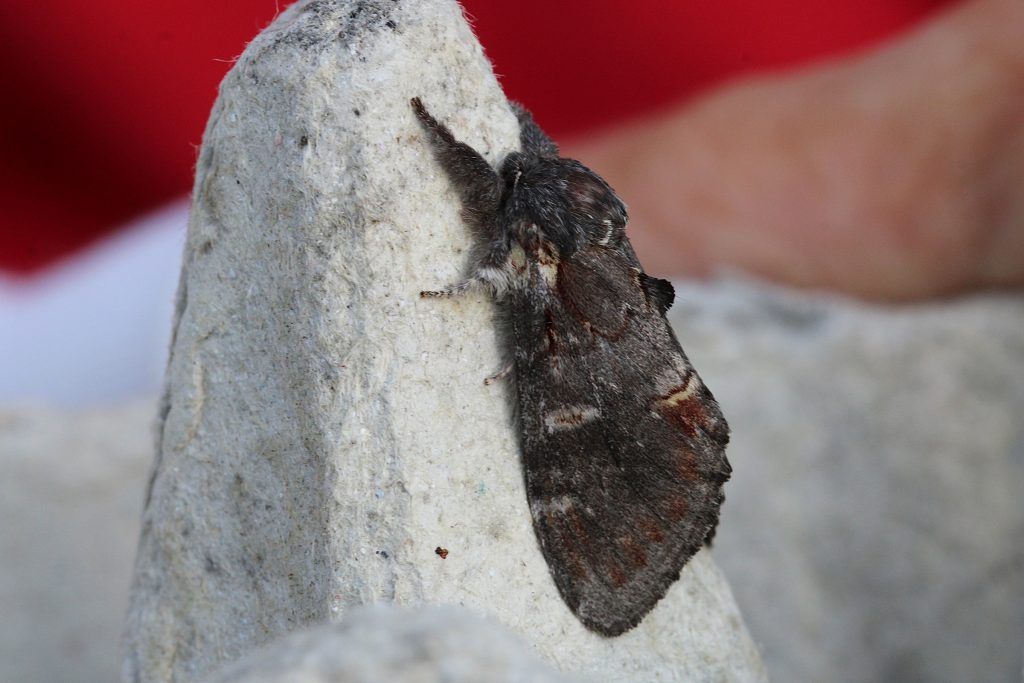
Iron Prominent, Prosperous, County Kildare. This is well distributed in Ireland.

There is one disturbing note. We again failed to find the Garden Tiger moth,  recently common. Has it disappeared from Kildare? If so, it must be lost from many areas. It breeds on common plants, such as Common Nettle, Broad-leaved Dock, Common Dandelion agg. and many other plants. We are not diagnosing a foodplant shortage for its disappearance, but perhaps the quality of the plants and the nature of the adjoining vegetation have altered. The disappearance of a large, colourful, much-loved species is a great concern, especially as it was common until about 2015.

Our post-trap conversations are typically eclectic, warm and humorous, and this was no exception. Thanks to Philip Strickland for organising the event, Dara and Maire for hosting us, and everyone who attended.

Photos copyright J.Harding 2026.