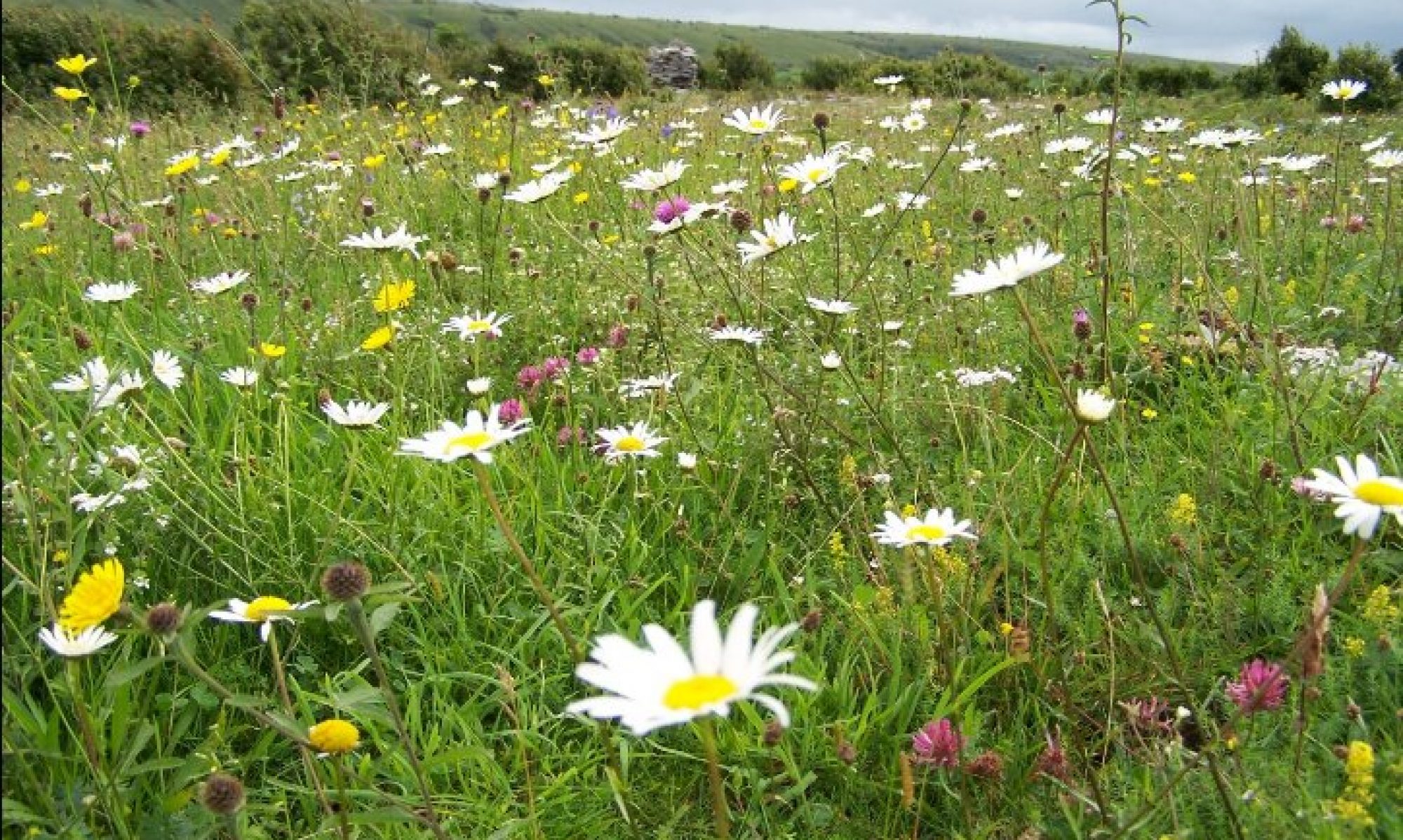
The golden September we often get is not ours in 2026, but many sunny Septembers offer a modicum of compensation for miserable summers. Summer 2026 was glorious, surpassing 1976 and 1989. Will it pass into the collective memory as a standout summer? That might depend on how we interpret climate data. We are in a time when hot, sunny weather is characterised as evidence of the collapse of the stability that has long characterised the global climate. Can’t we enjoy a hot summer without worrying? Apparently not.
That is not to be flippant about climate change, whether human-induced or arising from other influences. However, a remarkable feature of lepidopteran ecology is the rapid response to changing seasonal, climatic and environmental conditions. Changing climatic conditions can mean that ecological conditions within an area that were previously unsuitable for breeding become available for breeding. This is happening in Europe, Britain and Ireland.
The northward shift in butterfly and moth ranges is particularly evident in Europe, where range expansion does not require crossing water bodies. Species like the Map butterfly and the Peacock butterfly are extending their European range northward. The Brown Argus, formerly confined to breeding on Common rock-rose in the warmest habitats on chalk and limestone grassland in Southern England and Wales, has now expanded its British range, using cranesbills in cooler grasslands because the warming climate allows it to use these larval foodplants. Some species do not benefit from the warming climate, and some species benefit from the increasing warmth in some parts of their range and suffer declines in other regions.
Range expansions in continental Europe influence Britain and Ireland to a lesser degree; many species expanding on the continent will avoid crossing seas. However, migrant species are more mobile, and some show indications of establishing populations in these islands.
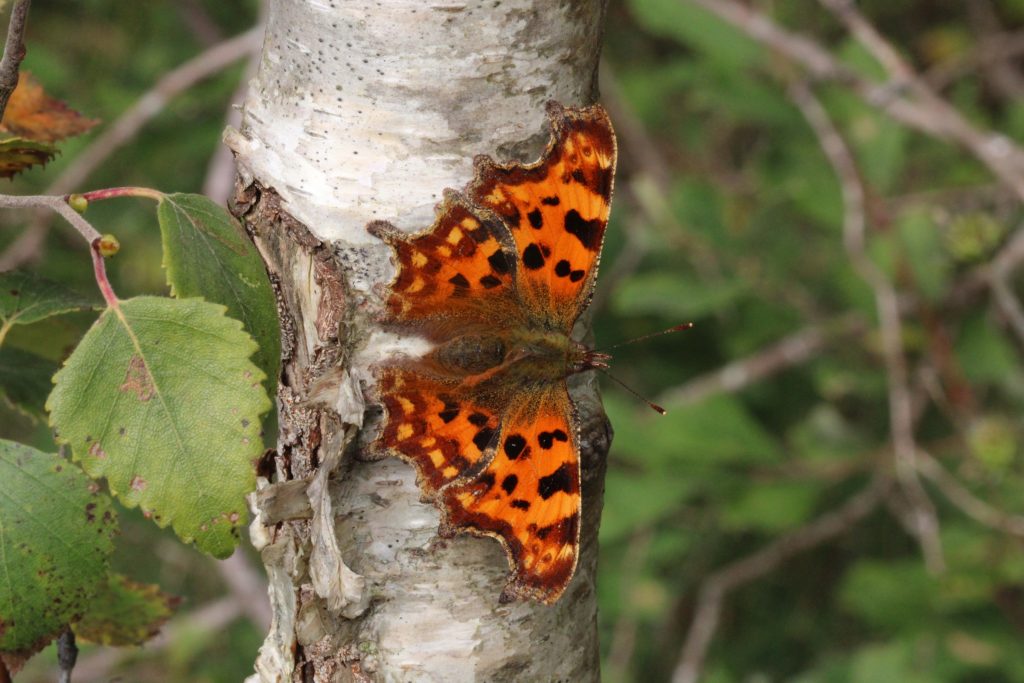
The most notable expansion from an Irish viewpoint is the Comma. Unknown in the Republic of Ireland before 2000, it has now been recorded in more than half of Ireland’s 10km squares, and its northward and westward expansion continues.
The lush Stinging Nettles along damp hedgerows, wood rides and edges, riverbanks and elsewhere suit it perfectly. It is thriving, producing two generations and is now a staple part of the butterfly experience in the east and midlands. Hedges holding blackberries and flowering ivy are the places to look in the general farmed countryside; wet grasslands and dry limestone grasslands with Devil’s-bit Scabious are also likely per-hibernation feeding grounds.
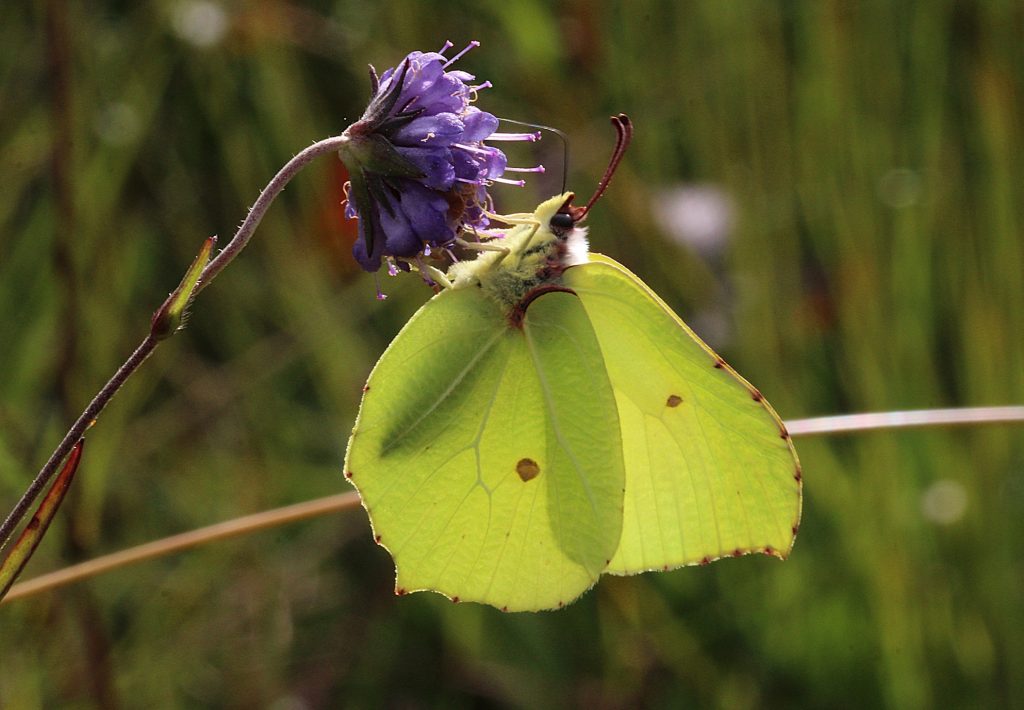
A stay-at-home butterfly to look for in September is the Brimstone. Most are in hibernation, but a few still feed on late flowers, especially Devil’s-bit Scabious, before disappearing into woods, scrub and dense grassland vegetation until next spring.
A glorious autumn moth that flies in a single generation in September-October is Merveille du Jour Griposia aprilina. Its scientific name is a strange choice. Linnaeus named it after April, when it is a larva, munching on oak leaves. Perhaps Linnaeus was thinking of the moth’s verdant colouring when composing the name. The moth is best imagined on oak boughs encrusted with lichens, where the moth becomes virtually invisible.
Photographs copyright J. Harding