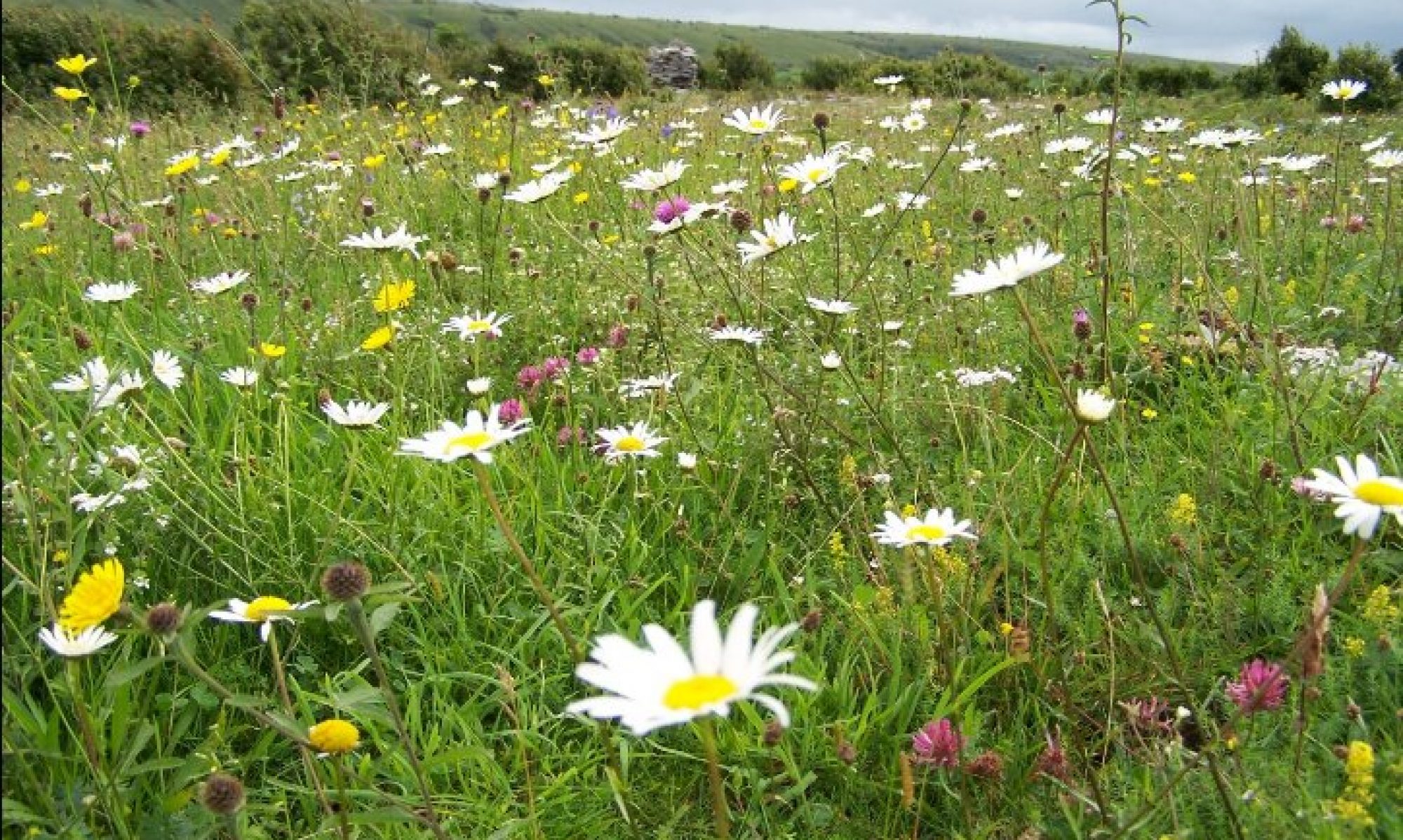
Corfu is reputed to hold high biodiversity, including butterfly populations. Armed with advice from Ionian Butterfly Conservation and the Field Guide Corfu produced by the European Butterfly Monitoring Scheme, we decided to see this for ourselves. We were not disappointed.
Corfu sits in the Ionian Sea, just 2km from Albania and about 10km from the Greek mainland. It is about 593 square km in area, c.57km in length, and about 28km in width at its widest point. The north is especially well wooded, with about 36% of the island under tree cover, although much of it consists of Olive plantations, mostly hundreds of years old. The economy is mainly reliant on tourism, but olive oil production is also important. Central and southern Corfu are the main agricultural areas. The island has about 101,000 residents, most of whom speak English. Corfu town holds about 40% of the population. Corfu has a Mediterranean climate, with hot, dry summers and mild winters when most rainfall occurs. The island is remarkably green, a feature striking for those familiar with the Mediterranean region in summer.
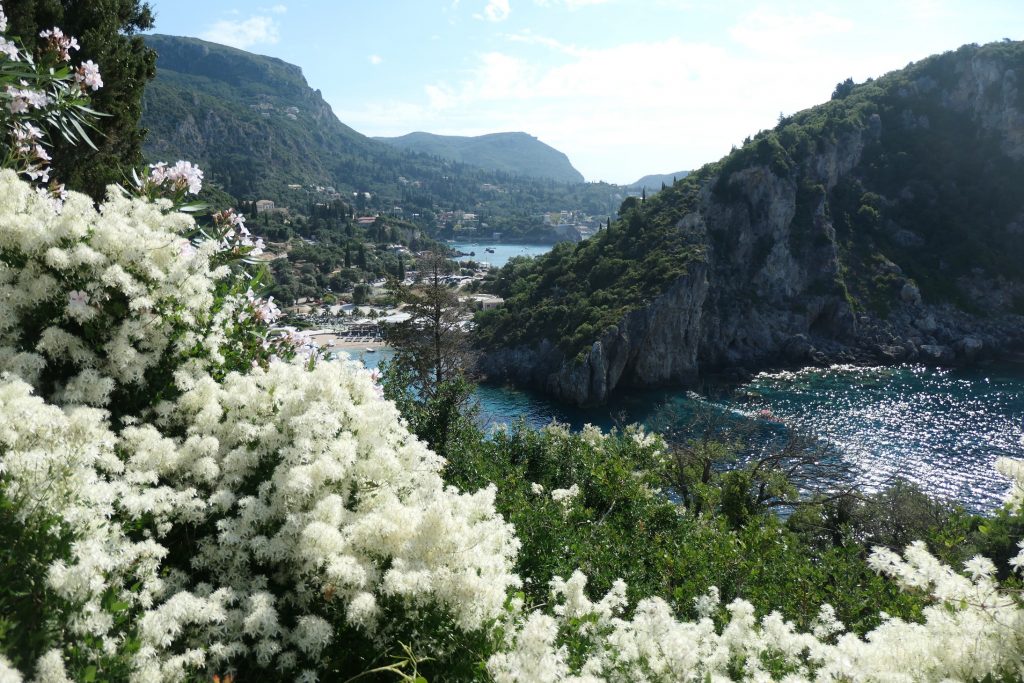
We visited from June 2 to June 13, and daytime maximum temperatures were typically 25-27 Celsius, with night temperatures about four Celsius lower. We focused mostly on the northern areas, which we heard were rich in butterfly populations. We were not disappointed!
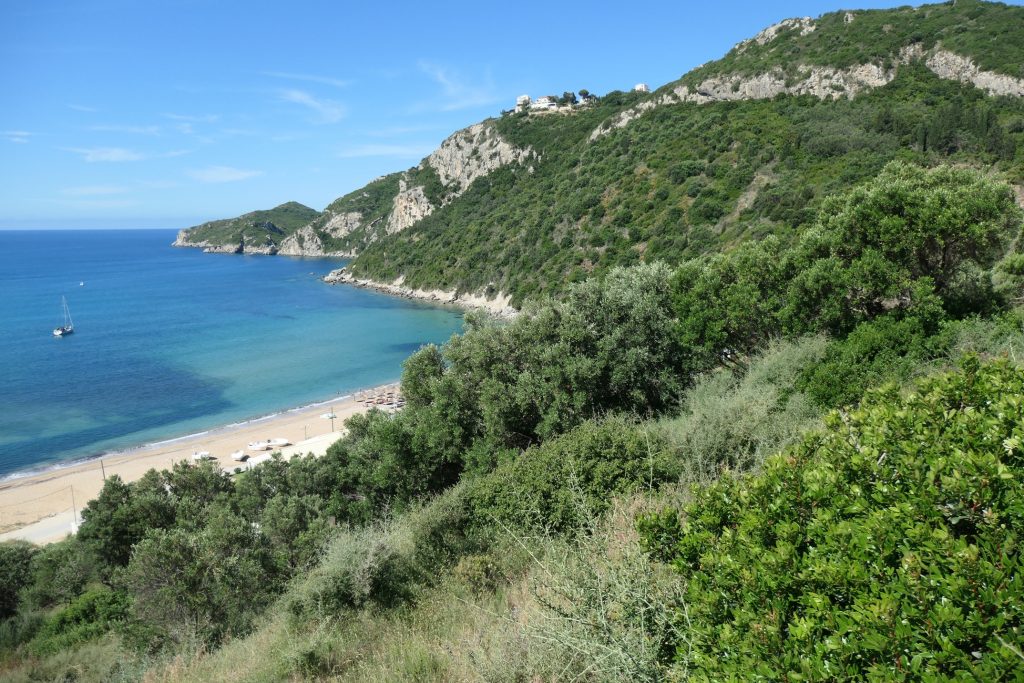
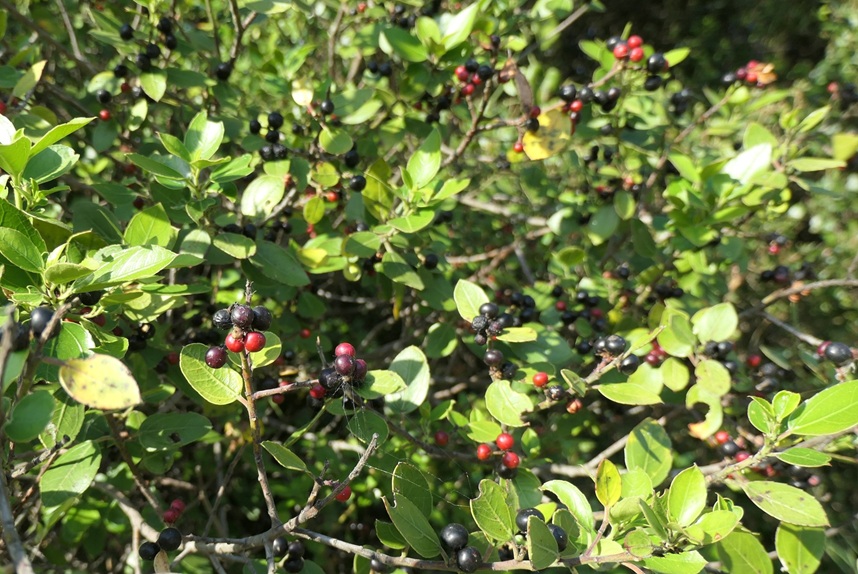
The best areas for butterflies were the open flower-rich edges and clearings in scrub, woodland, and olive groves, and along the tracks through these wooded areas. The soils are calcareous, and the clay soils, especially notable along the coast at Agios Georgios Pagon in NW Corfu, appear to retain moisture. In NE Corfu, near and around Mount Pantokrator, the terrain is rocky. It contains a mixture of bare and sparsely vegetated ground, native woodland, grassland and scrub known as Maquis, the term used to describe evergreen scrub in the Mediterranean basin. Common scrub species include Strawberry tree Arbutus unedo, Lentisk Pistacia lentiscus, Myrtle Myrtus communis, Holly Oak Quercus coccifera and buckthorns such as Mediterranean Buckthorn Rhamnus alaternus and Jerusalem Thorn/Christ’s Thorn Paliurus spina-christi.
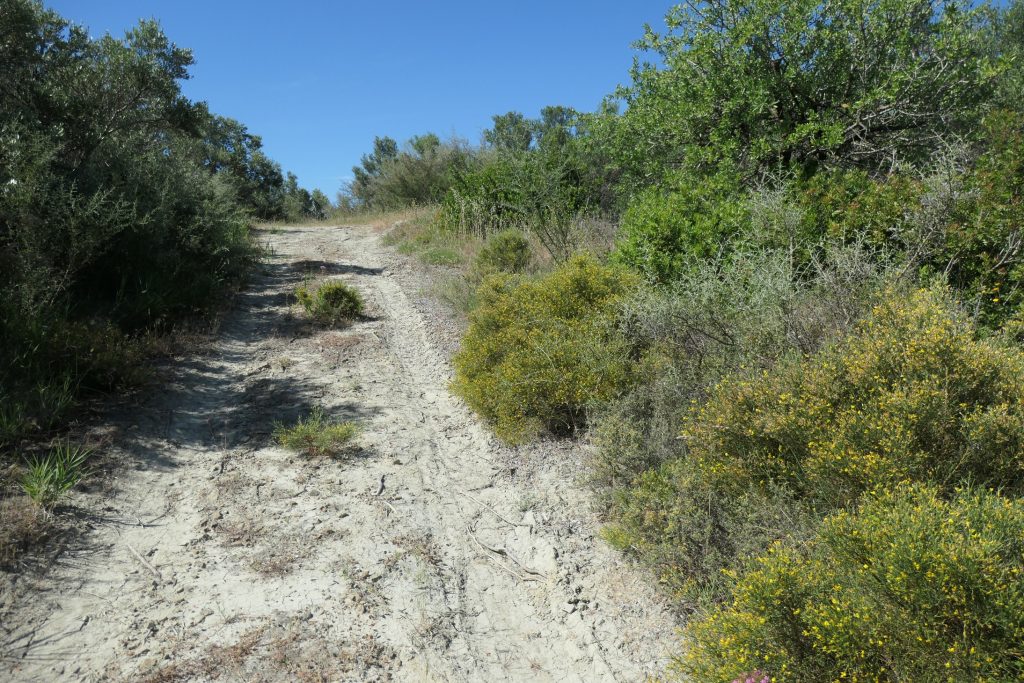
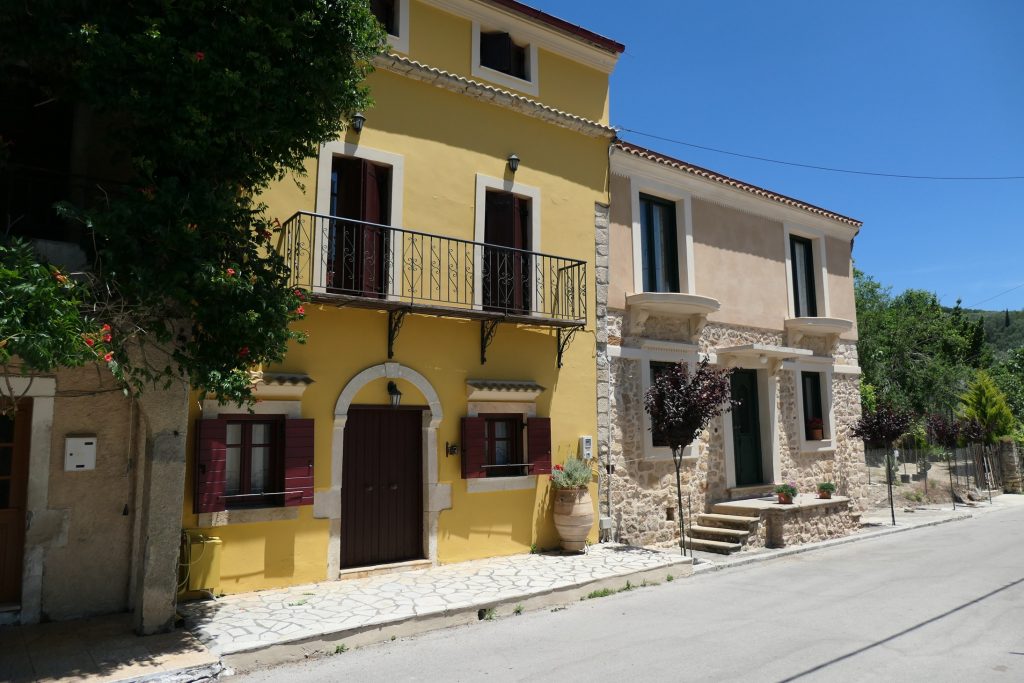
Grassy areas along roadsides were also rich in butterflies. In some areas, the populations were so large that people gazed at the spectacle. This included areas in coastal villages, where Cleopatra butterflies mixed with Large and Small Whites, Painted Ladies and Southern White Admirals to feed on garden flowers, especially the non-native reddish-purple climbing plant Bougainvillaea.
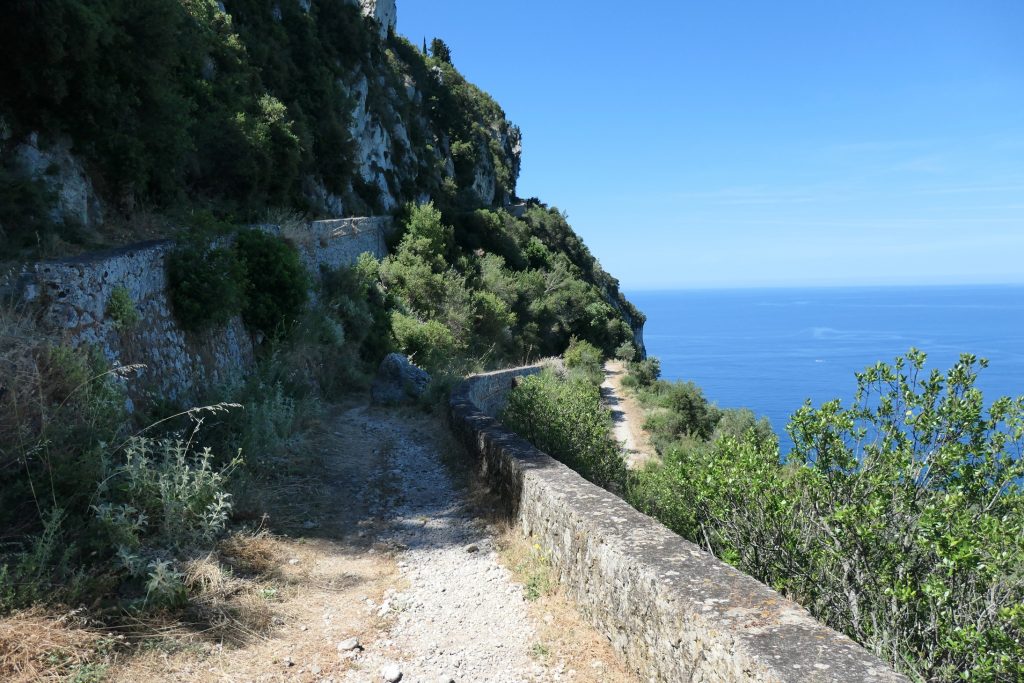
The various trails through the landscape, especially the donkey trails, were very rich in butterflies. We walked part of the donkey path from Makrades village toward the coast. Limestone cliffs edge part of this walk, with interesting flora in the narrow strip between the cliff and path, excellent for butterflies. We found the umbelliferous plant Scaligeria napiformis, a foodplant for the extremely range-limited rare butterfly used as the symbol for Butterfly Conservation Corfu, the Southern Swallowtail Papilio alexanor, the only European butterfly that roosts with wings fully extended.
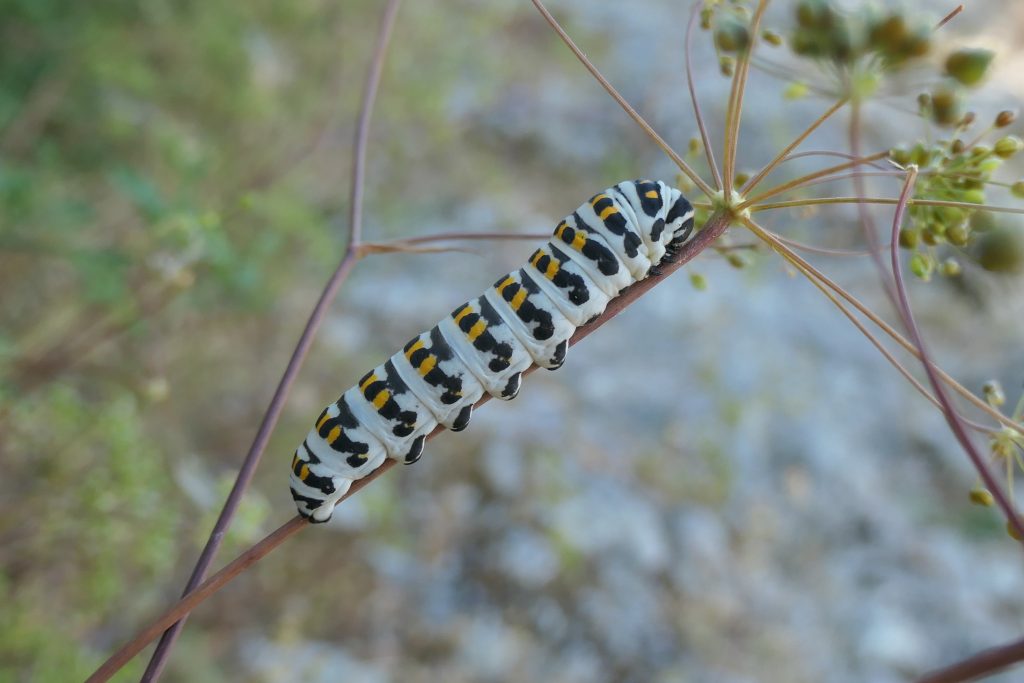
We found the caterpillars, black, white and orange, busy chewing on the seeds of the foodplant. When disturbed, it raises a fleshy, yellow organ from the first segment behind the head, producing a fluid that stinks of rotten pineapple. Presumably, this deters birds. Later in our stay, I found the caterpillars on Giant Fennel Ferula communis at sea level near the coast near Ipsos/Ypsos, NE Corfu. In Europe, it occurs only in small areas of SE France, NW Italy, W Croatia, parts of Greece, usually in mountains, Albania and the Republic of Macedonia, and its occurrence within these areas is local and sporadic.
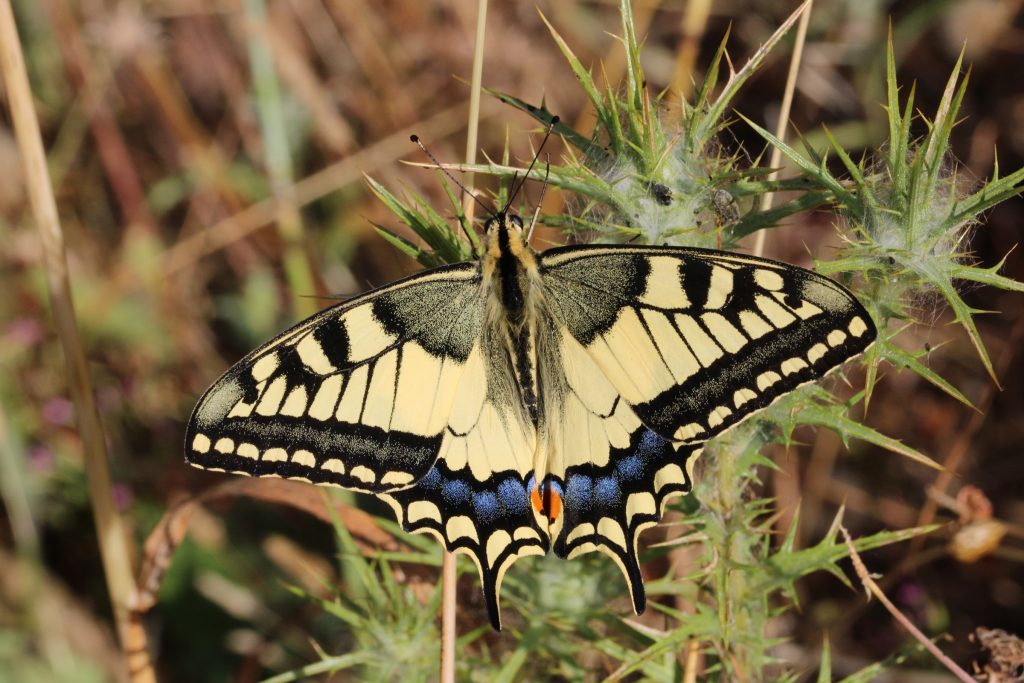
Corfu has four papilionid (swallowtails, festoons and apollos) butterflies, three swallowtails and the Eastern Festoon. The swallowtails present are Common Swallowtail Papilio machaon, Southern Swallowtail Papilio alexanor and Scarce Swallowtail Iphiclides podalirius. In Greek mythology, Machaon and Podalirius were sons of Asclepius, while Alexanor was a son of Machaon. Given their legendary roles as Greek deities, these butterflies should occur in Greece. All are stunning, floating in warm breezes with insolent ease. They are swift in flight, often fluttering teasingly close only to vanish when the fancy takes them. All these large, showy butterflies usually feed by fluttering over their flowers, standing on them on tiptoes, their heft too great for most flowers to support them.
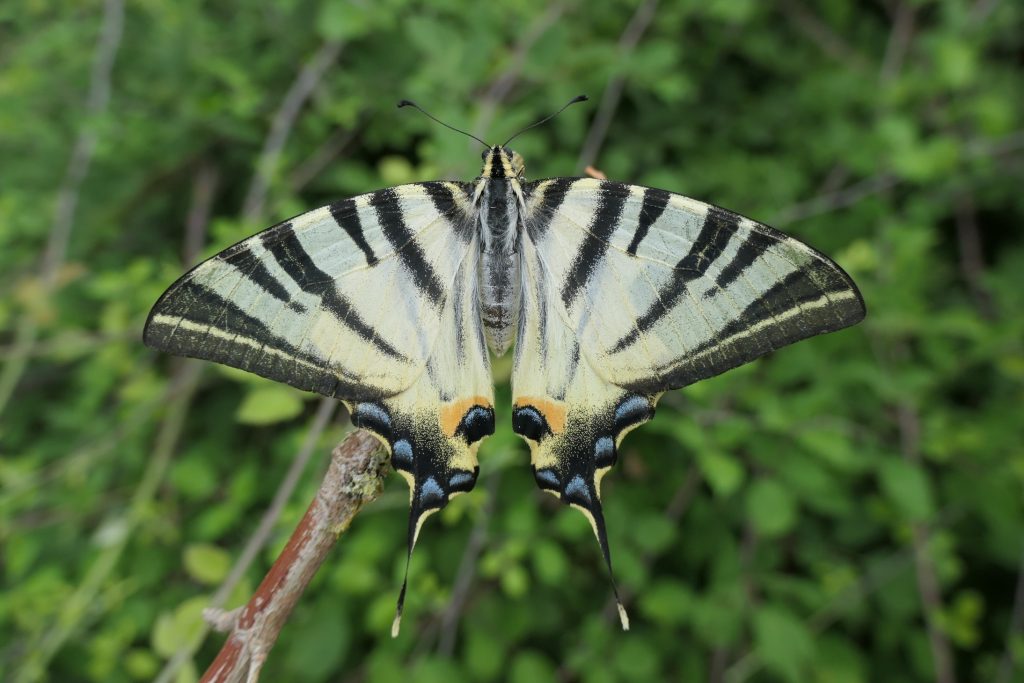
We caught glimpses of the Scarce and Common Swallowtails, but neither was numerous during our visit. Neither needs habitats of special character and can turn up anywhere, from exposed hill-tops to cosy gardens. The only chance of getting that good photograph is to find one early in the day, when they perch in warm, sunny places to heat their flight muscles for the day’s activities.
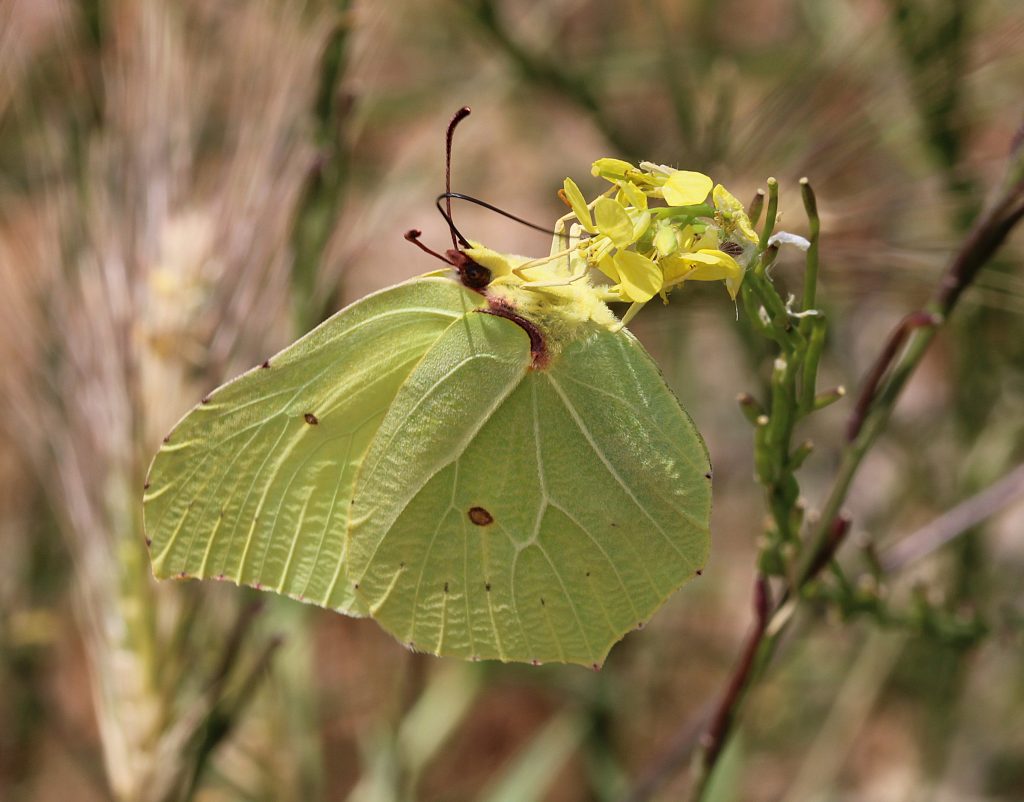
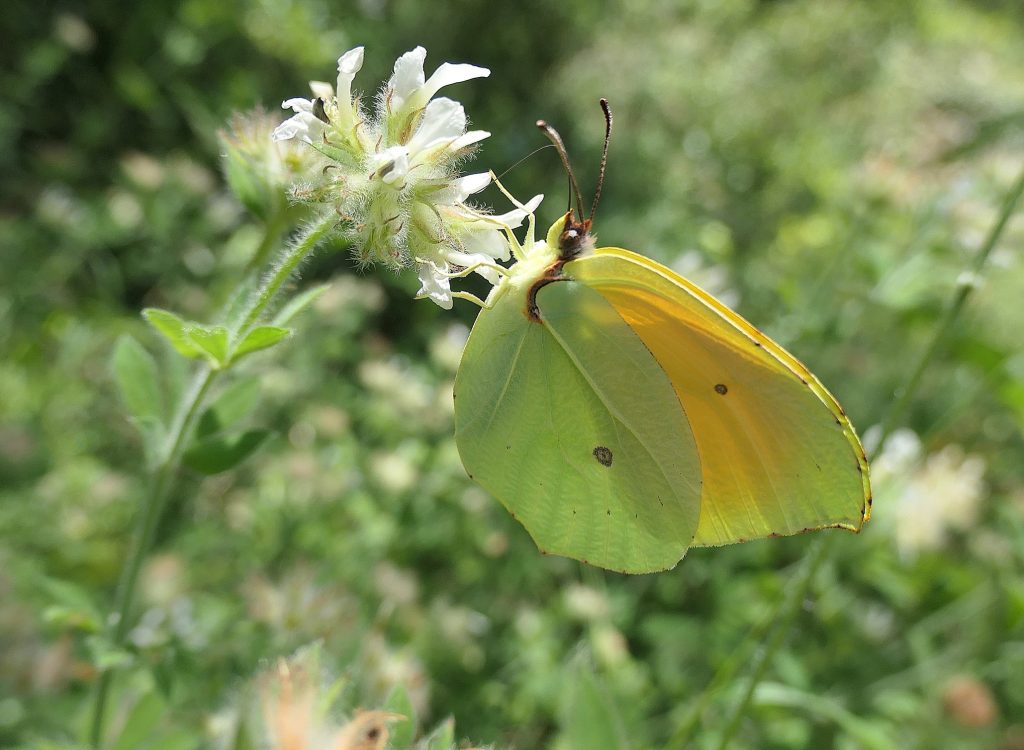
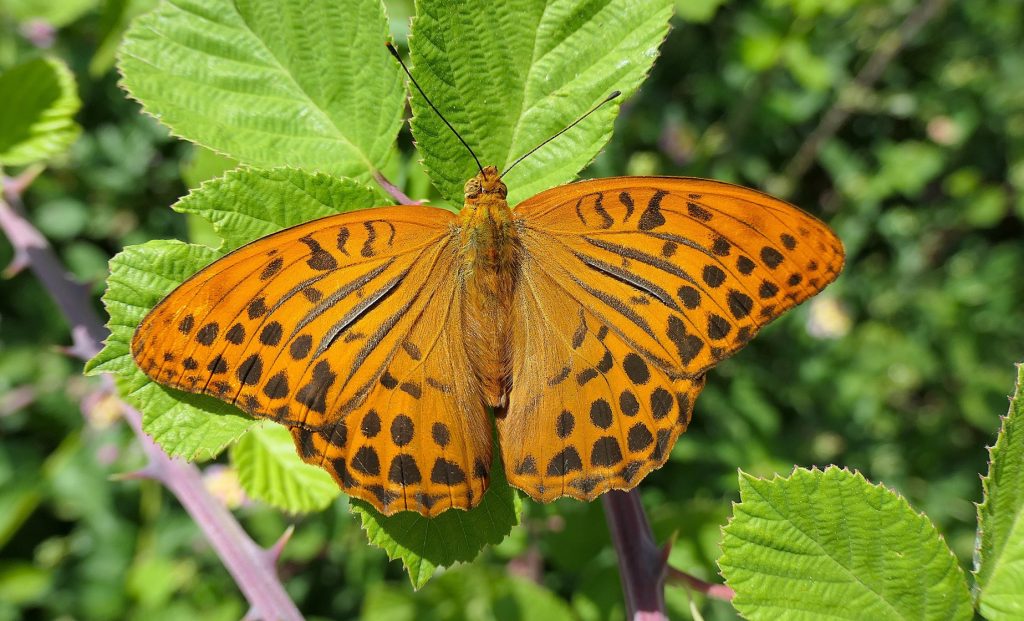
We found several species we have in Ireland, with the Brimstone (uncommon, but likely we were early in the flight period), Clouded Yellow, Wood White, Large and Small White (abundant, widespread), Small Copper (low numbers), Common Blue (abundant), Holly Blue (widespread but not numerous), Red Admiral (occasional), Painted Lady (widespread, numerous), Silver-washed Fritillary (widespread but not numerous), Speckled Wood (widespread but not numerous), Wall and Meadow Brown (widespread and abundant), Small Heath (in low numbers on short grassland), and Small Skipper (widespread but not numerous). The others we share with Corfu that we didn’t see, such as Comma and Peacock, might have been in the immature (non-adult) stage.
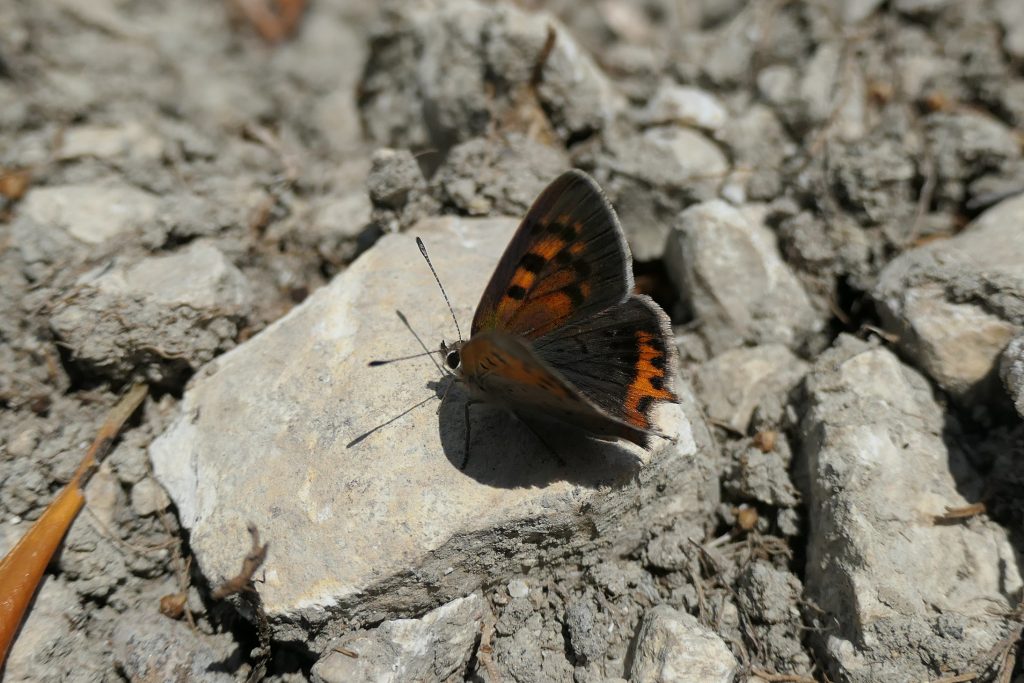
Overall, Corfu has 76 butterfly species; we saw 38, possibly 40 (Long-tailed Blue and Green-veined White might have been seen). We missed the spring flying species (April appears to be the key month).
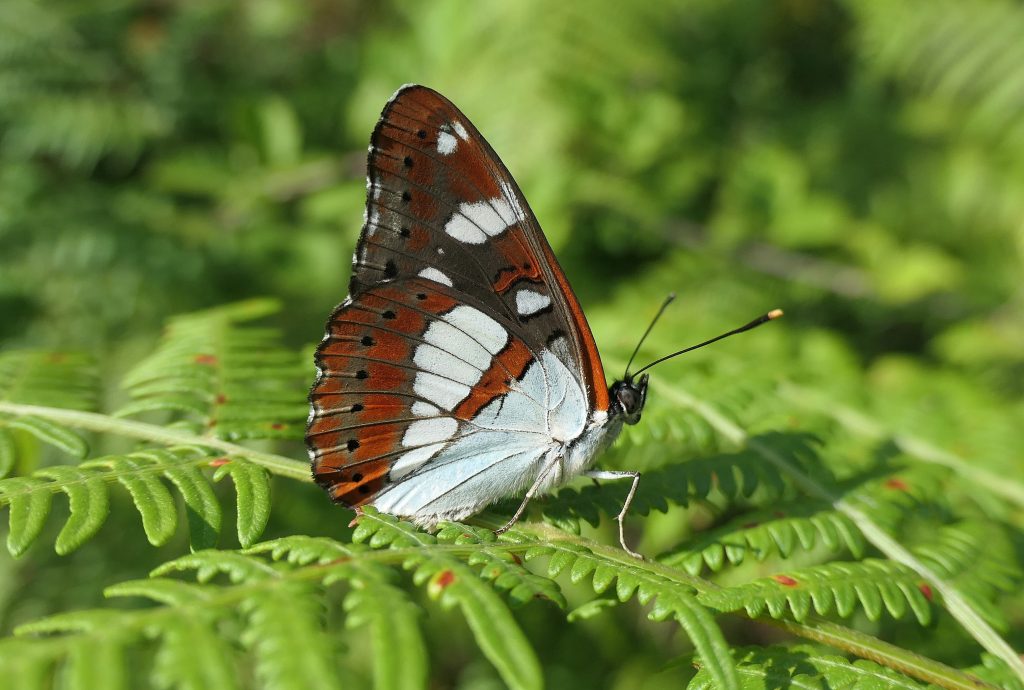
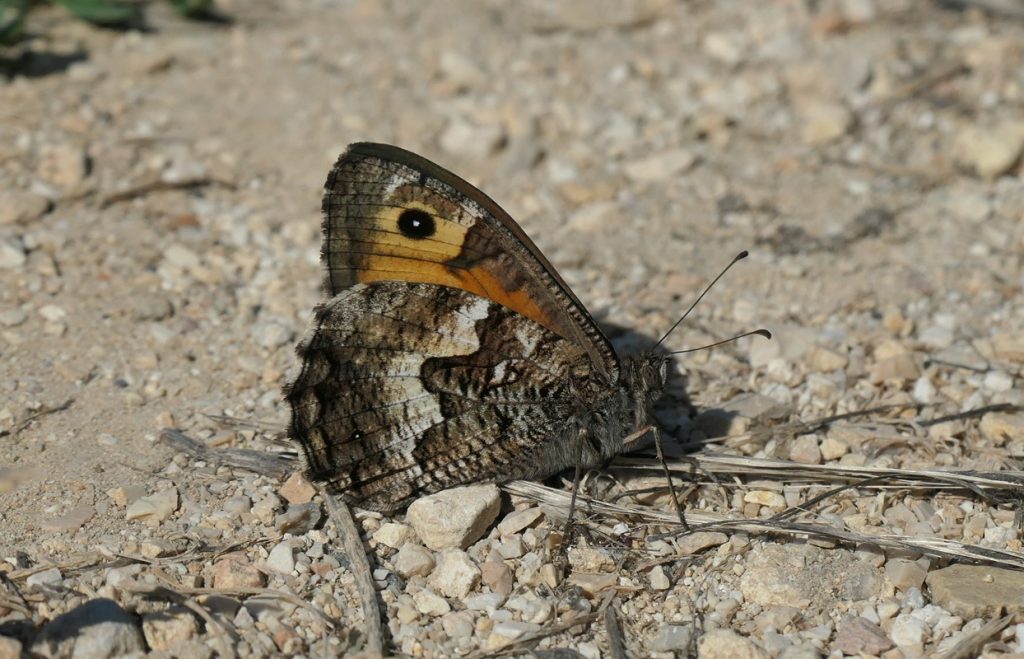
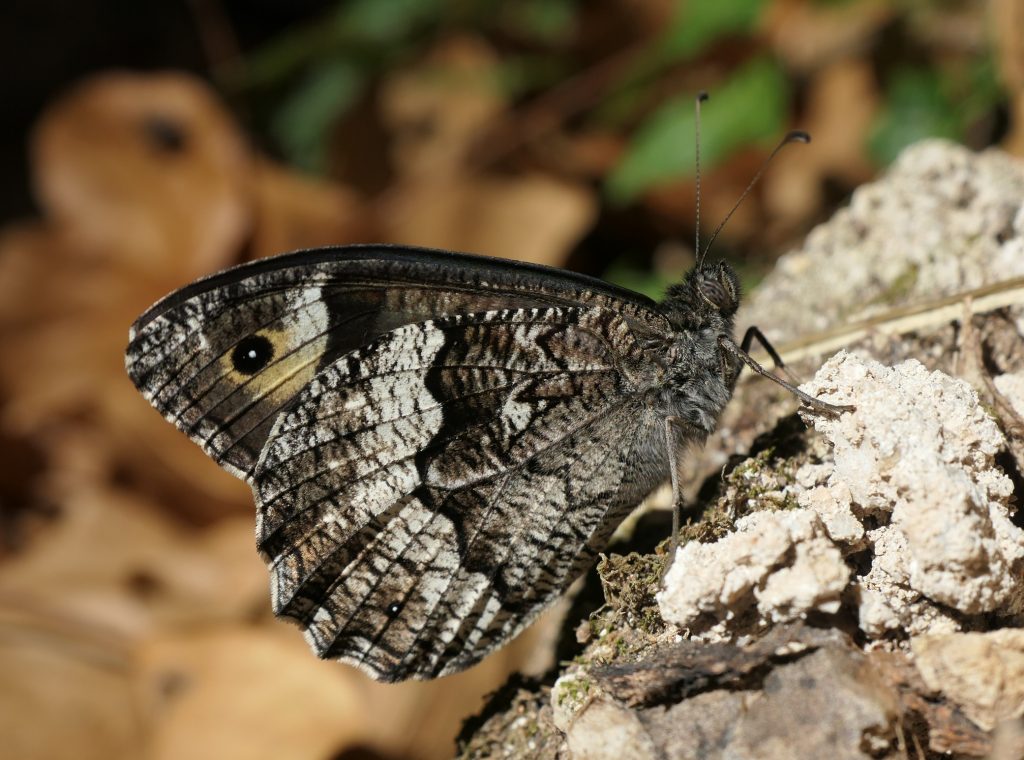
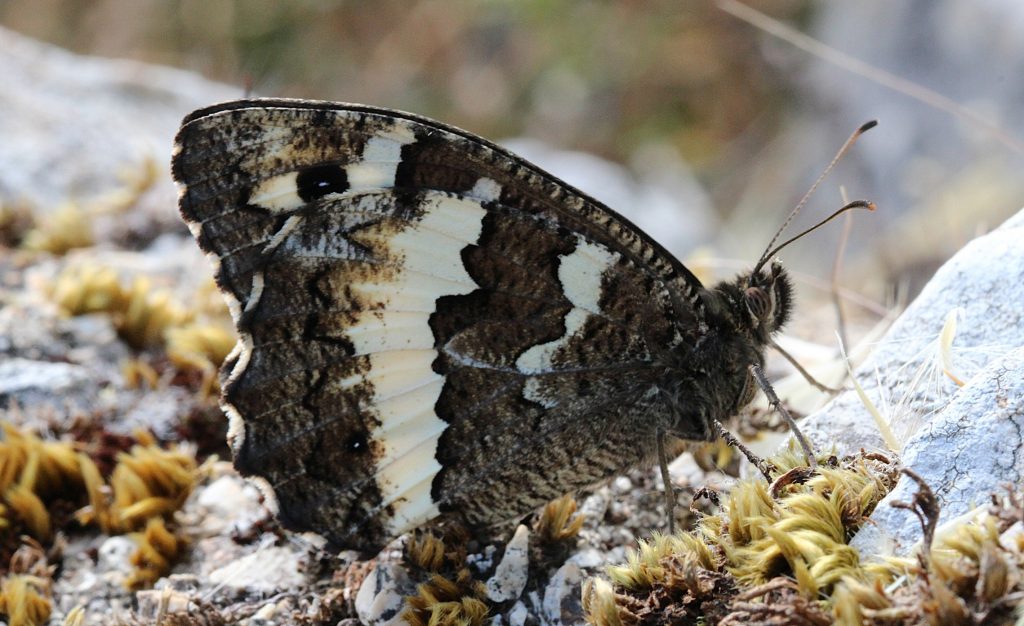
It was wonderful to see ‘new’ species, like the Southern White Admiral, a graceful flyer that occurs in areas with trees, shrubs and hedges, including gardens. Males are notably smaller and patrol their habitats using regular flight paths and perch points. The smart deep black and starched white uppersides contrast with equally smart brick-red and white underwings. The most exciting finds were three grayling species, Delattin’s Grayling, which looks very like our Grayling, Great Banded Grayling and Eastern Rock Grayling, the latter two large and dramatic in flight, and equally happy in hot, dry woodland with clearings and open scrub and even hot, rocky places with low, scattered scrub.
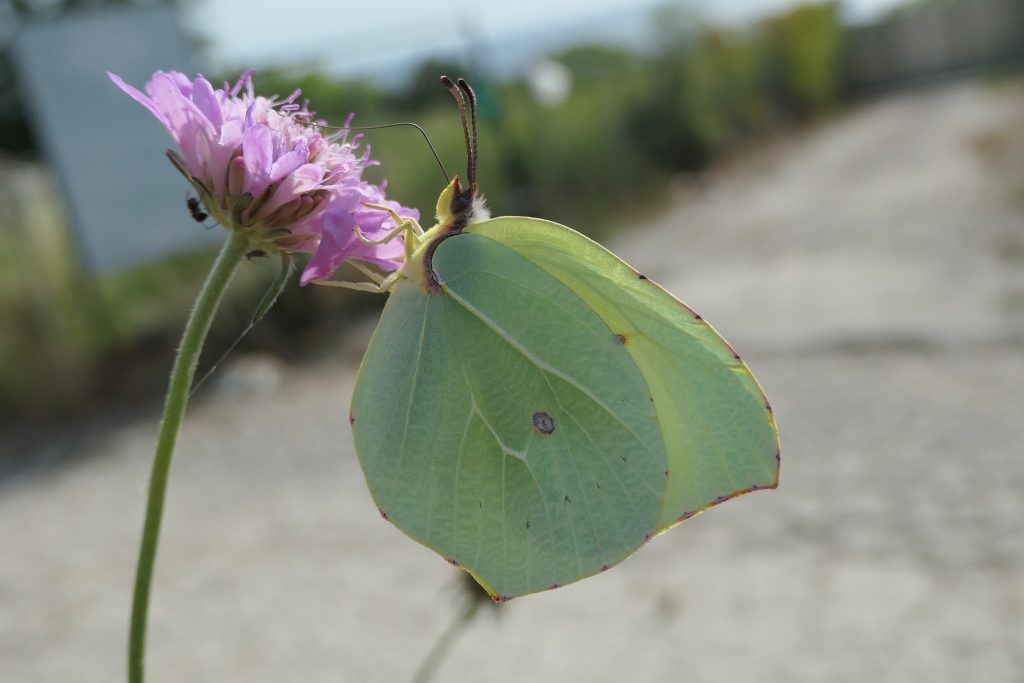
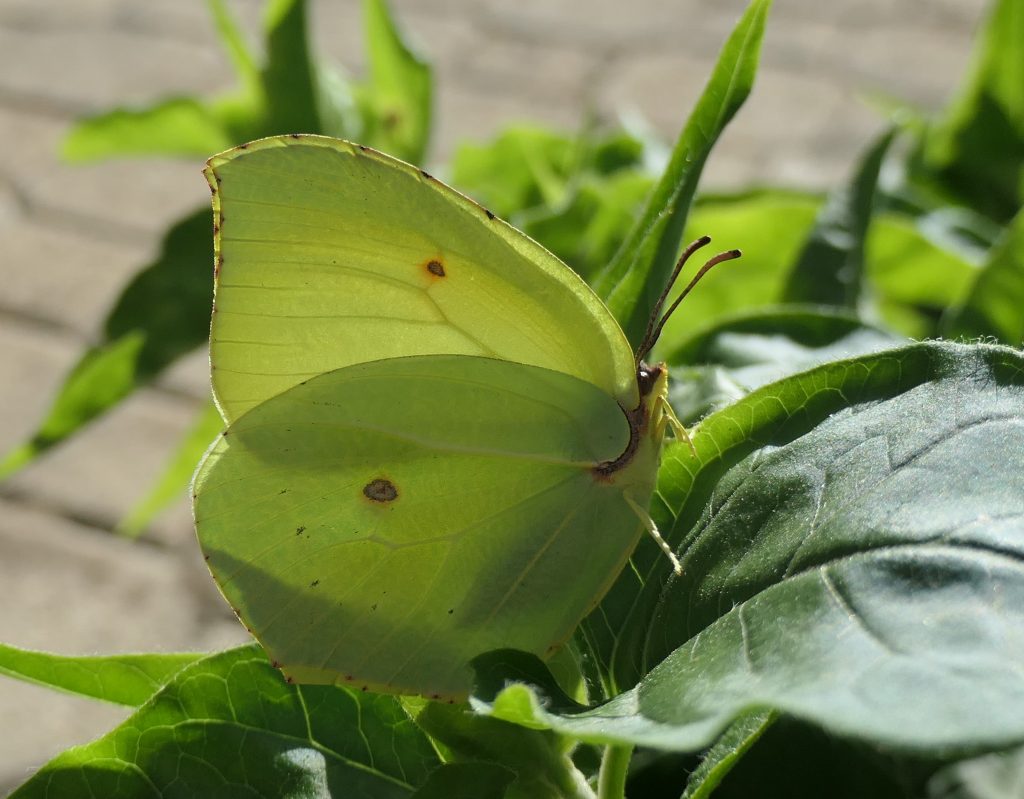
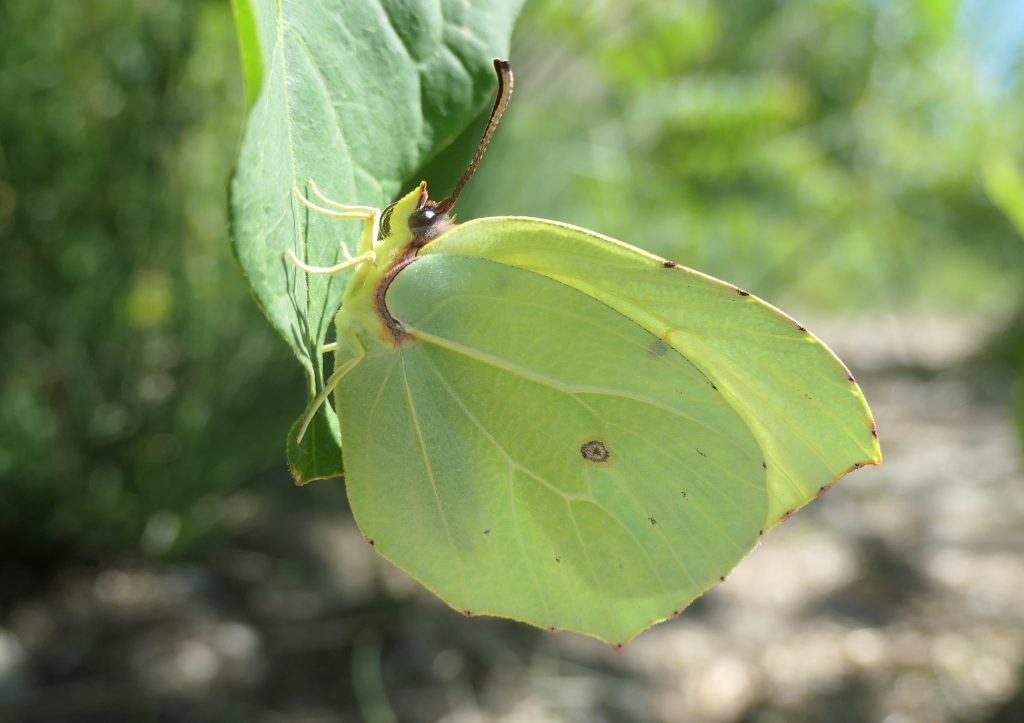
The stunning Cleopatra butterfly/Mediterranean Brimstone was seen everywhere, from beaches to gardens, roadsides and rocky mountain slopes. Males are straightforward to identify; they have sulphur uppersides sporting a deep orange forewing flush. Females are much trickier. I saw many large females with whitish-yellowish uppersides (normal form), very similar to the female Brimstone with which it is easily confused. However, some females, especially in SE Europe, including Corfu, have pale yellow uppersides and even the deeper sulphur uppersides, like the male Brimstone. We saw all three colour forms, and it took me a couple of days to be sure about what I was looking at. The Cleopatras were absorbed in feeding up for ‘winter’. It hibernates from the end of August, reappearing in February, although it probably breaks hibernation to feed after August. It was obvious that the heat in more exposed areas, even during late morning, was quite extreme, as individual Cleopatras and Brimstones frequently entered bushes to seek the coolness of shade.
The butterfly that shocks the spirit is the Two-tailed Pasha. Large, showy and fearless, it is impossible to be unimpressed by this powerhouse. My first glimpse of the butterfly was obtained while driving to Agios Georgios in NW Corfu on our first morning, when a hot pursuit over the road was sighted. A head-turner, this swift butterfly would be impossible to approach if it so chose, but it is so fearless that it allows you to eyeball it. It looks weirdly shark-like in outline, and its dark eyes have an opaqueness that allows no insight. It returns human gaze with dark, unreflecting eyes, suddenly surging into the skies to attack an intruding male. Step away from his launch site, and this Exocet invariably returns to its post, bristling with aggression.
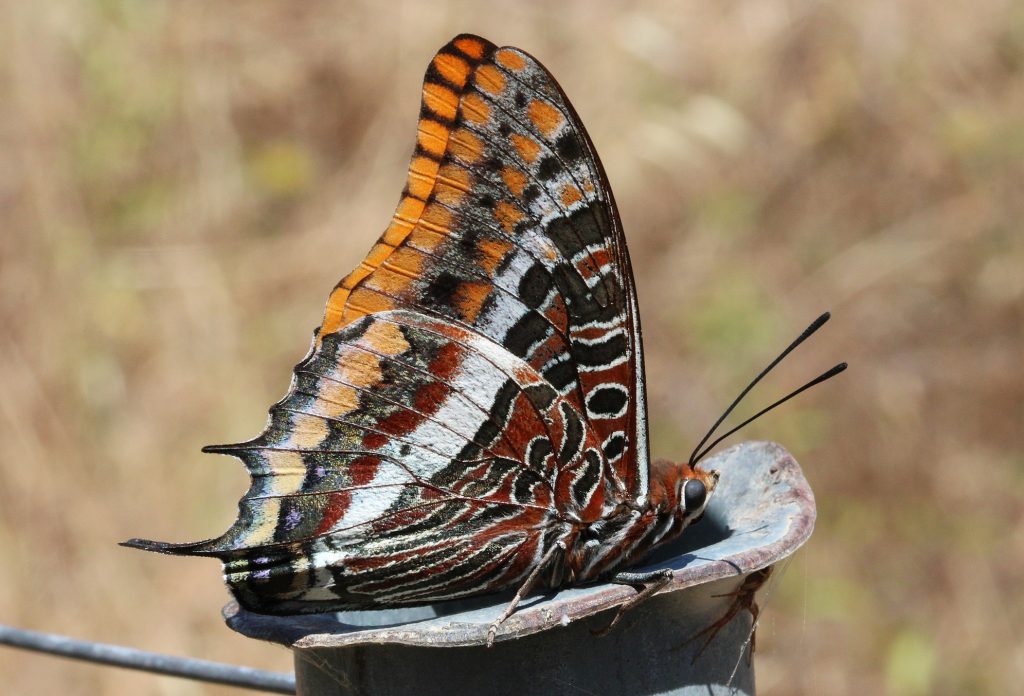
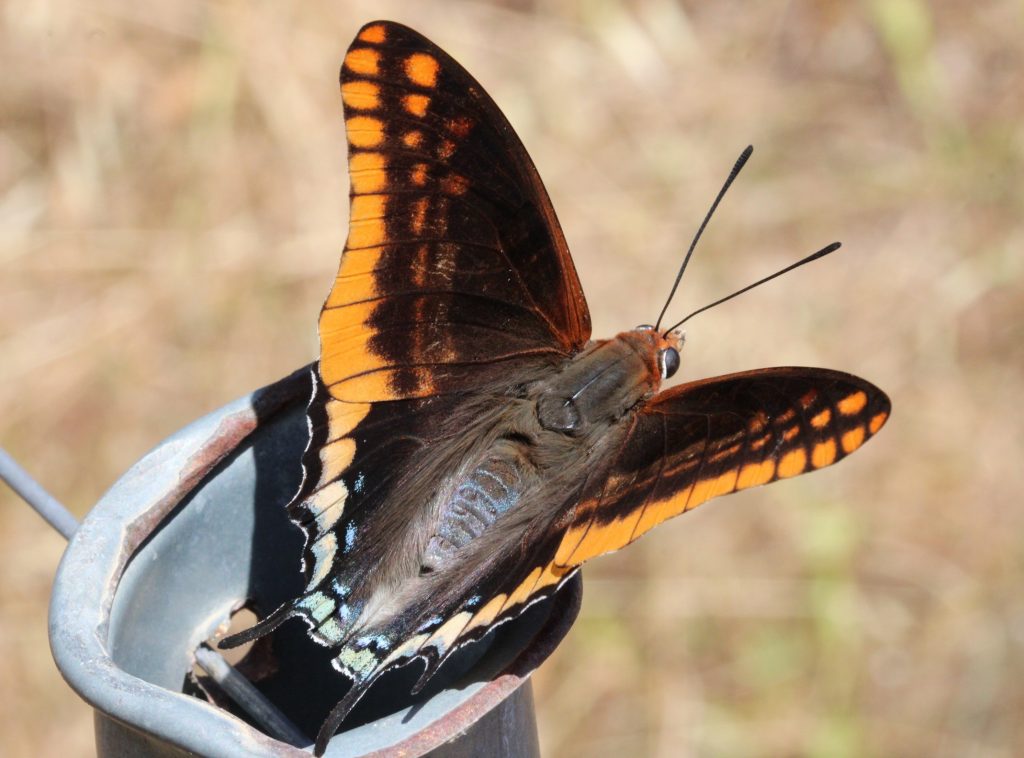
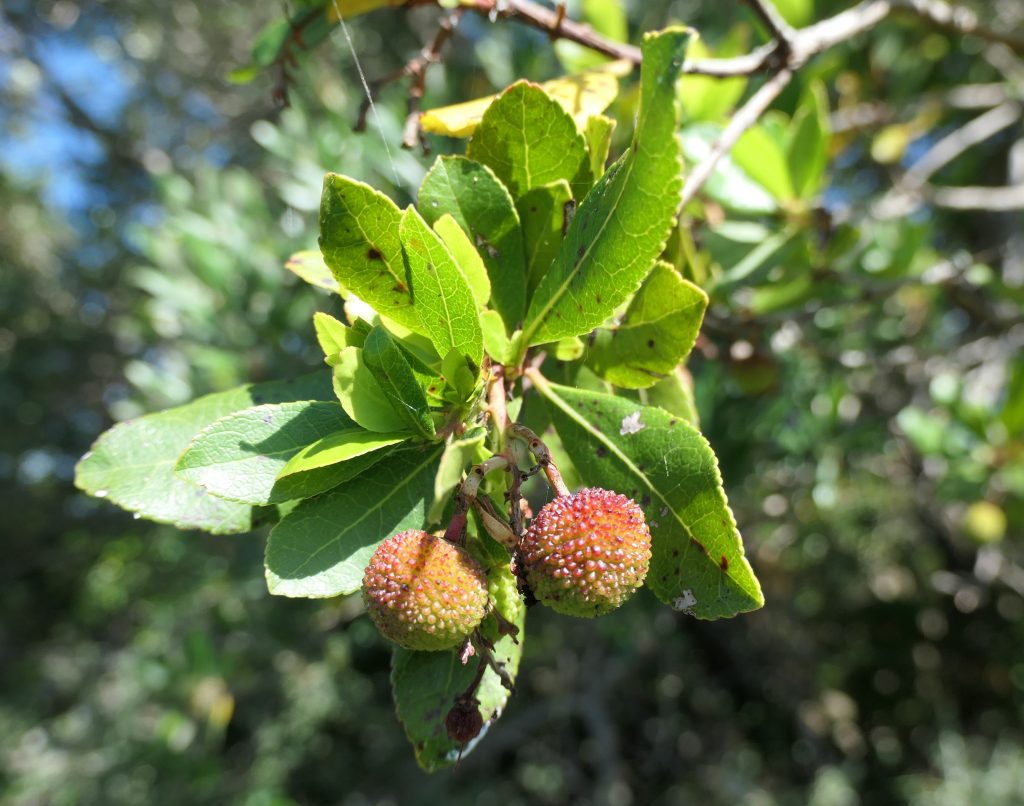
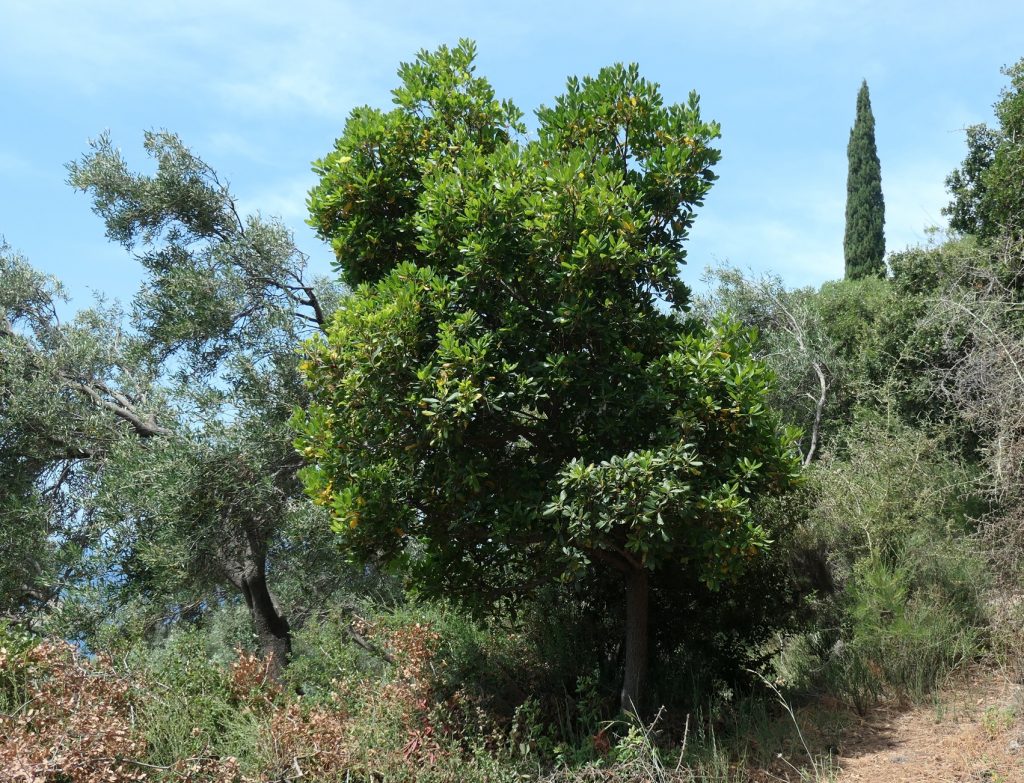
It breeds on the Strawberry Tree in open areas, and it likes maquis habitat on hillsides. Double-brooded, it is a tropical species restricted to the southern edges of Europe, usually near the sea. Seeing this species fulfilled the dream of a lifetime.
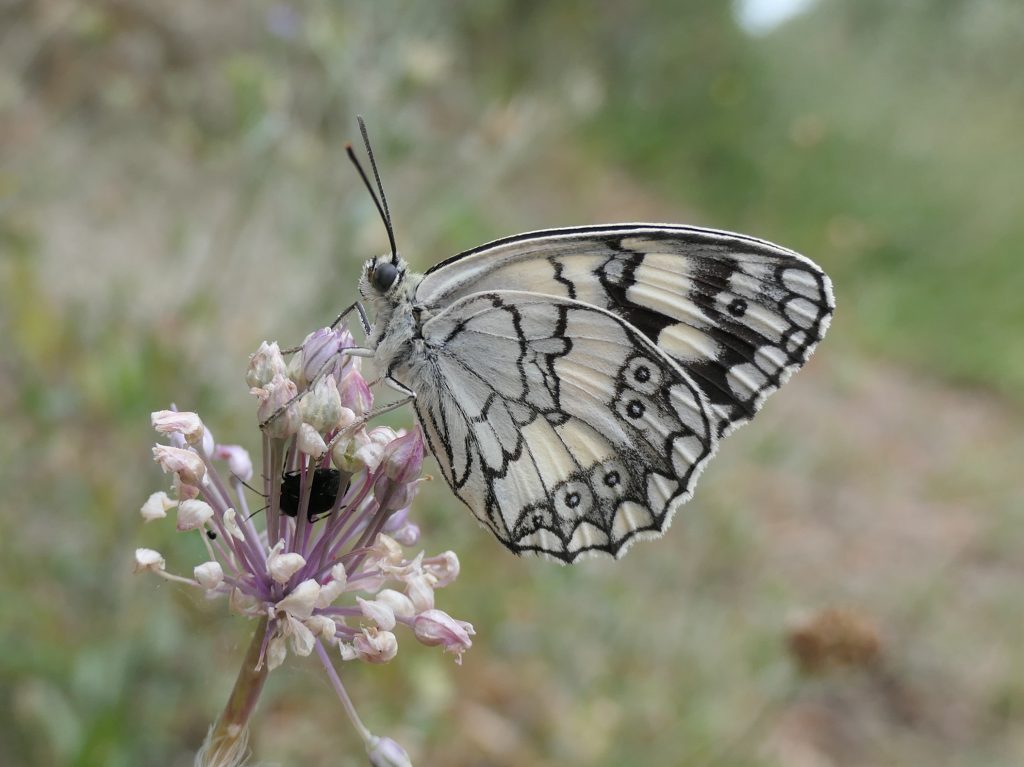
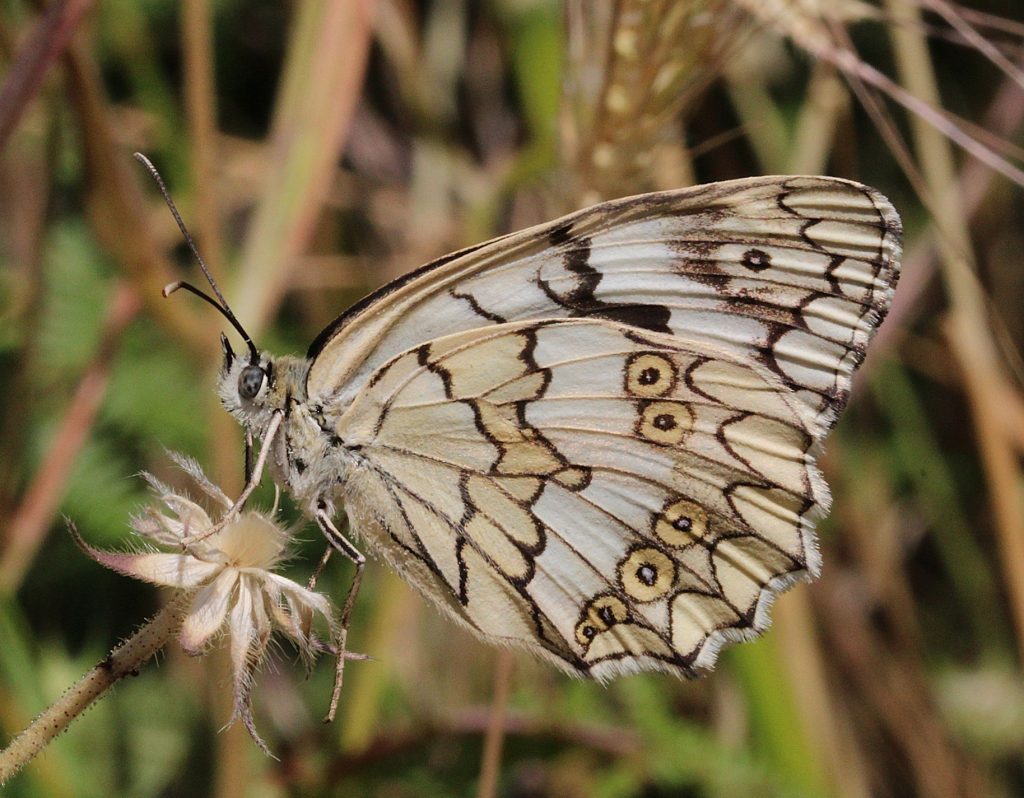
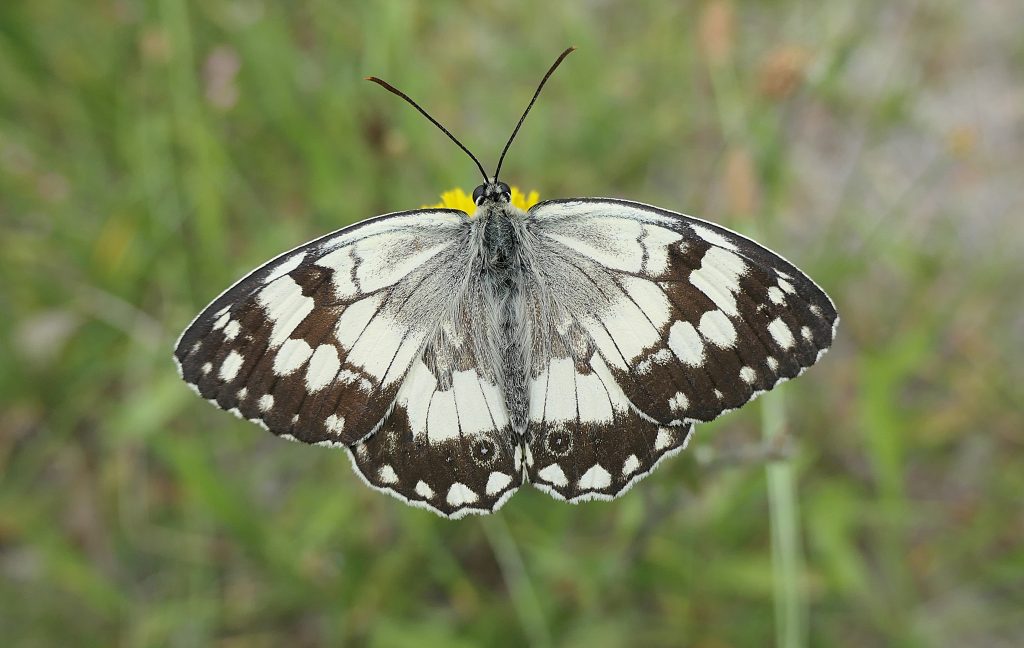
Another lovely butterfly we saw, and in great numbers, is the Balkan Marbled White (BMW). Despite being numerous (we saw around 200 in and near Old Perithia), it is geographically restricted, found only in SE Europe (also in Turkey, Transcaucasia and N Iran). The lovely black and off-white marbling patterning is classy and striking in an understated way. Like many butterflies, it was strongly attracted to scabious flowers, especially Sweet Scabious Scabiosa atropurpurea. Newly hatched BMWs are easy to observe and photograph. After a few hours, males become active, feeding and mate-seeking during sunshine, settling quickly in overcast weather. This response to cloudiness was noted in all the butterflies we observed.
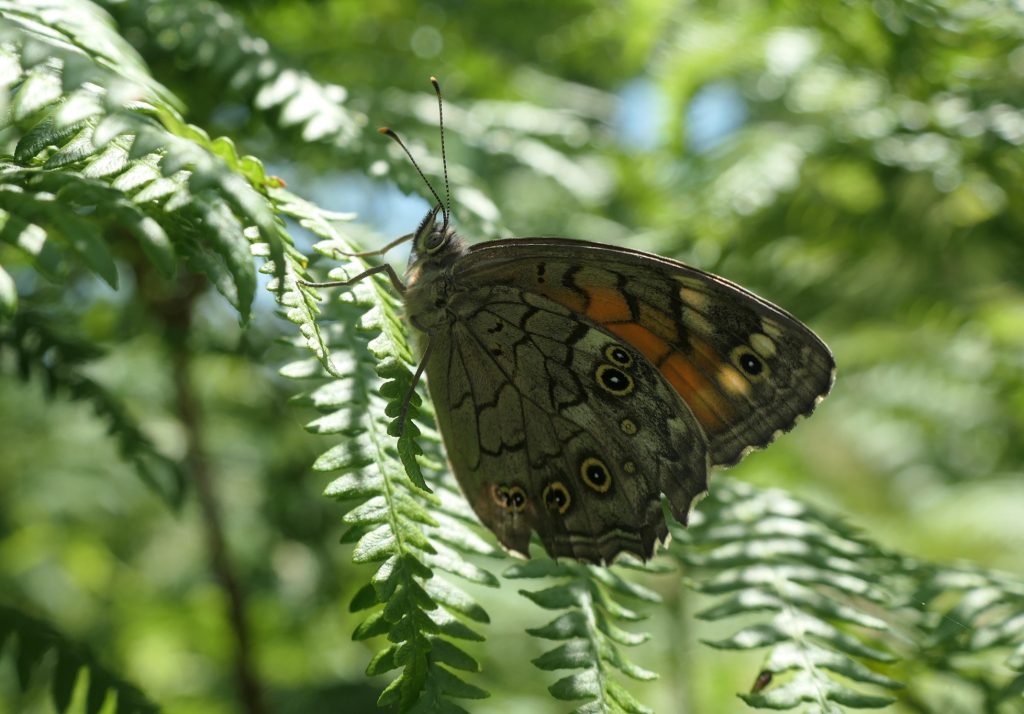
Another interesting butterfly is the Lattice Brown. It is large, about the size of the Red Admiral, and quite skulking. It rarely appears in the open, fluttering in shady scrub, Bracken and trees, where males scour the branches, doing circuits of the tree limbs, presumably looking for love while females prospect for egg-sites (it lays on trees). It is extremely hard to approach, and the dull light of the woodland does nothing to conceal the human approach. This orange and brown phantom of the forest is agile and ghostly, a spirit that melts into the earthy tones of hot shade. It is confined, in Europe, to the SE.
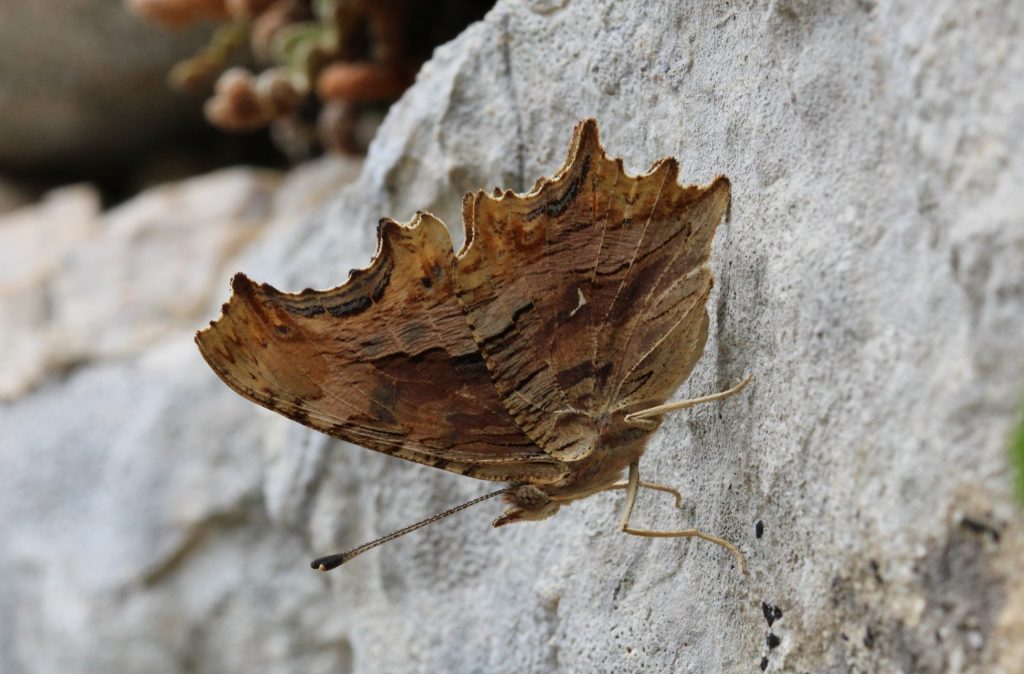
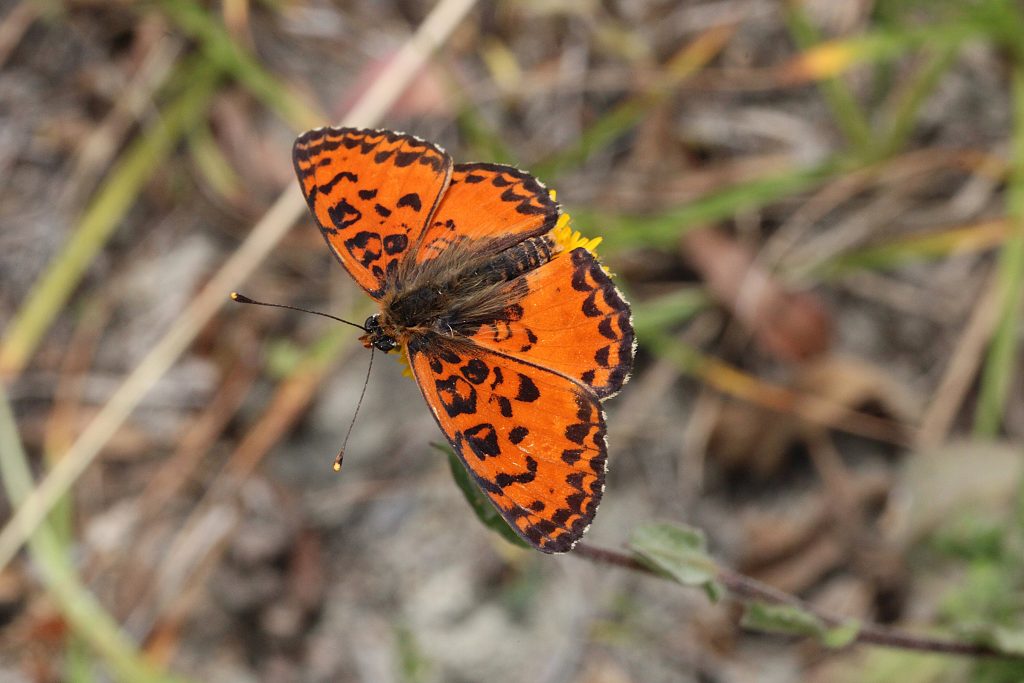
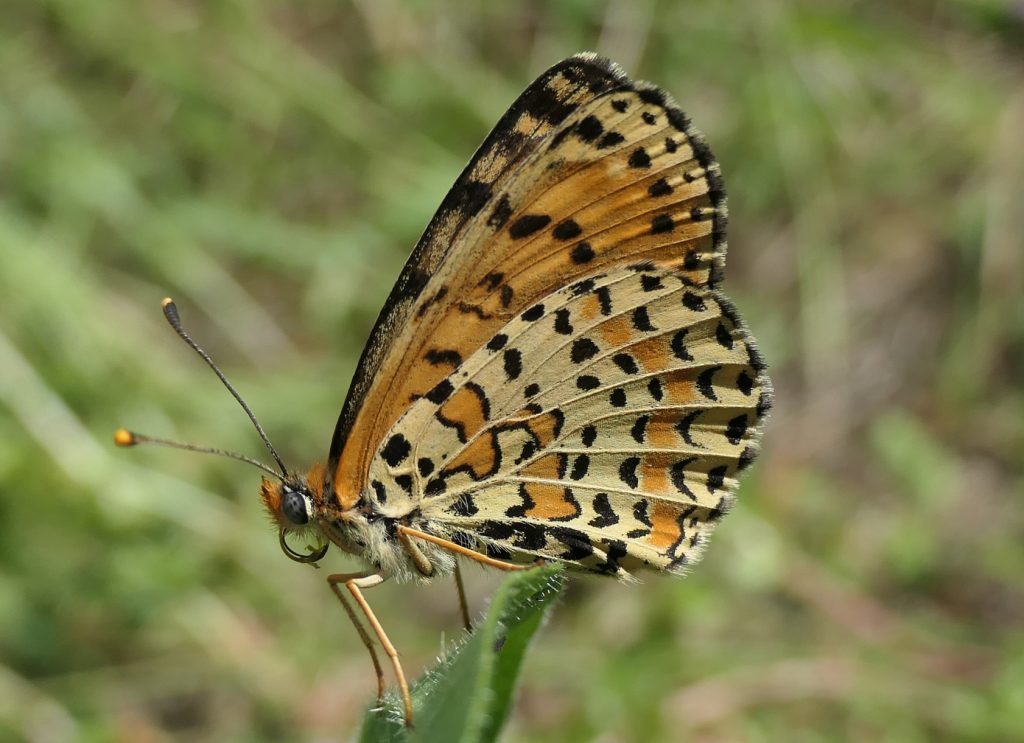
Large, Small, Mallow and Lulworth Skippers were widespread, with the Lulworth Skipper particularly abundant. Another eye-catching butterfly is the Spotted Fritillary, especially the orange-red males. This is probably the commonest fritillary in Europe. We also spotted the Southern Comma; brighter and paler than the Comma, it likes basking on rock and breeds on Pellitory-of-the-wall.
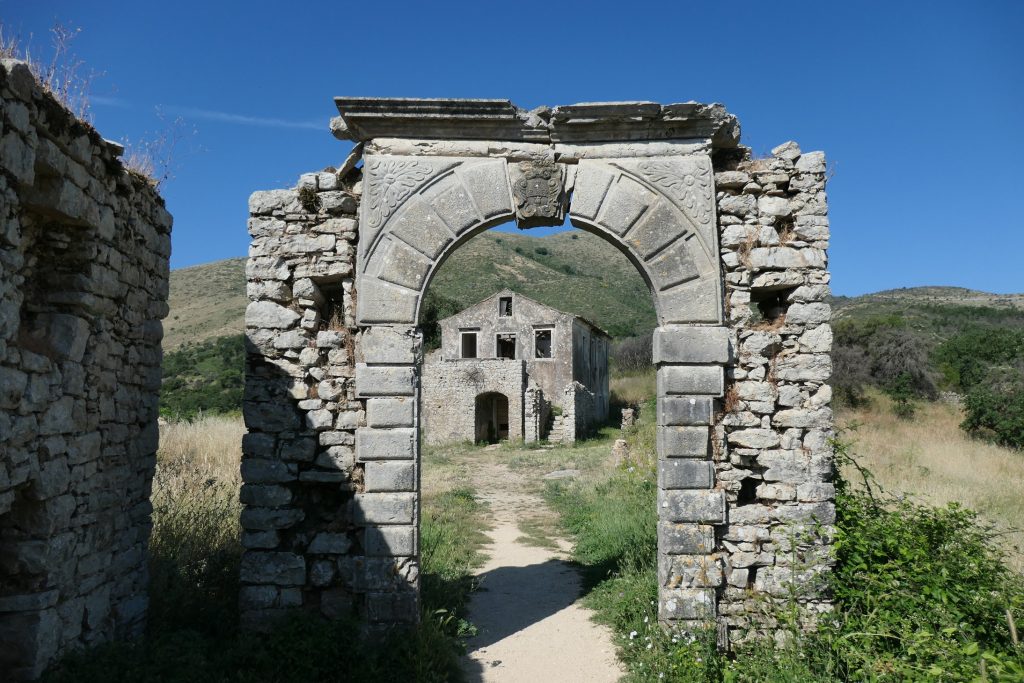
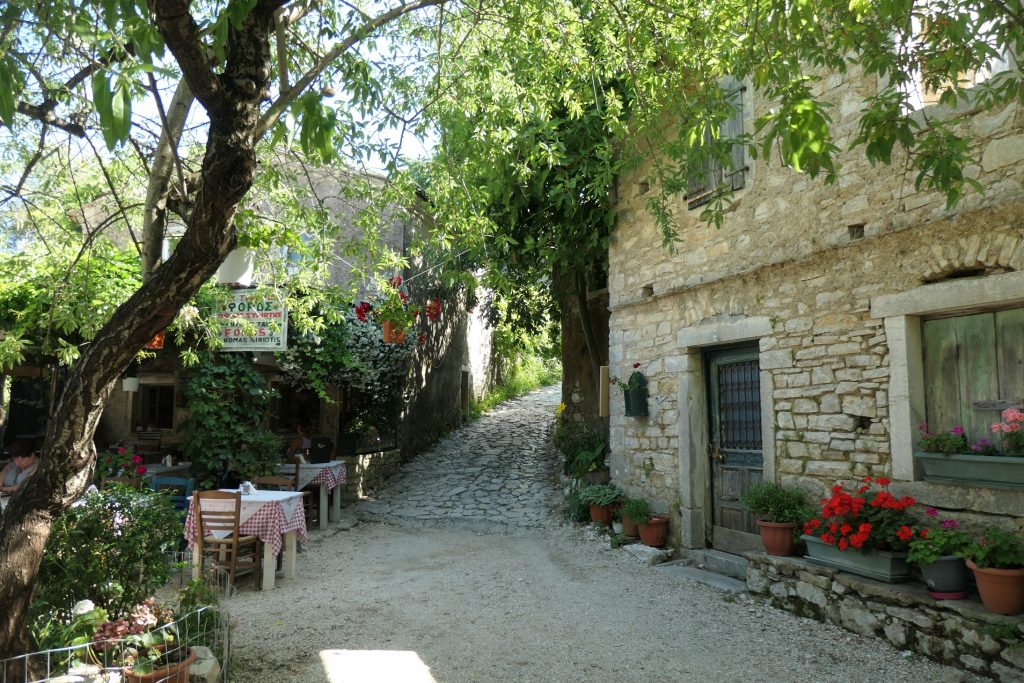
Butterflies were found elsewhere, but special hotspots are Old Perithia, a beautiful 14th-century village in a breathtaking setting, the areas immediately inland of Agios Georgios, accessed by tracks through olive groves and the donkey path from Makrades. I am tempted to visit in April for the spring butterflies!
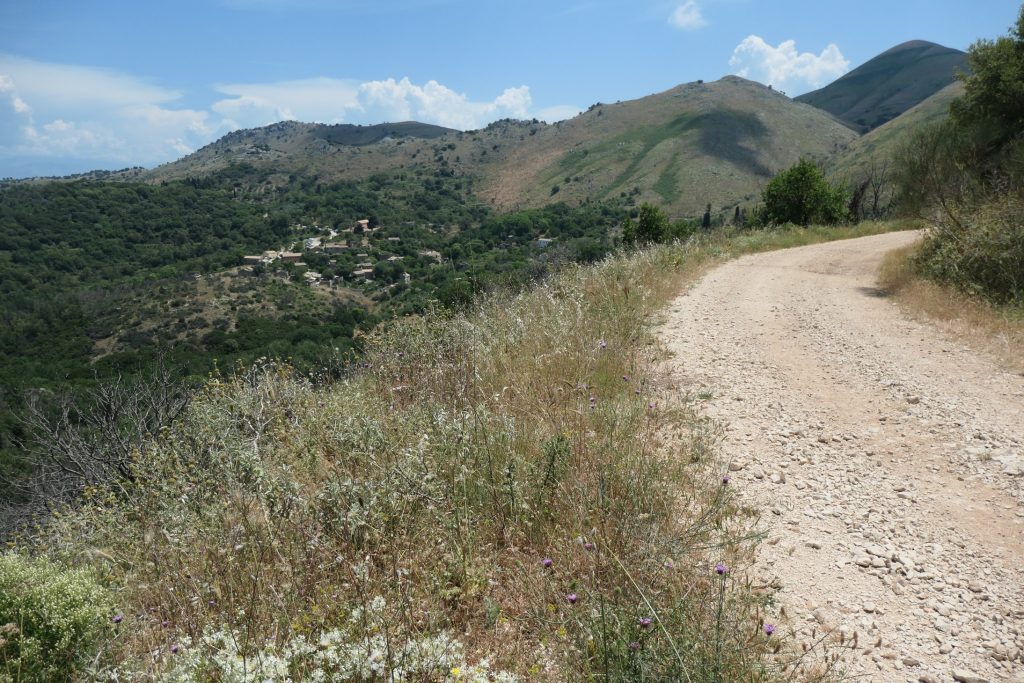
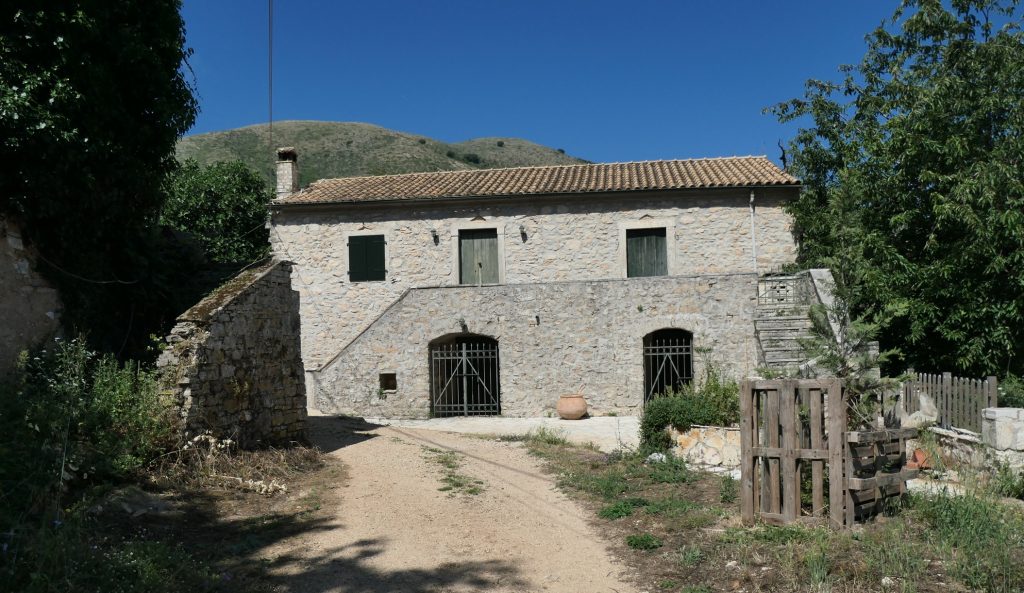
Looking at the abundance and at how widespread the Corfiot butterflies are, one worries more about the state of Ireland’s species. However, there are some concerns. Some olive growers use herbicides under the trees, eliminating important grasses and flowers for nature. This was unsightly and destructive, and no butterflies were observed in poisoned areas. Many olive groves were not poisoned, and these are great for insects. Like many residential areas in the Mediterranean region, garden flowers are grown instead of natives, but gardens are not extensive enough for this to be a major problem.
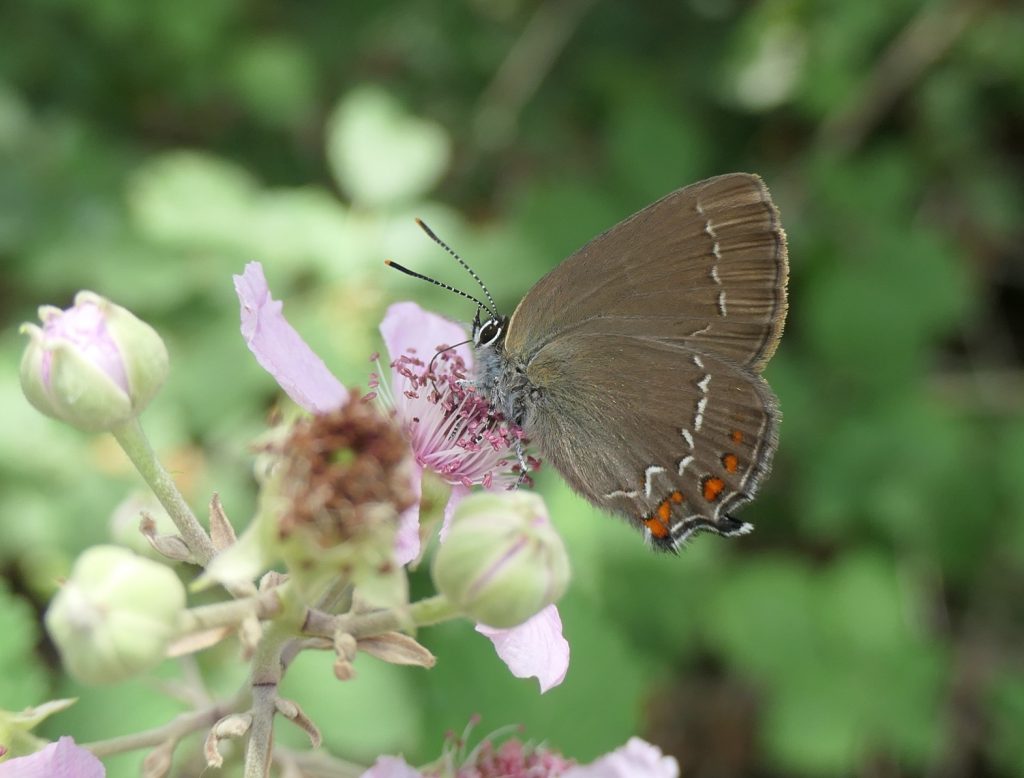
The scenery throughout the northern half of the island is simply spectacular. This might be true of the South, too. People are helpful and friendly, and the food is excellent with options everywhere in towns, villages and on seafronts. The roads are often narrow, and upland roads contain many sharp bends, so slow, cautious driving is essential. The island is green, despite the Mediterranean heat and dryness, quite different to nearby mainland Greece and Albania. No wonder Gerald Durrell called it ‘The garden of the gods.’
A special thanks to Chris from Ionian Butterfly Conservation for his help in identifying a couple of difficult species. Ionian Butterfly Conservation runs a recording scheme and would love to receive your records. You can learn more at https://ionianbutterflyconservation.org/index.php
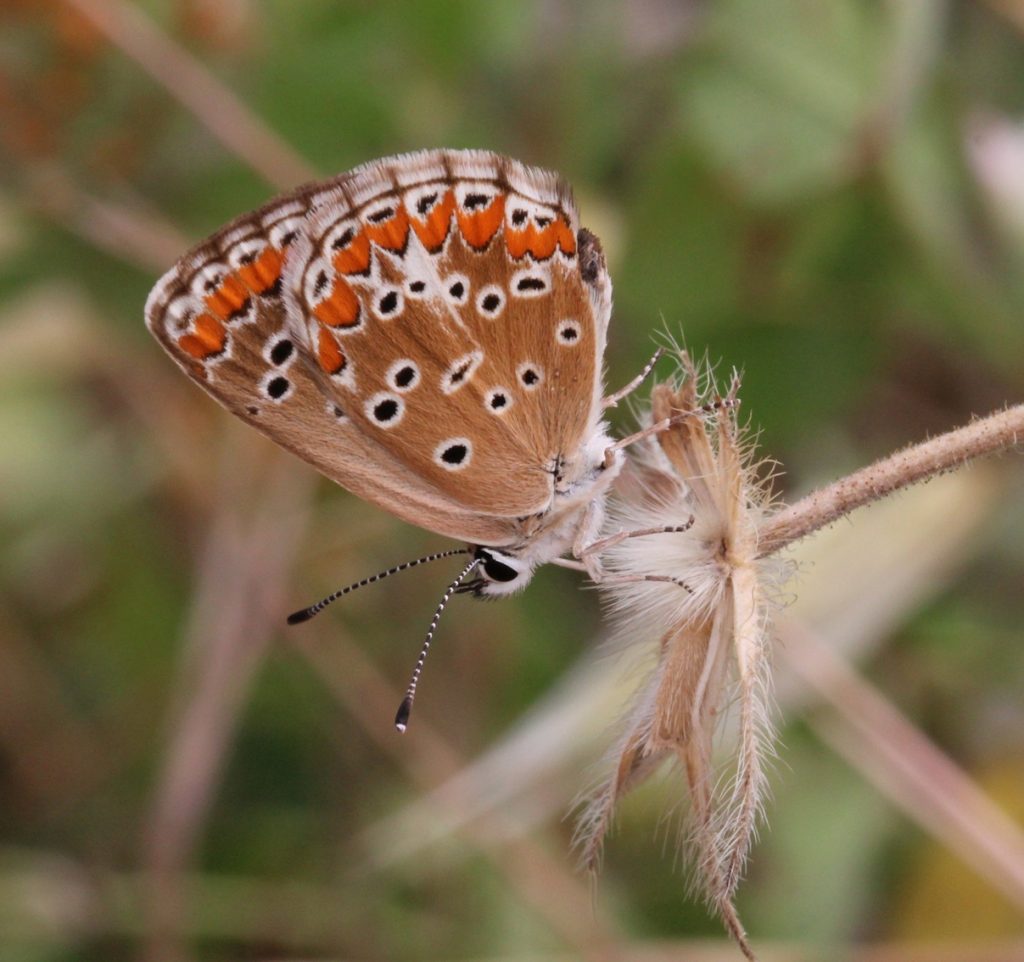
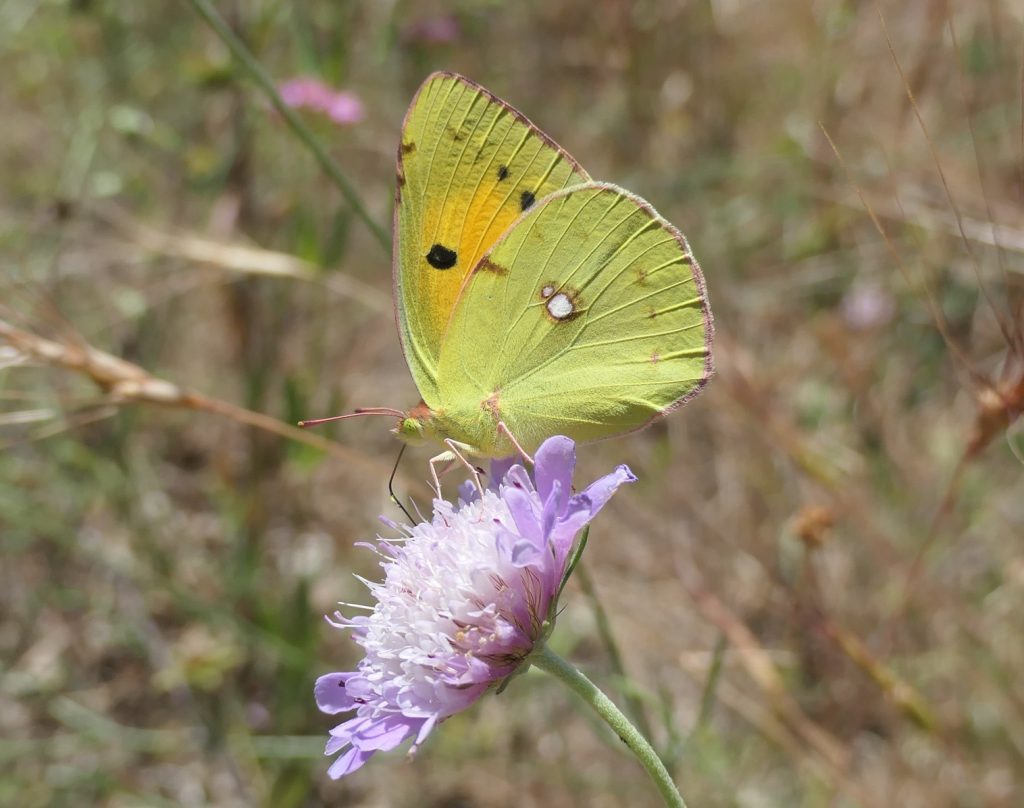
All photographs copyright J. Harding